
Speed and agility drills for young athletes unlock performance across every sport. A faster first step makes a soccer winger dangerous, a basketball defender harder to beat, and a baseball outfielder more rangy. Speed isn’t just about straight-line running — it’s the ability to accelerate, decelerate, and change direction efficiently. The good news: explosive movement is highly trainable from age 8 onward. These nine drills require almost no equipment and can be slotted into any practice.
The Science of Youth Speed Development
Kids develop speed through two windows: the neural window (ages 7-12) when the nervous system rapidly improves, and the strength window (ages 13+) when muscle gains compound the gains. The CDC physical activity guidelines recommend 60 minutes of varied movement daily for youth, and short bursts of speed work fit perfectly inside that window.
Train speed when athletes are fresh — at the start of practice, never after long endurance work. A tired nervous system can’t fire fast.
Drills 1-3: Acceleration
The first 10 yards win most plays in youth sports. Wall drives have the athlete lean against a wall at a 45-degree angle and march hard for 10 reps per leg, building proper acceleration angle. Falling starts start from a forward lean, letting gravity initiate the run; the athlete must catch themselves with a powerful first step. Resisted sprints with a partner holding a band around the waist add load to the acceleration phase.
Combine these with proper preparation from our warm-up routines for youth sports practice — cold muscles strain easily during max-effort work.
Drills 4-6: Change of Direction
Speed without control is wasted. 5-10-5 shuttle (the pro agility test) has the athlete sprint 5 yards right, 10 yards left, 5 yards right back to center. Time it. T-drill uses four cones in a T-shape to combine forward sprinting, lateral shuffling, and backpedaling. Reactive mirror drill pairs two athletes facing each other; one leads, the other mirrors. This builds reaction speed, the most game-relevant agility quality.
The NSCA youth training articles note that change-of-direction work transfers more directly to sports performance than straight-line speed for athletes under 14.
Drills 7-9: Top-End Speed
Top-end speed matters in soccer, football, and track. Flying 20s have the athlete build up over 20 yards then sprint flat-out for the next 20 — this teaches running at full speed without the acceleration phase. Hill sprints (20-30 yards on a moderate grade) build power without the eccentric pounding of flat sprints. A-skips and B-skips are technical drills that teach proper knee drive and foot strike.
These speed and agility drills for young athletes pair beautifully with strength work in older athletes. Younger kids should keep volume low — 6-8 sprints per session is plenty.
Final Tips for Building Speed Safely
Quality always beats quantity in speed training. Ten perfect 20-yard sprints with full recovery (60-90 seconds) beats 30 sloppy ones every time. Track times weekly so kids see their progress — visible improvement is the best motivator. And remember that nutrition and sleep do half the work; a tired athlete can’t sprint fast no matter how good the drill. For more on that side, check our sports nutrition for young athletes guide. Three speed sessions a week, eight weeks straight, and you’ll see different kids on the field.
Frequently Asked Questions
At what age can kids start speed and agility drills for young athletes?
Light agility games are safe from age 6. Structured speed work with timing and full recovery should start around age 8-9.
How often should youth athletes train speed?
Two to three sessions per week, separated by at least 48 hours. Speed is a high-CNS-demand activity and needs recovery.
Are agility ladders worth using?
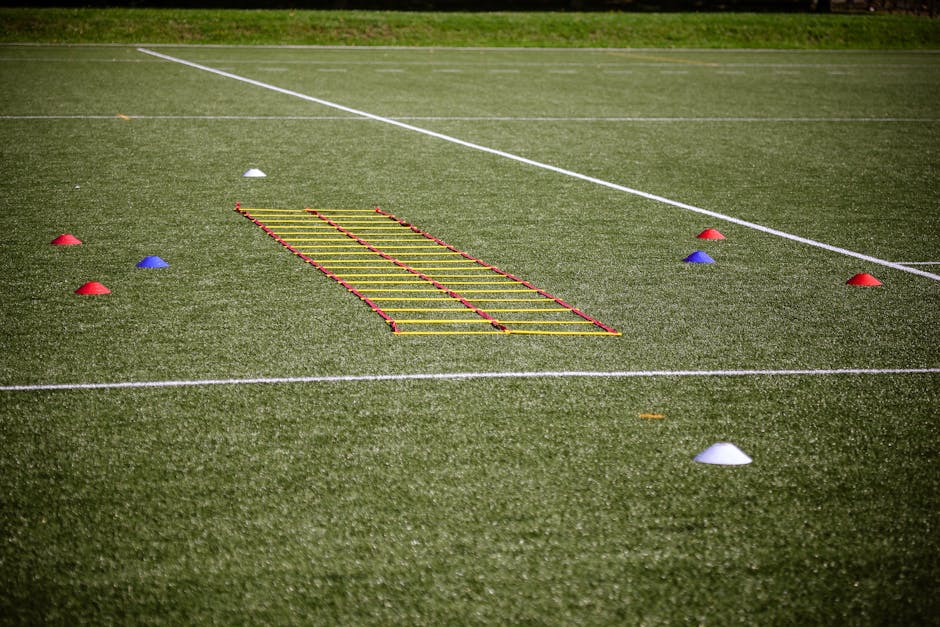
Ladders are great for warm-ups and footwork patterns but don’t transfer much to game speed. Use them sparingly — maybe 5 minutes at the start of practice.
Should young athletes wear cleats or running shoes for speed work?
Sport-specific cleats for sport-specific drills. For pure conditioning, running shoes or cross-trainers protect the feet better.
How long until I see improvement?
Most kids see measurable speed gains in 4-6 weeks of consistent work. Form changes can show up in as little as 2 weeks.
2 thoughts on “9 Powerful Speed and Agility Drills for Young Athletes”