
Freestyle isn’t one stroke — it’s two closely related skills wearing the same cap. A swimmer racing a 50 and a swimmer racing a 1500 are both doing ‘freestyle,’ but the catch, arm timing, kick, and breathing pattern each swimmer uses look noticeably different up close.
This guide breaks down exactly what changes between sprint and distance freestyle technique, why those changes make swimmers faster or more efficient, and how to train the version of the stroke that matches your race or set.
Quick Answer
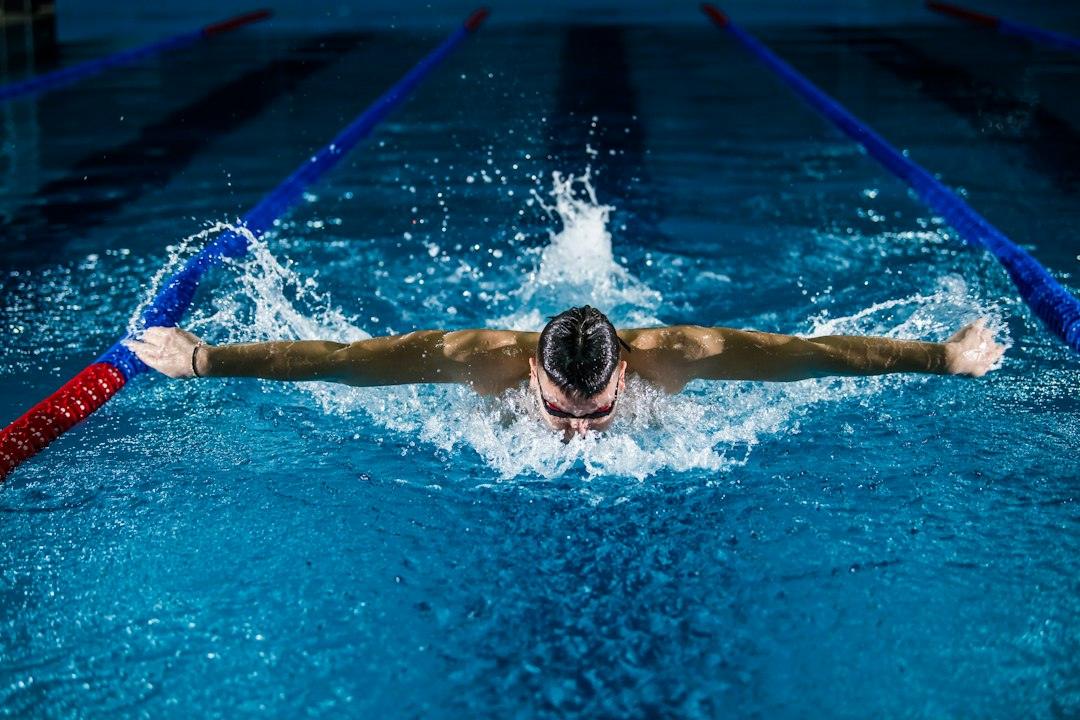
Sprint freestyle favors a faster arm turnover, an early, aggressive catch, flatter body position, and a stronger continuous kick — all built for maximum speed over a short distance. Distance freestyle favors a longer, more patient catch, a slightly overlapping or catch-up arm timing, a calmer kick, and a focus on stroke efficiency so the swimmer can hold pace for many lengths without burning out.
What Actually Changes Between the Two
Catch timing and depth: In distance freestyle, swimmers extend the lead arm fully before starting the catch, reaching forward and pressing water back in a smooth, patient motion. In sprint freestyle, the catch starts almost as soon as the hand enters the water, with the swimmer pulling earlier and driving the hand deeper to generate force faster, even though it costs some reach.
Arm coordination: Distance freestyle often uses a slight ‘catch-up’ style, where one arm momentarily pauses out front while the other finishes its pull — this creates small gliding moments that help conserve energy over a long swim. Sprint freestyle shifts toward more overlapping timing, where one arm is already pulling before the other finishes recovering, so there’s almost no gap in propulsion. That overlap is part of why true distance-style catch-up timing doesn’t work well in an all-out 50.
Stroke rate and stroke length: Sprinting trades some distance-per-stroke for a much faster turnover — the arms simply cycle quicker. Distance swimming leans the other way, slowing the tempo down and trying to get as much distance as possible out of every stroke, since a swimmer who can hold a long, efficient stroke will out-pace one who’s spinning their arms but moving in short, choppy pulls.
Body position and kick: Sprinters tend to ride higher and flatter in the water with a stronger, faster kick (often closer to a true 6-beat kick) that adds real propulsion. Distance swimmers sit a touch lower, use a quieter 2-beat or easy 6-beat kick mainly for balance and body rotation rather than speed, and save their legs for the finish.
Breathing pattern: Sprinters in short races often breathe less frequently — sometimes only once or twice per length, or even not at all in a 50 — because every head turn briefly disrupts speed. Distance swimmers breathe on a regular, comfortable pattern (commonly every stroke cycle or every other) to keep oxygen flowing over the length of the race.
Train smarter with a free AI coach. Create a free account →
How to Train Each Version of the Stroke
To build sprint technique: practice short, fast reps (12.5–25m) focused on an immediate catch and quick arm turnover, and use drills with an exaggerated high stroke rate so your body gets comfortable moving the arms faster without losing your feel for the water. Pair this with kick sets that emphasize power, since a strong kick is a bigger part of sprint speed than distance speed.
To build distance technique: swim longer reps (200m+) while counting your strokes per length and trying to hold a low, consistent count — this trains the long, patient catch and full extension that keeps your stroke efficient late in a race. Pace-based sets (holding a steady, repeatable split for a long series of 100s or 200s) also reinforce the rhythm distance freestyle depends on.
Most competitive swimmers train both ends of this spectrum, because even a distance specialist needs a faster gear for a finish, and a sprinter benefits from the efficiency habits distance work builds.
Tips / Common Mistakes
Don’t force true catch-up timing into a sprint — it feels efficient but actually slows your turnover; let your arms overlap more as you pick up speed.
Don’t let ‘faster stroke rate’ turn into short, splashy arm cycles — a sprint stroke should still be powerful and complete, not rushed and shallow.
Don’t over-glide in distance freestyle just to lower your stroke count — a long pause between strokes can kill momentum; the goal is a longer, efficient pull, not a longer gap between pulls.
Don’t ignore your kick in distance sets — it should be quieter than a sprint kick, but a kick that goes completely dead will drag your hips and legs down and cost you more energy than it saves.
Explore more: More swimming technique guides.
Freestyle sprint vs distance technique FAQs
Is freestyle technique really different for sprinting versus distance swimming?
Yes, in practice — coaches and swimmers consistently adjust catch timing, stroke rate, kick intensity, and breathing between the two. Some research on elite swimmers suggests the underlying arm mechanics are more similar than they look, but the practical technique adjustments (tempo, kick effort, breathing pattern) still make a real difference in training and racing.
Should beginners learn sprint or distance technique first?
Distance-style technique first. Learning a patient catch, full extension, and efficient stroke builds the foundation and water feel that makes it much easier to add speed and turnover later.
What’s the single biggest technique difference between a 50 and a 500 freestyle?
Arm coordination and catch timing: a 50 is swum with an early, aggressive catch and overlapping arm strokes for continuous propulsion, while a 500 is swum with a longer, more patient catch and a touch of catch-up timing to conserve energy.
Does kicking harder always make freestyle faster?
Only up to a point, and only if you can sustain it. A strong, fast kick helps a lot in sprints where you only need to hold it for seconds, but the same effort in a distance race will burn your legs out and actually slow you down later in the swim.
Level Up With SportsSteps
Train smarter with a free AI coach
Log workouts, follow a training plan, and see your progress over time — for athletes at every level.
Create a free accountFor families, athletes, coaches & clubs
Want training tips and sports news in your inbox? Subscribe to the free newsletter.
Photo by Gentrit Sylejmani on Unsplash.