Walk into most pools in the U.S. and you’ll run into one of two level systems: the American Red Cross’s numbered Levels 1-6, or the YMCA’s Swim Starters, Swim Basics, and Swim Strokes stages. The names don’t match across programs, ages overlap, and a kid who’s “Level 3” at one pool might be a “Stage 4” swimmer at another. That mismatch is the #1 reason parents sign their child up for the wrong class.
This guide breaks down what each level actually teaches, how the two major systems line up, and how to figure out where your child belongs — without just guessing based on age or grade.
Quick Answer
Pick a level by skill, not age or grade. If your child can’t yet put their face in the water and blow bubbles comfortably, start at the entry level (Red Cross Level 1 or YMCA Swim Basics Stage 1) regardless of how old they are. If they can already swim a recognizable front crawl for a short distance, they belong in a stroke-focused class (Red Cross Level 3+ or YMCA Swim Strokes Stage 4+), not a beginner class.
How the Red Cross levels break down
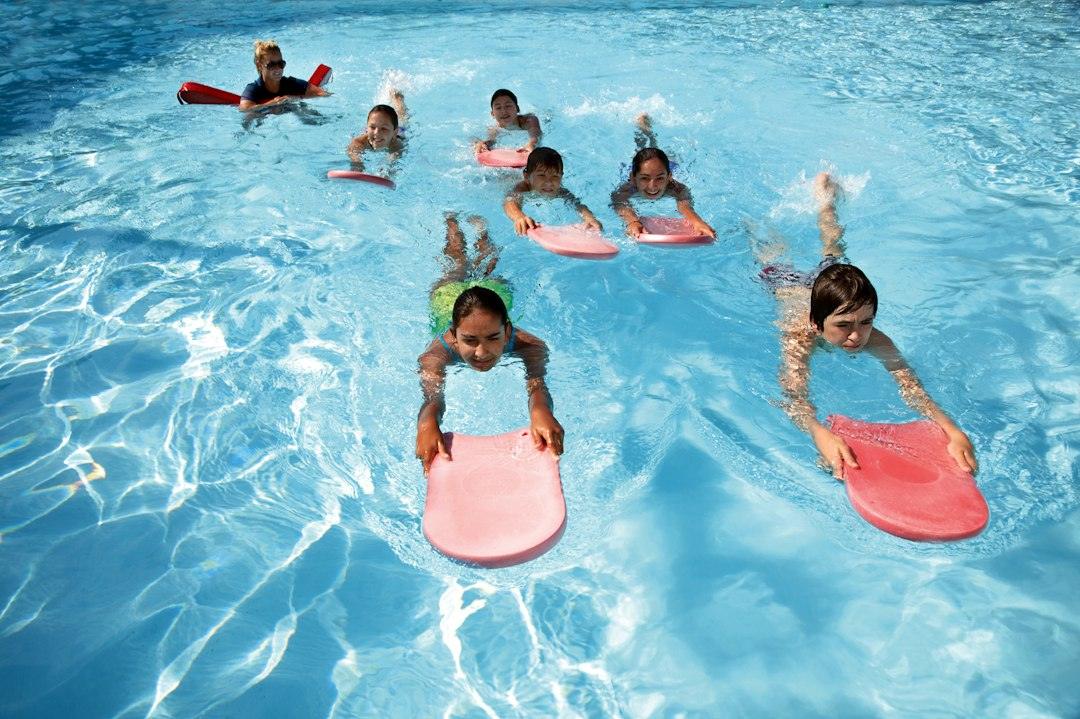
The American Red Cross Learn-to-Swim program runs on six numbered levels, typically for swimmers around age 5 and up. Level 1, Introduction to Water Skills, is about comfort: entering and exiting the water, blowing bubbles, bobbing, and basic floats with support. Level 2, Fundamental Aquatic Skills, builds independence — submerging, floating without help, and changing direction while moving through the water.
Level 3, Stroke Development, is where real strokes start: a rough front crawl and elementary backstroke, plus an introduction to scissor and dolphin kicks. Level 4, Stroke Improvement, adds endurance and headfirst dives, and introduces breaststroke, sidestroke, and butterfly alongside flip turns. Level 5, Stroke Refinement, polishes all six strokes and starts prepping stronger swimmers for lifeguarding, competitive swimming, or diving tracks, and Level 6 is less a class and more a branch point into fitness swimming, diving, or Water Safety Instructor pathways.
For kids roughly ages 4-5 who aren’t quite ready for the numbered levels, many Red Cross-affiliated pools also run a separate Preschool Aquatics track with its own smaller progression before feeding into Level 1.
How the YMCA stages compare
The YMCA uses a three-phase system instead of six numbered levels. Swim Starters (Stages A-B) is for roughly 6 months to 3 years old and is a parent-and-child class — you’re in the water with your toddler, working on comfort, body position, and basic safety habits rather than independent swimming.
Swim Basics (Stages 1-3) is where independent swimming begins, split into a preschool track (roughly ages 3-5) and a school-age track (roughly 6-12), both built around the same core goal: getting a swimmer who falls into water to safely resurface, turn, and swim to safety. Swim Strokes (Stages 4-6) is the stroke-technique phase, where kids refine front crawl and backstroke, then layer in breaststroke and butterfly, along with endurance and turns.
Roughly speaking, YMCA Stages 1-2 line up with Red Cross Level 1-2, YMCA Stage 3 overlaps with Red Cross Level 2-3, and YMCA Stages 4-6 map onto Red Cross Levels 3-5. If you’re switching pools or systems, ask the new facility for a placement swim test rather than assuming the numbers transfer directly.
Tips for picking the right class
Ask for a skills-based placement, not an age-based one. Most pools will do a quick in-water evaluation — take it even if it feels like an extra step, since it’s the fastest way to avoid a class that’s too easy or too scary.
Watch one class before committing to a session if you can. A good fit looks like a child who’s mildly challenged but not panicked; if your child is clinging to the wall the whole time or visibly bored, flag it to the instructor so they can move up or down a level.
Expect repeats. It’s normal and common for a child to repeat a level, especially the stroke-development levels — that’s a sign the curriculum is doing its job, not that your child is behind.
Don’t chase strokes before safety. A child who can do a pretty front crawl but panics when they fall in unexpectedly hasn’t actually met the goal of these programs. Water-safety skills (floating, resurfacing, swimming to an exit) matter more early on than how polished the stroke looks.
If your child has a fear of water, look specifically for small-group or private lessons at the entry level rather than a standard group class — fear is usually a comfort problem, not a skill problem, and needs more individual attention than a 4:1 group class provides.
Explore more: more youth sports guides.
Swim lesson levels FAQs
What swim level should a 6-year-old start at?
It depends entirely on prior water exposure, not age. A 6-year-old who’s never had lessons typically starts at Red Cross Level 1 or YMCA Swim Basics Stage 1, the same entry point as any other beginner. Age mainly determines whether a child is old enough for an independent (no-parent-in-pool) class, not which skill level they start at.
How long does it take to move up a swim level?
It varies a lot by child and by how often they practice between sessions. Some kids move up after one multi-week session; others repeat a level two or three times, especially the stroke-development levels. Instructors generally assess readiness at the end of each session rather than on a fixed timeline.
Do Red Cross and YMCA swim levels transfer between pools?
Not directly — the two systems use different names and slightly different skill checkpoints. If you’re switching from a Red Cross-based program to a YMCA one (or vice versa), ask the new pool for a placement swim test instead of assuming your child’s old level number or letter carries over exactly.
Level Up With SportsSteps
Track your athlete’s progress, connect with coaches and your team, and grow — get the SportsSteps app. Get the SportsSteps App.
Want training tips and sports news in your inbox? Subscribe to the free newsletter.
Photo: U.S. Navy photo by Courtney Pollock / Public domain, via Wikimedia Commons.