
You raised your hand at sign-ups, and now you’re the coach. Maybe nobody else would do it, maybe your kid begged you, or maybe you just figured someone had to — either way, you’ve got a team, a practice schedule, and absolutely no idea where to start.
The good news: at the recreational level, you don’t need a playing background or a coaching license to do this well. You need a simple practice plan, a few ground rules, and a realistic idea of what a good season actually looks like. This guide walks through exactly that, from your first practice to the trickiest parts of game day.
Quick Answer
To coach a youth team with no experience: complete basic training through a program like the National Alliance for Youth Sports (NAYS) Coach Training & Membership Program, keep practices short and active with minimal standing in line, set 1-2 clear goals for the season (fun and basic skills, not winning), and communicate ground rules to parents before game one. Lean on your league’s coordinator and any assistant coaches for the technical stuff you don’t know yet.
Before Your First Practice
Take whatever training your league offers, even if it feels optional. Many rec leagues run through the National Alliance for Youth Sports (NAYS), whose Coach Training & Membership Program (the successor to what was once called NYSCA) is built specifically for volunteer coaches with no background — it covers basic safety, age-appropriate expectations, and sport fundamentals through a short video, an exam, and a coaching code of ethics, and membership typically includes liability insurance coverage for coaches. If your league doesn’t require it, you can usually still complete it on your own through NAYS directly.
Set your actual goal for the season before you set foot on the field. For younger age groups especially, the realistic goal isn’t a winning record — it’s that every kid wants to come back next season. Decide that now, say it out loud to yourself, and it’ll make every other decision (playing time, practice drills, how you react to a bad call) easier.
Recruit at least one assistant coach, and lean on your league’s age coordinator or a veteran coach for sport-specific questions. You don’t have to know every rule or drill on day one — you just need someone one phone call away who does.
Send parents a short note before practice starts: practice days/times, what to bring, your contact info, and one or two expectations (arrive on time, bring water, let you know about absences). This heads off half the confusion of week one.
Running Practices Kids Actually Want to Come Back To
Keep kids moving. The single biggest mistake new coaches make is lining kids up and having them wait for a turn — at younger ages especially, standing around is when attention and behavior fall apart. Bring enough balls or equipment that every kid has one, or close to it, and build drills where multiple kids are active at the same time.
Pick one or two focus skills per practice, not ten. A practice that drills one or two things well (say, dribbling and a simple pass) beats a practice that tries to cover everything and sticks to nothing.
Use short, simple instructions. When you’re talking to the group, take a knee so you’re at their eye level, face away from the sun so they can see you, and keep it to under a minute. Long speeches lose kids fast, especially the younger ones.
Build in a water break and some unstructured fun — a scrimmage or a favorite game — near the end of practice. Kids remember how practice ended more than how it started.
Plan practice on paper (even just a few bullet points) before you show up. A rough plan beats improvising in front of fifteen kids and their parents every time.

Tips / Common Mistakes
Don’t try to replicate what you’ve seen on TV. Pro-style drills and strategy are usually wrong for the age group — keep things simple and age-appropriate, and trust your league’s training materials over instinct.
Don’t skip the parent conversation. Most conflict during a season comes from unclear expectations around playing time, communication, or behavior at games — not from skill issues. A short pre-season message or meeting prevents most of it.
Don’t coach from the sideline the way players do on TV, yelling instructions mid-play. Kids at the rec level generally learn more from practice repetition than from in-game correction.
Expect it to feel harder than you thought. Most first-time coaches go in with high hopes and find that not having control over outcomes (every kid improving at the same pace, every game going well) is the hardest part. That’s normal — find another coach, even from a different team, to compare notes with.
Don’t ignore safety basics. Know your league’s policy on weather, injuries, and head injuries/concussion protocol before the season starts, not after someone gets hurt. Your league coordinator can point you to the exact policy.
Explore more: More youth sports coaching and training guides.
First-time volunteer coaching FAQs
Do I need any certification to volunteer coach a rec league team?
Most recreational leagues don’t legally require certification, but many either require or strongly recommend a basic training program like the NAYS Coach Training & Membership Program, which covers safety and age-appropriate coaching basics and is usually low-cost through your league or NAYS directly.
How long should practices be for young kids?
For the youngest age groups, 45-60 minutes is usually plenty — shorter, high-energy practices with lots of movement work better than long ones with a lot of standing around.
What if I don’t know the sport well?
Lean on your league’s coaching materials, recruit an assistant coach with more experience, and ask your age coordinator questions as they come up. Most rec leagues expect first-time coaches and have support built in.
How do I handle a parent who’s upset about playing time?
Set and share your playing-time approach before the season starts so there are no surprises, then address any complaint one-on-one and calmly, away from the kids. Most issues come from unclear expectations, not bad intentions.
What’s the single most important thing for a first-time coach to focus on?
Making sure every kid wants to come back next season. If you keep practices active, keep instructions short and positive, and treat every kid fairly, the rest of the season tends to fall into place.
Level Up With SportsSteps
Track your athlete’s progress, connect with coaches and your team, and grow — get the SportsSteps app. Get the SportsSteps App.
Want training tips and sports news in your inbox? Subscribe to the free newsletter.
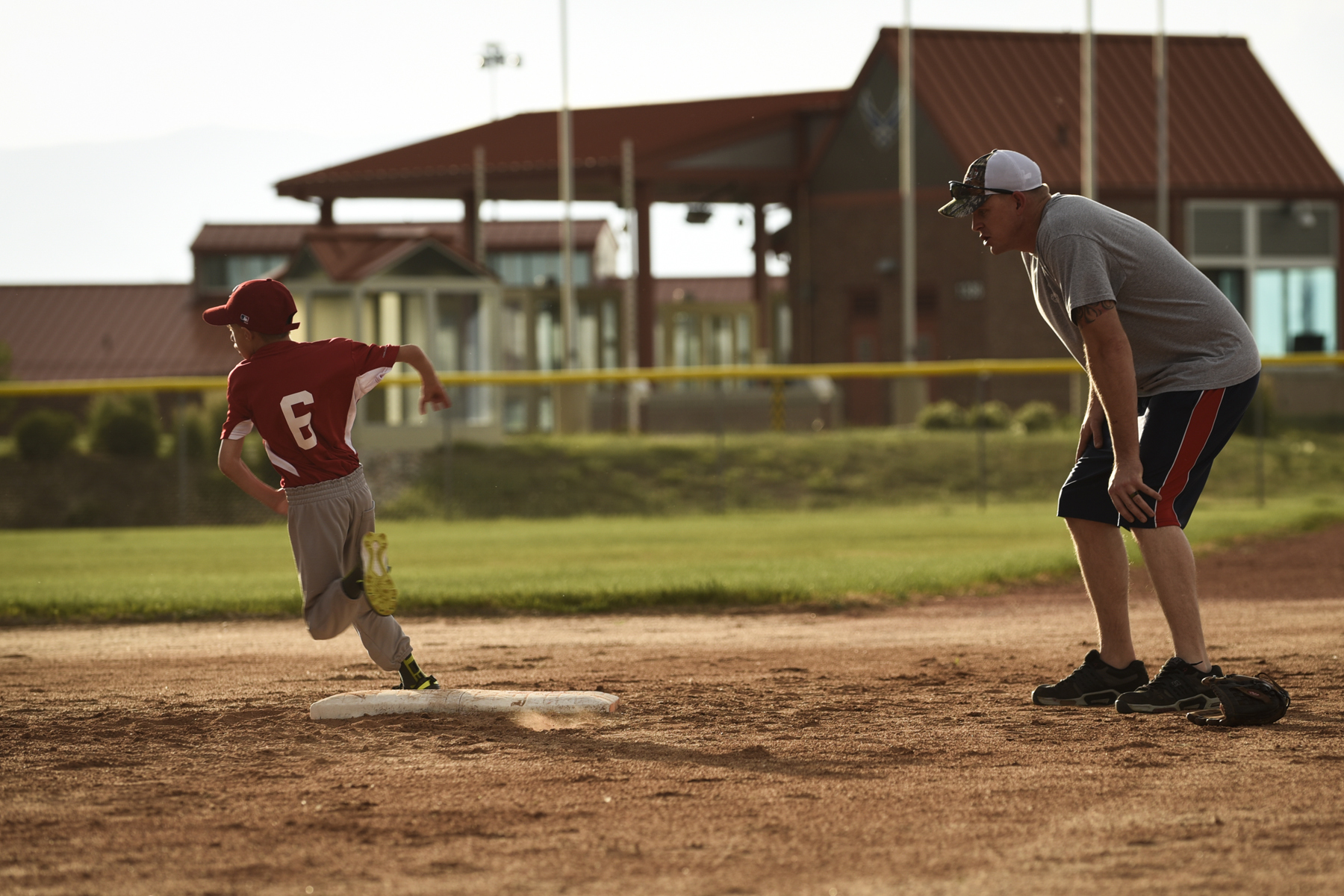
Photo: USAG- Humphreys / CC BY 2.0, via Wikimedia Commons.