If your middle- or high-schooler just joined the cross country team, a GPS running watch can be one of the most useful (and most reasonably priced) pieces of gear you buy them. It tracks pace during workouts, logs mileage for the season, and helps them learn to run by feel instead of guessing splits.
The good news is you don’t need to spend $400+ on a triathlon-grade multisport watch for a 13-to-18-year-old runner. Several watches under $250 cover everything a youth cross country athlete actually needs — solid GPS accuracy, lightweight comfort for a smaller wrist, and simple enough menus that they’ll actually use it. Here’s how to pick the right one.
Quick Answer
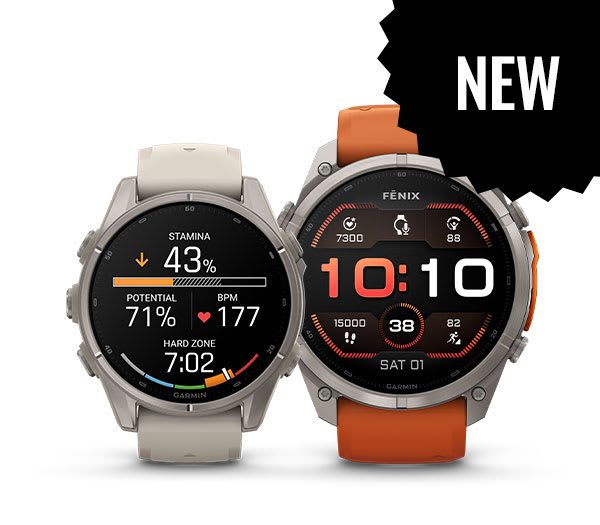
For most youth cross country runners under $250, the Garmin Forerunner 165 ($249.99) and the Coros Pace 4 ($249) are the top picks — both have AMOLED touchscreens, race predictors, and multi-day battery life, though the Pace 4 adds dual-frequency GPS while the Forerunner 165 uses Garmin’s standard single-band, multi-satellite tracking. If budget matters more than having the newest model, the Coros Pace 3 (MSRP $229, frequently discounted) is excellent value, also has dual-frequency GPS, and still has everything a high schooler needs for training and racing.
What to Look for in a Youth Cross Country Watch
Wrist size and weight come first. Teen and pre-teen wrists are often smaller than an adult’s, so a lighter, slimmer case (under about 40g) is more comfortable for runs and won’t feel bulky during a race. Look at the case diameter (around 42-43mm is the sweet spot) and check the strap’s minimum wrist-circumference spec before buying.
GPS accuracy matters more than almost any other spec, since cross country courses wind through grass, trees, and open fields where weaker GPS chips can lose the signal. Dual-frequency (also called multi-band) GPS, used in the Coros Pace 3 and Pace 4, holds a lock better under tree cover than single-band tracking. The Garmin Forerunner 165 uses single-band tracking across multiple satellite systems (GPS, GLONASS, and Galileo) rather than dual-frequency — it’s still accurate for most open-field courses, just not quite as resistant to signal bounce in heavy tree cover as a dual-frequency watch.
Battery life should comfortably cover a week of practices plus a Saturday race without a mid-week charge — look for at least 10-15 hours of continuous GPS tracking, or multi-day battery in smartwatch mode. Also check for basics like interval/auto-lap support for repeats, a stopwatch and lap-pace display that’s easy to read mid-stride, and simple five-button or touchscreen navigation so a young runner isn’t fumbling with settings before a meet.
Log training and see progress over time. Start logging free →
Top Picks Under $250
Garmin Forerunner 165 ($249.99) — This is the easiest overall recommendation. It has a 1.2-inch AMOLED touchscreen, weighs about 39g, and runs up to 11 days in smartwatch mode (around 19 hours in standard GPS mode, or about 17 hours with all satellite systems on). It includes Garmin Coach guided training plans, a race predictor for 5K through marathon pace, VO2 max estimate, and recovery tracking — genuinely useful features for a high schooler working toward a season PR, without the cost of Garmin’s higher-end Forerunner models that add dual-frequency GPS.
Coros Pace 4 ($249) — COROS’s lightest AMOLED watch yet, around 32g with the nylon band, with dual-frequency GPS and a notably long battery life for an AMOLED watch (COROS lists up to roughly 19 days of daily use, around 41 hours of standard high-accuracy GPS tracking, and about 31 hours in dual-frequency mode). It’s an excellent choice if your runner wants a watch light enough to forget they’re wearing it, plus the most accurate GPS tracking of the three.
Coros Pace 3 (MSRP $229, often on sale) — The previous-generation Pace is still sold and still very good: about 30g, also dual-frequency GPS, and roughly 38 hours of standard GPS battery life (about 15 hours in dual-frequency mode). Since it’s a generation old, it’s frequently discounted below its list price, making it the best value pick if you want to spend less and don’t need the newest AMOLED display.
If your runner has a notably small wrist (common with younger middle schoolers), physically try the watch on before buying, or check the band’s minimum circumference spec on the manufacturer’s site — a loose strap on a tiny wrist can still feel awkward during a race.

Tips / Common Mistakes
Don’t overspend on multisport features your runner won’t use. Triathlon watches with solar charging, offline maps, or advanced cycling dynamics add significantly to the price for features a cross country-only athlete rarely touches. Stick to a dedicated running watch in the sub-$250 range.
Set up auto-lap by distance (one mile or 1km) before the first practice, so splits show up automatically without your runner needing to press a button mid-stride. Also check your state and league rules — some cross country meets restrict GPS watches with pace alerts during the actual race (to prevent real-time coaching via audible pace cues), even though they’re fine for training. Have your runner check with their coach before wearing one in a meet.
Charge it the night before race day, not the morning of — most of these watches charge from empty in under two hours, but teenagers (and parents) forget. Finally, buy a case or make sure the watch is rated for at least 5 ATM water resistance; sweat, rain, and the occasional post-race hose-down are a given in cross country season.
Explore more: more training and performance gear guides.
GPS watch for youth cross country runners FAQs
Is a GPS watch necessary for a youth cross country runner?
It’s not required — many runners train fine with just a stopwatch and a coach’s splits — but a GPS watch helps a young runner learn pacing, track weekly mileage to avoid overtraining, and see progress over a season, which is motivating for a new runner.
What’s the best cheap alternative if $250 is still too much?
The Coros Pace 3 regularly discounts below its list price, and older Garmin Forerunner models sometimes show up at closeout prices well under $200 at retailers while supplies last — just confirm it’s a new, not used, battery before buying.
Do youth cross country watches need a heart rate monitor?
All three watches above include built-in wrist heart rate, which is useful for understanding effort level, but it’s a nice-to-have rather than essential for most youth runners — pace and distance tracking matter more for cross country training.
Level Up With SportsSteps
Log training and see progress over time
Pair your gear with a free training log, progress tracking, and an AI coach for your sport.
Start logging freeFor families, athletes, coaches & clubs
Want training tips and sports news in your inbox? Subscribe to the free newsletter.
Images: Garmin.