
Stepping back onto the field, court, or trail after a long layoff is exciting, but your body isn’t where you left it. Even a few weeks of total inactivity triggers real losses in cardiovascular fitness, strength, and movement sharpness, and jumping straight back into your old training load is one of the most common ways athletes get hurt.
This guide walks through what actually happens to your fitness during time off, how to structure your comeback in progressive phases, and the mistakes that turn an exciting return into a setback.
Quick Answer
Rebuild fitness in progressive phases rather than on a fixed calendar: start at a fraction of your old training volume and intensity, add roughly 10% more volume per week, prioritize low-impact cardio and basic strength work first, and only reintroduce sport-specific speed, cutting, and contact once your base conditioning returns. How long the whole process takes depends heavily on how long you were out — a reasonable planning rule is that reconditioning after a long layoff often takes about as long as the layoff itself, sometimes longer, so a break of several months can mean a comeback stretching well beyond two months.
What Happens to Your Body During Time Off
Cardiovascular fitness is the first thing to slip. Noticeable drops in aerobic capacity can begin within about two to three weeks of no cardio activity, driven largely by a reduction in blood volume and how efficiently your heart moves oxygen to working muscles. The longer the break stretches into months, the more of that aerobic fitness erodes, though well-trained athletes tend to hold onto a meaningful base even after extended time off.
Strength holds up somewhat longer than cardio, especially if the break is a few weeks rather than several months, but connective tissue — tendons and ligaments — adapts far more slowly than muscle in either direction, since it’s built mostly of collagen with a much slower turnover rate. That mismatch is a big part of why comeback injuries (tendon strains, joint tweaks) happen: your muscles and motivation can rebuild noticeably faster than your tendons and ligaments are ready to handle.
The good news: previously trained fitness comes back faster than it was built the first time, since your body retains a kind of muscle memory. But ‘faster than from scratch’ still isn’t fast — after a layoff of several months, plan on a reconditioning period that’s a substantial fraction of the time you were out, not a quick few weeks, and longer still if the break followed an injury or surgery.
A Phased Return-to-Training Plan
Phase 1 — Rebuild the base. Do easy-to-moderate cardio (walking, cycling, swimming, light jogging) three to four times a week, plus two short bodyweight or light-resistance strength sessions covering major movement patterns (squat, hinge, push, pull, core). Keep effort conversational — you should be able to talk through most of it. A reasonable starting point is somewhere around a quarter of your previous training volume, scaling down further the longer you were off.
Phase 2 — Add volume and basic intensity. Increase total training time by roughly 10% per week, introduce a bit more resistance in strength work, and start light sport-specific drills (easy ball-handling, footwork patterns, technique work) without full speed or contact. Stay in this phase as long as it takes to progress without lingering soreness — for a layoff of a few weeks that might be one to two weeks; for a layoff of several months it can take considerably longer.
Phase 3 — Reintroduce intensity. Add intervals or tempo work to cardio sessions, increase strength loads toward your prior working weights, and bring in moderate-speed agility and change-of-direction drills once Phase 2 feels comfortable, not on a fixed date.
Phase 4 — Sport-specific and contact work. Full-speed sprints, cutting, scrimmage-style practice, and contact (where applicable) come last, once you can handle the volume and intensity of Phase 3 without soreness that lingers more than a day or two.
Treat the phases as checkpoints you earn by how your body responds, not a countdown. Athletes coming back from several months off, older athletes, or anyone returning from injury or surgery should expect the full arc to run considerably longer than someone returning from a two- or three-week break.

Tips and Common Mistakes
Get cleared first if the break was due to injury, surgery, illness, or a significant medical event — a quick check-in with a doctor or physical therapist before ramping up training is worth the time.
Don’t match your old workout numbers right away. The single biggest cause of comeback injuries is doing what you used to do, at the intensity you used to do it, in week one.
Prioritize sleep, protein intake, and hydration during the rebuild — tissue adaptation (tendons and ligaments catching up to muscle) depends heavily on recovery quality, not just training.
Expect some muscle soreness, but treat sharp joint pain, lingering swelling, or pain that gets worse session to session as a signal to back off and reassess rather than push through.
Warm up longer than you think you need to. Tendons and connective tissue that have been dormant need more preparation time before they’re ready for sprinting or cutting.
Track how you feel, not just what you did. Two consecutive sessions of unusual fatigue or soreness is a cue to hold at your current phase for a few extra days before progressing, regardless of what week number you’re on.
Explore more: more training and performance guides.
Rebuilding fitness after a long break from sports FAQs
How long does it take to get back in shape after a long break?
It depends heavily on how long you were out. A useful planning rule is that reconditioning after a long layoff often takes roughly as long as the layoff itself, sometimes longer — so a break of a few weeks might mean a few weeks back, while a break of several months can mean a comeback that stretches well beyond two months, especially if the break included an injury or surgery.
Do you lose fitness faster than you gain it?
Yes. Fitness is generally lost faster than it’s built, but because your body has adapted to training before, you regain it faster than you built it from scratch the first time — though for long layoffs that still means a reconditioning period measured in months, not weeks.
Is it better to focus on cardio or strength first when coming back?
Build a light cardio base and basic full-body strength in parallel during the first phase, then layer in sport-specific speed and power work once that foundation feels solid, regardless of how many calendar weeks that takes.
Why do athletes get injured when returning to sports after time off?
Muscles and motivation tend to recover faster than tendons and ligaments, so resuming old training loads or sprinting and cutting too soon puts stress on connective tissue that hasn’t caught up yet.
Level Up With SportsSteps
Track your athlete’s progress, connect with coaches and your team, and grow — get the SportsSteps app. Get the SportsSteps App.
Want training tips and sports news in your inbox? Subscribe to the free newsletter.
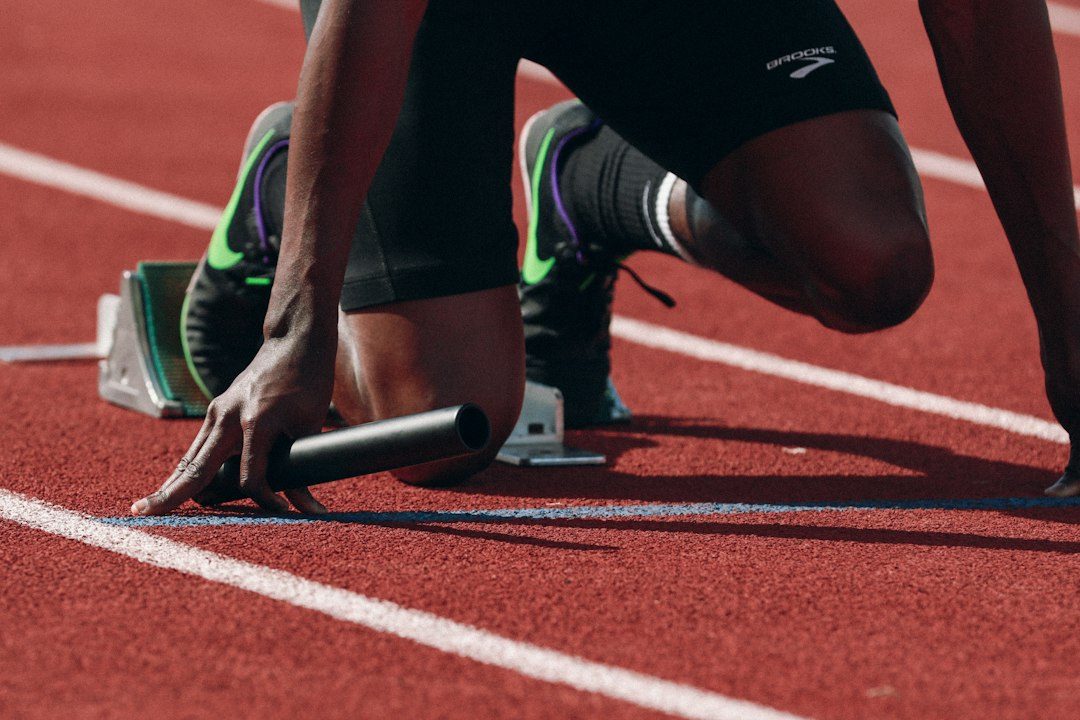
Photo by Braden Collum on Unsplash.