
Watching a child gas out after one lap can make endurance feel like a mystery, but stamina in the water is built the same way it is on land: gradually, consistently, and with enough recovery to let the body adapt. Kids don’t need adult-style distance training to swim longer and stronger — they need a plan that matches their age, current skill level, and attention span.
This guide breaks down a progressive approach to building swimming endurance in kids, from beginners who can barely finish a pool length to age-group swimmers working toward longer sets — plus a dedicated section on the kind of targeted conditioning that actually prepares a child for school or club swim team tryouts. You’ll get a step-by-step framework, sample practice sets by level, and the most common mistakes that stall progress or lead to burnout.
Quick Answer
Build swimming endurance in kids by increasing total distance gradually, using interval sets with generous rest at first, and training consistently 2-4 times a week rather than doing one long, exhausting session. For a child aiming for a school swim team, the targeted approach is the same principle applied with a goal in mind: short-rest interval sets (like repeated 25s, 50s, or 100s) to build race-specific stamina, technique work across all four competitive strokes, and light dryland conditioning, started roughly 6-8 weeks before tryouts rather than crammed in at the last minute.
Start With Technique, Not Distance
A child who swims with poor form burns energy fast and fatigues early, so before adding yardage, make sure strokes are efficient — a long, controlled freestyle stroke with steady breathing will always out-endure a frantic, splashy one. Even five minutes of drill work (streamline kicks, bilateral breathing practice, catch-up drills) at the start of a session pays off over weeks, and it matters even more for a child prepping for tryouts, since coaches evaluating new swimmers typically weigh legal, sustainable technique as heavily as raw distance.
Match the Plan to Your Child’s Current Level
A true beginner might only manage one pool length without stopping; an intermediate swimmer might handle 100-200 meters continuously; a club-level age grouper may already swim well beyond that per practice. Pick a realistic starting volume and build from there rather than copying a plan meant for a different level — trying to force a beginner into an advanced set is one of the fastest ways to kill motivation before it kills fatigue.
Build Endurance With Interval Sets, Not One Long Grind
Continuous swimming is harder to sustain for kids both physically and mentally, so break endurance work into repeated distances with rest between. A beginner-friendly structure is short-rest, short-distance repeats: for example, 4-8 x 25 meters with 20-30 seconds rest, gradually shifting toward 4-6 x 50 meters with 15-20 seconds rest as fitness improves. For newer swimmers, a generous work-to-rest ratio keeps effort sustainable; more experienced swimmers can tighten that ratio over time as their aerobic base grows.
Add distance, reduce rest, or increase the number of repeats — but change only one of these per week or two. A gradual weekly increase in total session distance is enough to challenge the body without overloading it. Ladder or pyramid sets also work well for endurance because they build a sense of pacing: something like 50m-100m-150m-100m-50m, with short rest between each, teaches kids to manage effort across a changing distance rather than just swimming hard until they stop.
Targeted Endurance Training for a Child Joining a School Swim Team
The endurance building that best prepares a child for a school or club swim team is race-specific interval conditioning, not long unbroken swims. Coaches at tryouts are generally checking whether a swimmer can hold legal technique across a distance, not how far they can grind through fatigue — so the most useful sets are repeated distances with short rest, like 4-6 x 50 meters or 4 x 100 meters at a steady, controlled pace, mixed with shorter sprint repeats so a child can handle both the pace and the finish of a tryout swim. What’s expected physically varies by age: younger swimmers (roughly ages 8-10) are typically asked to cover one or more pool lengths of freestyle and backstroke without stopping, while older swimmers (around 11-12 and up) are usually expected to be comfortable in all four competitive strokes and able to hold distances like 50 yards in each stroke, with some programs asking for 100 yards freestyle or an individual medley.
Because tryouts reward consistency more than a single big push, start targeted conditioning roughly 6-8 weeks out rather than cramming yardage in the final week — 3-4 pool sessions a week that combine technique work, interval sets, and short sprints builds the kind of durable stamina that holds up under evaluation. Light dryland conditioning (bodyweight moves like squats, planks, and push-ups) a couple of times a week supports general cardiovascular endurance without adding pool fatigue. In the final few days before tryouts, ease off volume slightly so the child arrives with fresh legs and a clear head instead of accumulated fatigue — technique executed with confidence under mild fatigue reads far better to a coach than a swimmer who is exhausted but ‘trained hard.’
Sample Endurance Sets by Level
Beginner (can swim 1-2 lengths without stopping): Warm up with easy kicking on a board, then 6-8 x 25m freestyle with 20-30 seconds rest, finishing with a relaxed 50m cool-down swim or float. Focus entirely on breathing rhythm and a long stroke, not speed.
Intermediate (comfortable swimming 100-200m continuously): Warm up with a 100-200m easy swim, then a main set such as 4 x 100m at a steady, sustainable pace with 20-30 seconds rest, followed by a short ladder like 50m-100m-50m with light rest. Add a kick set with fins or a board to build leg endurance without overloading the arms.
Tryout-focused/age-group (training 3-4+ times a week): Warm up with 300-400m of mixed strokes and drills, then repeat sets across all four strokes such as 4-6 x 50m per stroke with 20-30 seconds rest, plus one longer interval set like 4 x 100m freestyle with the second half of each 100m slightly faster than the first. Finish with a few short, fast sprints (25m) to simulate the effort a tryout swim actually demands.
Tips and Common Mistakes
Don’t chase distance before technique is solid — a tired, poorly-formed stroke teaches bad habits that are hard to undo later and increases the risk of shoulder strain, especially in freestyle and butterfly. Avoid jumping straight to long continuous swims; interval work with rest lets a child accumulate more total endurance-building yardage than they could manage in one unbroken swim, and it keeps motivation higher.
Watch for overtraining signs: persistent fatigue, declining performance despite training, loss of interest, or complaints of shoulder or joint pain. Kids need adequate rest days and sleep for endurance gains to actually show up. Keep it engaging with games, relay-style sets, or simple goals like beating last week’s time on a set, and build in a taper before a big swim test, meet, or tryout — reducing volume slightly in the days before an event lets accumulated fatigue clear so endurance gains actually show up in performance.
Photos
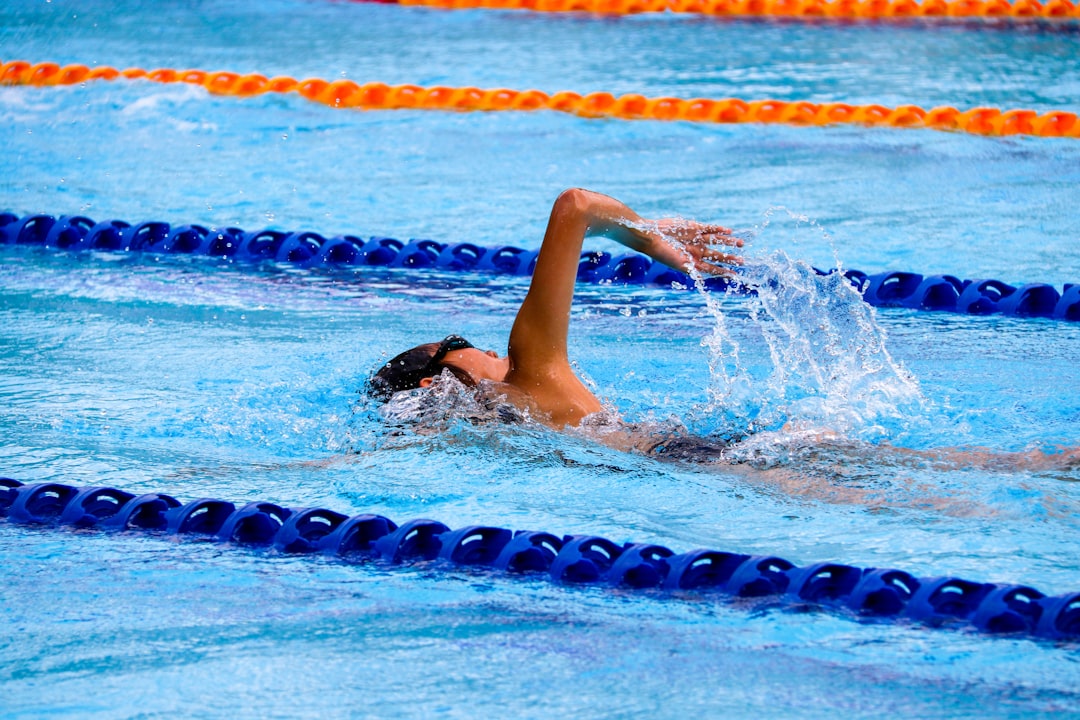
swim team tryout endurance training for kids FAQs
What kind of targeted endurance building is recommended for a child who aspires to join a school swim team?
Race-specific interval training rather than long continuous swims: repeated sets like 4-6 x 50m or 4 x 100m across all four competitive strokes with short rest, paired with a few sprint repeats and light dryland conditioning. Start about 6-8 weeks before tryouts with 3-4 pool sessions a week, prioritizing legal technique over raw distance, and taper volume slightly in the final days so the child arrives rested rather than fatigued.
At what age should kids start endurance-focused swim training?
Endurance-specific training is most appropriate once a child has solid basic stroke technique and water comfort, which for many kids falls somewhere in the 6-8 year-old range. Before that, the priority should stay on comfort, breath control, and basic stroke mechanics rather than building distance.
How long before tryouts should a child start conditioning?
Roughly 6-8 weeks is a reasonable window for most kids. That’s enough time to build interval-based stamina and stroke consistency gradually without needing to cram yardage in the final week, which tends to increase fatigue and hurt performance on tryout day instead of helping it.
How many days a week should a child train to build swimming endurance?
For most youth swimmers, 2-4 pool sessions a week that mix technique, interval sets, and some continuous swimming is enough to see steady improvement over a matter of weeks, especially when paired with rest days for muscle recovery. Kids preparing for tryouts often lean toward the higher end of that range, 3-4 sessions weekly.
What’s the difference between interval training and continuous swimming for kids?
Interval training breaks a distance into repeated shorter swims with rest in between (like 6 x 50m), which lets a child accumulate more total endurance-building yardage with better form and higher motivation than one unbroken swim. Continuous swimming — sustaining one long, uninterrupted swim — is harder for kids to hold both physically and mentally, so it’s generally introduced later, once a child already has an interval-built aerobic base.
Level Up With SportsSteps
Track your athlete’s progress, connect with coaches and your team, and grow — get the SportsSteps app. Get the SportsSteps App.
Want training tips and sports news in your inbox? Subscribe to the free newsletter.