
Not every team gets a turf field with two sets of goals waiting at practice time. If your group is stuck in a gym, a parking lot, a half-field shared with soccer, or someone’s backyard, you can still run a practice that builds real stick skills, decision-making, and conditioning.
This guide walks through how to substitute for goals, how to shrink the game to fit your space, and which drills give kids the most touches without needing a regulation setup.
Quick Answer
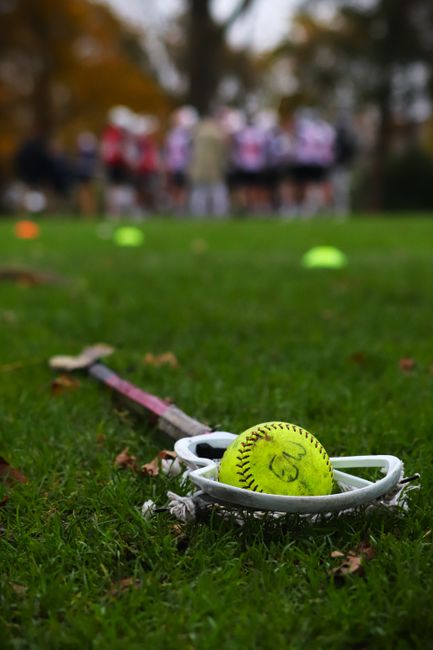
Replace goals with cones, trash cans, or painted lines as targets, and shrink the playing area using small-sided formats like Flex6 Lacrosse (USA Lacrosse’s official small-space, no-goalie version of the game). Fill the rest of practice with wall ball, ground-ball drills, and cone-based passing circuits, all of which need only a stick, a ball, and a few square yards.
Replace the Goal, Don’t Skip It
You don’t need a real goal to teach shooting and finishing. A trash can, a milk crate, or two cones set a stick-length apart works fine as a target for shooting drills — kids still have to pick a corner and follow through. For game-like reps, USA Lacrosse’s Flex6 Lacrosse format was built exactly for this situation: it’s played in a space about a quarter the size of a normal field, uses a soft ball, has no goalie, and puts a trash can or similar object in the middle of each ‘goal’ area instead of a net. It’s typically run 3v3 on a basketball or tennis court, or 4v4 to 5v5 with a bit more room, and it scales up or down based on how many players and how much space you have.
Because there’s no goalie and no crease to defend, Flex6 keeps the focus on ball movement, cutting, and catching under pressure — the same skills a small-sided scrimmage would build on a full field, just compressed into whatever space you’ve got.
Drills That Work in Any Space
Wall ball is the single best use of a blank wall or garage door: players throw right-catch right, throw right-catch left, and run quick-stick reps (catch and release without cradling) to build hands and confidence with both sides of the stick. It needs no partner and almost no space, so it’s ideal for warmups or stations while you work with other groups.
For ground balls, mark a small box with cones, roll or bounce the ball in, and have players explode to scoop it while a teammate applies light pressure. This works on a gym floor, blacktop, or grass patch as small as 10 by 10 yards.
Set four cones as a square or triangle about 10-15 yards apart and run a quick-pass circuit: players pass and then immediately move to a new cone, forcing constant communication and passing on the run. Add a defender or two in the middle for a 4v3 or 3v2 possession drill, which teaches spacing and support without needing anything resembling a real field.
A cone line for stick-handling agility (cones spaced about 5 yards apart, switching hands at each one) is another space-saver that builds dodging mechanics in a hallway-sized strip of ground.
Tips / Common Mistakes
Don’t try to cram a full-field offense or defense into a tiny space — it just creates a pile-up. Shrink the number of players on the ball (3v3 or 4v4) rather than shrinking a bigger drill to fit.
Use a softer ball (like the Flex6 ‘pinkie’ ball or a tennis ball) indoors or in tight spaces near windows and cars — a standard hard lacrosse ball is unnecessary risk in confined areas.
Rotate players through wall ball, ground balls, and small-sided possession stations rather than running one drill for the whole practice. Short, high-repetition stations keep engagement up when you don’t have the room to spread kids out.
Don’t skip conditioning just because there’s no field to run sprints on — shuttle runs between cones or defensive slide drills in a confined grid still get the job done.
Explore more: More youth lacrosse coaching guides.
Youth lacrosse practice without goals or a field FAQs
Can you actually teach shooting without a goal?
Yes. A trash can, milk crate, or cone target still forces players to pick a spot and follow through, which is the core skill. Add a passive or light defender once accuracy is solid.
What is Flex6 Lacrosse?
It’s USA Lacrosse’s official small-sided, non-contact format designed for tight spaces like courts or gyms. It’s played with no goalie, a soft ball, and as few as 3 players per side in roughly a quarter of a normal field’s space.
How much space do I actually need for a solid practice?
Less than you’d think. Wall ball needs a single wall, ground-ball and cone drills fit in a 10×10 yard box, and small-sided games can run on a basketball court or large driveway.
Level Up With SportsSteps
Track your athlete’s progress, connect with coaches and your team, and grow — get the SportsSteps app. Get the SportsSteps App.
Photo: (User:Wgreaves) / Public domain, via Wikimedia Commons.