
Most young players don’t lose points because they lack power – they lose them because the serve never clears the net or sails out of bounds. Before a beginner ever worries about hitting harder, the toss, the stance, and a firm wrist need to become automatic.
This guide breaks down a simple coaching progression you can run in any practice: drills that lock in consistency first, then layer in power and target accuracy once the basic motion is reliable. Grab a cart of balls, a few cones, and some tape, and you’re ready to go.
Quick Answer
Start beginners with toss-and-catch reps to groove a consistent ball drop, add the step-and-swing motion once the toss is reliable, then build power by stepping further back from the service line in stages. Layer in target zones only after serves are consistently clearing the net – accuracy training before consistency just reinforces bad habits.
Step-by-Step Serving Progression
1. Dummy serve (no ball). Have players walk through the full motion – stance, toss arm up, step, swing – without a ball, saying the cues out loud (“toss, step, swing”). This builds rhythm before contact ever matters, and it’s the fastest way to fix footwork or arm-swing errors without a ball rolling away to chase.
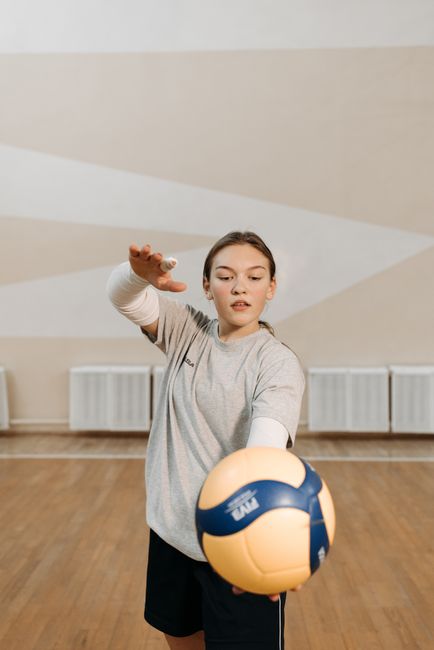
2. Toss-and-catch drill. Players toss the ball out in front of their hitting shoulder and let it drop, catching it instead of swinging. Put a strip of tape on the floor marking the ideal drop spot and have each player toss and let the ball land on or near it ten times in a row before moving on. A toss that drifts behind the shoulder or out to the side is the number one cause of serves going into the net or wide.
3. Add the swing. Once the toss is consistent, players serve for real from close range (halfway between the service line and the net), focusing only on clean contact – heel of the hand striking the middle of the ball, wrist firm through contact. Distance doesn’t matter yet.
4. Move back to full distance. Once contact is clean up close, have players back up to the actual service line and repeat the same motion. Some serves will fall short at first – that’s expected, and it’s a cue to work on step and swing power next, not to rush the toss.
5. Layer in targets. Set up five or six target zones on the other side of the net using cones, hoops, or floor markers (deep corners, middle back, short angles). Have players pick one target and serve until they hit it a set number of times in a row before switching zones. This turns practice serving into decision-making practice, which is what actually shows up in games.
Building Serve Power the Right Way
Power for young players comes from the legal transfer of weight into the ball, not from arm strength alone. Have players stand with feet staggered at roughly a 45-degree angle to the net (not square to it), which allows the hips and shoulders to rotate into the serve rather than just swinging the arm.
A simple progression: have players serve 8-10 balls focused purely on a full arm swing and a confident step into the ball, then move them back 3-5 feet and repeat, keeping the same step-and-swing mechanics rather than muscling the ball harder. Power that comes from technique holds up under game pressure; power that comes from a harder arm swing usually falls apart when a player gets nervous.
Off the court, basic core and shoulder strength (planks, band work, medicine ball throws appropriate for the athlete’s age) support serve power over time, but technique reps should always come first for true beginners.
Tips / Common Mistakes
Floppy wrist at contact. A loose wrist or soft hand at the moment of contact is one of the most common reasons a beginner’s serve dies into the net. Cue players to keep the hand firm and finish the swing rather than patting the ball.
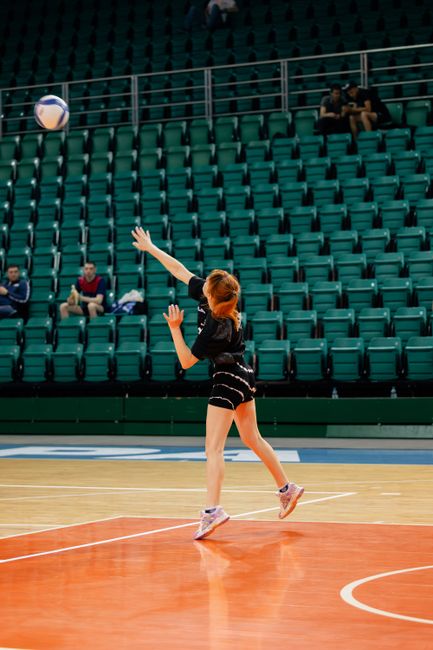
Tossing the ball behind the shoulder or off to the side. This forces an awkward reach and kills both power and direction. The toss should land in the same spot, in front of the hitting shoulder, every single time – that’s why the toss-and-catch drill above is worth repeating often, even with more experienced players.
Chasing power before consistency. Encouraging a young player to “serve it harder” before their toss and contact are reliable usually just adds more misses. Let accuracy and consistency lead; power should be added once the motion holds up.
Skipping the target work. Serving into open space with no target doesn’t transfer to games, where opponents position themselves to receive. Even five minutes of target serving at the end of practice builds the habit of aiming, not just contacting.
Explore more: More Training & Performance guides.
Volleyball serve drills for youth players FAQs
What age should kids start learning the overhand serve?
Many youth programs start players on the underhand serve first to build contact and consistency, then introduce the overhand serve once a player has enough strength and coordination to get the ball over the net consistently – this varies by individual player rather than a fixed age.
How can a beginner get more power on their serve without just swinging harder?
Power comes from a bigger step into the ball, hip and shoulder rotation from a staggered 45-degree stance, and a firm wrist at contact – not from arm strength alone. Swinging harder without fixing the toss and step usually just makes the serve less accurate.
How many reps should a young player serve in practice?
There’s no fixed number that works for every player, but short, focused blocks (for example, ten reps on the toss, then ten on full serves, then targeted serving to specific zones) tend to build good habits faster than large, unfocused rep counts.
Why does my child’s serve keep going into the net?
The most common causes are a toss that drifts behind the shoulder, a floppy wrist at contact, or not stepping into the ball. Fixing the toss with a toss-and-catch drill is usually the fastest way to solve a serve that consistently hits the net.
Level Up With SportsSteps
Track your athlete’s progress, connect with coaches and your team, and grow — get the SportsSteps app. Get the SportsSteps App.
Photo by Vince Fleming on Unsplash.