
If your freestyle feels like you’re working hard but not going anywhere, the culprit is almost always the catch — specifically, a dropped elbow during the underwater pull. The high elbow catch (also called the Early Vertical Forearm, or EVF) is the single most impactful technique fix available to recreational and competitive swimmers alike, and it’s one of the most commonly misunderstood.
This guide breaks down exactly what a high elbow catch is, why it matters, how to feel the correct position, and the drills that will wire it into your stroke for good.
Quick Answer
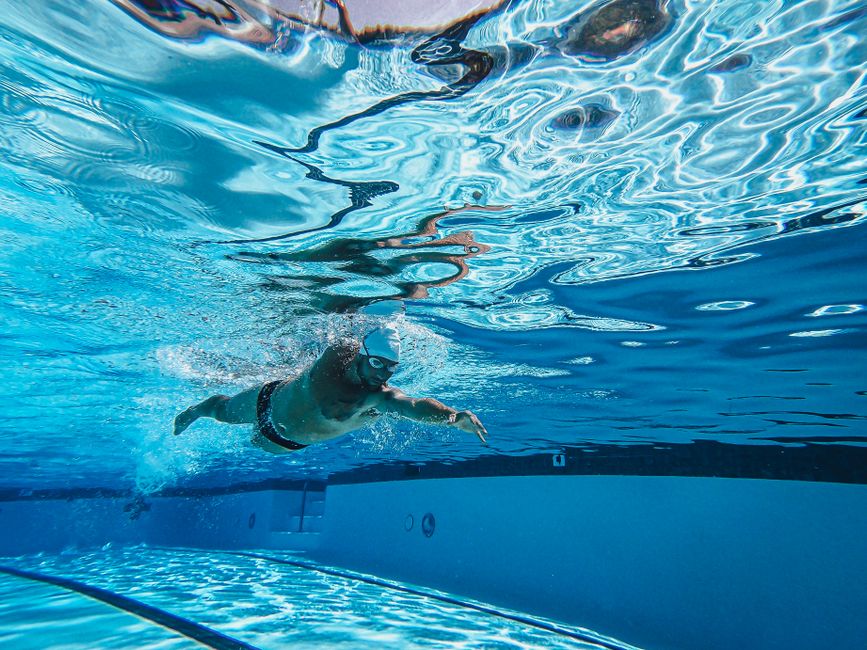
A high elbow catch means keeping your elbow above your wrist and hand during the underwater pull phase of freestyle. The goal is to get your forearm vertical as early as possible after hand entry — creating a large paddle-like surface that anchors against the water so you can pull your body forward rather than just dragging your hand back. When your elbow drops, that surface collapses and you slip through the water instead of gripping it.
What a High Elbow Catch Actually Means
The term ‘high elbow’ confuses swimmers because it sounds like it applies to the recovery (the part of the stroke above water). It doesn’t. The high elbow that matters is underwater, at the moment your hand transitions from reaching forward to pulling back. At that point, your fingertips should be pointing toward the pool bottom, your wrist below your elbow, and your elbow below your shoulder — creating a stacked, vertical forearm.
Think of it using the barrel analogy coaches often use: imagine a large barrel floating just below the surface in front of you. You reach over the barrel and wrap your arm around it — elbow high, hand dropping underneath. That wrapping motion is exactly the shape of a correct catch. What you’re doing is turning your forearm and hand into one rigid paddle blade, then anchoring that blade against the water and pulling your whole body past it using your lats and core. This is far more powerful than pulling with just your hand.
When the elbow drops instead, the forearm faces downward rather than backward. Instead of pushing water behind you, you’re pushing it toward the bottom of the pool — generating lift rather than propulsion. The result is a stroke that looks and feels effortful but produces surprisingly little forward speed.
How to Get Into the Right Position
Start with a dry-land check. Stand facing a wall and raise both arms straight out in front of you at shoulder height, palms down. Now bend your elbows so your fingertips drop toward the floor while your elbows stay up and your forearms hang vertically. That is the catch position. Your elbow should be roughly at shoulder level, your wrist below your elbow, your fingertips pointing down. Hold it and feel how the forearm faces backward — that’s the direction you want to push water when you’re in the pool.
In the water, the sequence goes like this: hand enters the water fingertip-first in front of your shoulder, you extend forward briefly, then before you start pulling you initiate the catch by bending the elbow and dropping the fingertips. The elbow stays high. Only once your forearm is vertical do you begin driving back through the pull phase, using your shoulder and lat muscles to move your body forward past that anchored forearm. Maintain the elbow-above-wrist relationship all the way through until your hand exits near your hip.
The Best Drills to Build It
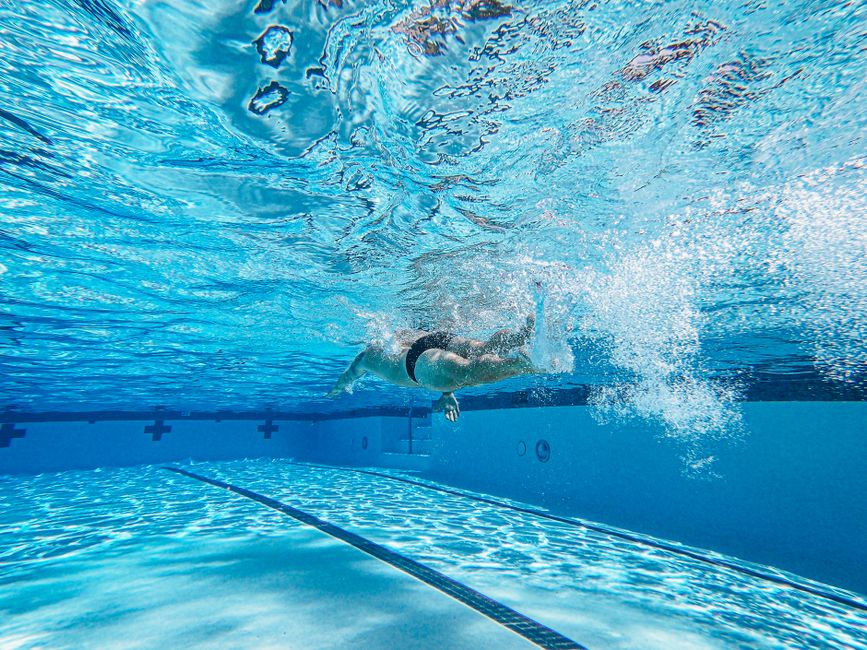
The catch-up drill is the classic starting point. Push off the wall with both arms extended in front of you, then take one stroke at a time while the other arm stays out front. The pause forces you to slow down and feel each catch individually before moving on — you can’t rush through the critical moment the way you might in full freestyle.
The doggy paddle drill strips away the above-water recovery entirely. Use a pull buoy, keep your face down, and slide each hand forward just below the surface to set up the next catch instead of swinging it over the water. With no recovery to worry about, all your attention goes to how your hand enters, your elbow bends, and your forearm anchors.
The fist drill is underrated for building EVF. Swimming with your hands closed forces your forearm to do the work — you simply cannot generate enough grip with a fist unless your elbow stays up and your forearm faces backward. Even a few laps with fists followed immediately by open-hand freestyle tends to produce a noticeably improved catch feel.
For a strength and awareness combo, try the deck-up drill: swim to the pool wall, place your palms on the pool deck, and push yourself up while maintaining a high elbow position. The resistance makes you feel exactly which muscles should be driving the pull. Do a set of 10, then immediately swim a length focusing on recreating that same sensation.
Common Mistakes and How to Fix Them
Leading with the elbow. This is the most common error — the elbow drops and moves backward first, with the hand trailing at an angle. The fix is a simple cue: your fingertips go down before your elbow goes back. If your fingertips aren’t pointing at the pool floor during the catch, your elbow has already dropped.
Breaking at the wrist. Some swimmers bend their wrist back trying to angle their fingers down, which collapses the paddle. Your hand, wrist, and forearm should act as one rigid unit — think of a flat canoe paddle blade, not a bent hand. If this is happening, swimming with hand paddles can help because the rigid paddle prevents the wrist from flexing.
Trying to get the elbow too high above the water. The high elbow catch is an underwater event. Obsessing over elbow height during the recovery can lead to shoulder strain and takes your attention away from where the real work happens — below the surface.
Rushing through the catch. Recreational swimmers often sprint through the entry and catch phases to get to the ‘power’ pull, but the catch IS the power. Slowing down with catch-up freestyle or adding a deliberate two-second pause before initiating the pull can reset your timing and give your proprioception time to catch up with your mechanics.
Explore more: Swimming tips and guides.
High Elbow Catch in Freestyle FAQs
What is the difference between a high elbow catch and a dropped elbow?
In a high elbow catch, your elbow stays above your wrist during the underwater pull, so your forearm faces backward and pushes water behind you. A dropped elbow means your elbow sinks below your wrist, turning your forearm to face downward — which pushes water toward the pool floor instead of generating forward propulsion.
Can a high elbow catch help prevent shoulder injuries?
Yes. Shoulder injuries in freestyle are often linked to improper mechanics rather than volume alone. When the elbow drops, swimmers tend to compensate with shoulder rotation and strain. A correct high elbow catch distributes the load to larger muscles like the lats and back, reducing stress on the shoulder joint.
How long does it take to develop a consistent high elbow catch?
It varies widely depending on how ingrained your current habits are. Many swimmers notice immediate improvement in ‘feel’ within a session or two of focused drill work, but building it into automatic freestyle at race pace typically takes weeks of consistent practice. Drilling slowly and then gradually adding speed is the most reliable path.
Level Up With SportsSteps
Track your athlete’s progress, connect with coaches and your team, and grow — get the SportsSteps app. Get the SportsSteps App.
Photo by Kindel Media on Pexels.