
Every parent means well on the sideline, but there’s a real gap between cheering that fires a kid up and cheering that makes them want to sink into the turf. If your child has ever shot you a look, asked you to sit somewhere else, or gone quiet in the car ride home, you’ve already gotten the message that something needs to change.
This guide breaks down exactly what separates supportive sideline behavior from the kind that embarrasses kids, with specific phrases to use, habits to drop, and a quick-reference list for game day. The goal isn’t to go silent — it’s to cheer in a way your child actually wants to hear.

Quick Answer
Cheer for effort and team plays instead of coaching or correcting, keep comments short and positive rather than analyzing the game in real time, match your volume and energy to the other parents around you, and save any detailed feedback for a private conversation well after the final whistle — not during the car ride and not within earshot of teammates.
What Actually Embarrasses Kids on the Sideline
Most embarrassment doesn’t come from parents cheering too much — it comes from parents cheering the wrong things. Yelling instructions (‘Shoot it!’ ‘Pass to Jayden!’) during live play is the single biggest offender, because it undermines the coach, distracts the player, and broadcasts to everyone nearby that mom or dad thinks they know better than the kid on the field in that moment.
Reacting loudly to mistakes is a close second. A groan, a sharp ‘come on!’, or visible frustration after a missed shot or dropped ball tells your child their performance is being graded in real time by the person whose opinion matters most to them. Kids pick up on this instantly, even from across a field.
Other common missteps include arguing with referees or officials, criticizing other kids on the team, comparing your child to teammates or siblings within earshot, filming or photographing obsessively instead of just watching, and standing or pacing near the bench in a way that makes the child aware of being watched more than played for.
Age matters too. Younger kids (roughly under 8) often love seeing a parent cheer loudly and visibly — it signals love and attention. Older kids, especially middle schoolers and teens, are far more sensitive to being singled out and generally prefer low-key, general encouragement over anything that draws attention to them specifically.
Track your kid's progress and get age-right drills free. Create a free account →
How to Cheer the Right Way
Cheer for the team, not just your kid. ‘Let’s go, Eagles!’ lands very differently than repeatedly shouting your child’s name — it shows support without putting them in a spotlight they didn’t ask for.
Stick to encouragement, not instruction. Phrases like ‘Nice hustle,’ ‘Great try,’ ‘Way to keep going,’ or simple applause work in any sport and at any age. They acknowledge effort without second-guessing strategy, which is the coach’s job, not yours.
Match the room. Watch how the other parents around you are behaving and calibrate to roughly that volume and tone. If you’re consistently the loudest or most reactive adult on the sideline, that’s usually the clearest sign to dial it back.
Save corrections for later — and make them optional. If you have real feedback, wait until well after the game, ask if they want to talk about it first, and keep it brief. ‘Want to hear what I noticed, or just talk about something else?’ respects that the car ride isn’t always the right venue.
Let the coach coach. Even if you know the sport well, shouting technical instructions from the sideline contradicts what the coach is telling the player in real time and puts your child in an impossible position mid-play.
Ask your child directly what they want. A simple conversation — ‘Do you like it when I cheer loud, or would you rather I just clap?’ — solves most of this instantly and shows them you’re paying attention to their comfort, not just your own enthusiasm.
Tips / Common Mistakes
Don’t react visibly to referee calls, even bad ones — arguing with officials is consistently cited by youth sports organizations as one of the fastest ways to embarrass a child and escalate sideline tension.
Avoid narrating the game loudly to other parents about your child’s performance, positive or negative — kids often overhear more than parents realize.
Don’t keep score out loud or announce stats in a way that puts pressure on the moment; let the scoreboard do that job.
If you catch yourself about to yell a correction mid-play, redirect it into a simple ‘You’ve got this!’ instead — it fills the same impulse without the sideline-coaching effect.
Checking in periodically as your child gets older (every season or two) matters, since what felt fun to cheer for at age 7 may feel mortifying at age 12.
If your child specifically asks you to tone it down or sit elsewhere, treat that as useful feedback rather than a rejection — it’s a normal part of kids developing independence around their activities.
Explore more: More parent guides for youth sports.
Cheering for your child at games FAQs
Is it okay to clap but not yell during games?
Yes — for many kids, especially older ones, quiet applause and brief, calm encouragement feel far more comfortable than loud cheering. Ask your child what they prefer and adjust to that.
Should I say anything if my child makes a mistake during the game?
In the moment, no — a simple ‘shake it off’ or nothing at all is better than a visible reaction. Save any real feedback for a private, low-key conversation after the game, and only if they want to hear it.
What if other parents are being loud or disruptive — should I match them?
No. Matching disruptive behavior just adds to the problem. It’s fine to be enthusiastic in a way that’s distinct from a parent who’s arguing with officials or yelling instructions — stick to positive, team-focused cheering regardless of what others are doing.
How do I know if my cheering is embarrassing my child?
Watch for cues like your child avoiding eye contact with you during the game, asking you to sit elsewhere, going quiet afterward, or directly telling you to stop. The most reliable way to know, though, is simply to ask them.
Level Up With SportsSteps
Track your kid's progress and get age-right drills free
A free AI coach for their sport, drills that fit their level, and a simple log of every practice and game.
Create a free accountFor families, athletes, coaches & clubs
Want training tips and sports news in your inbox? Subscribe to the free newsletter.
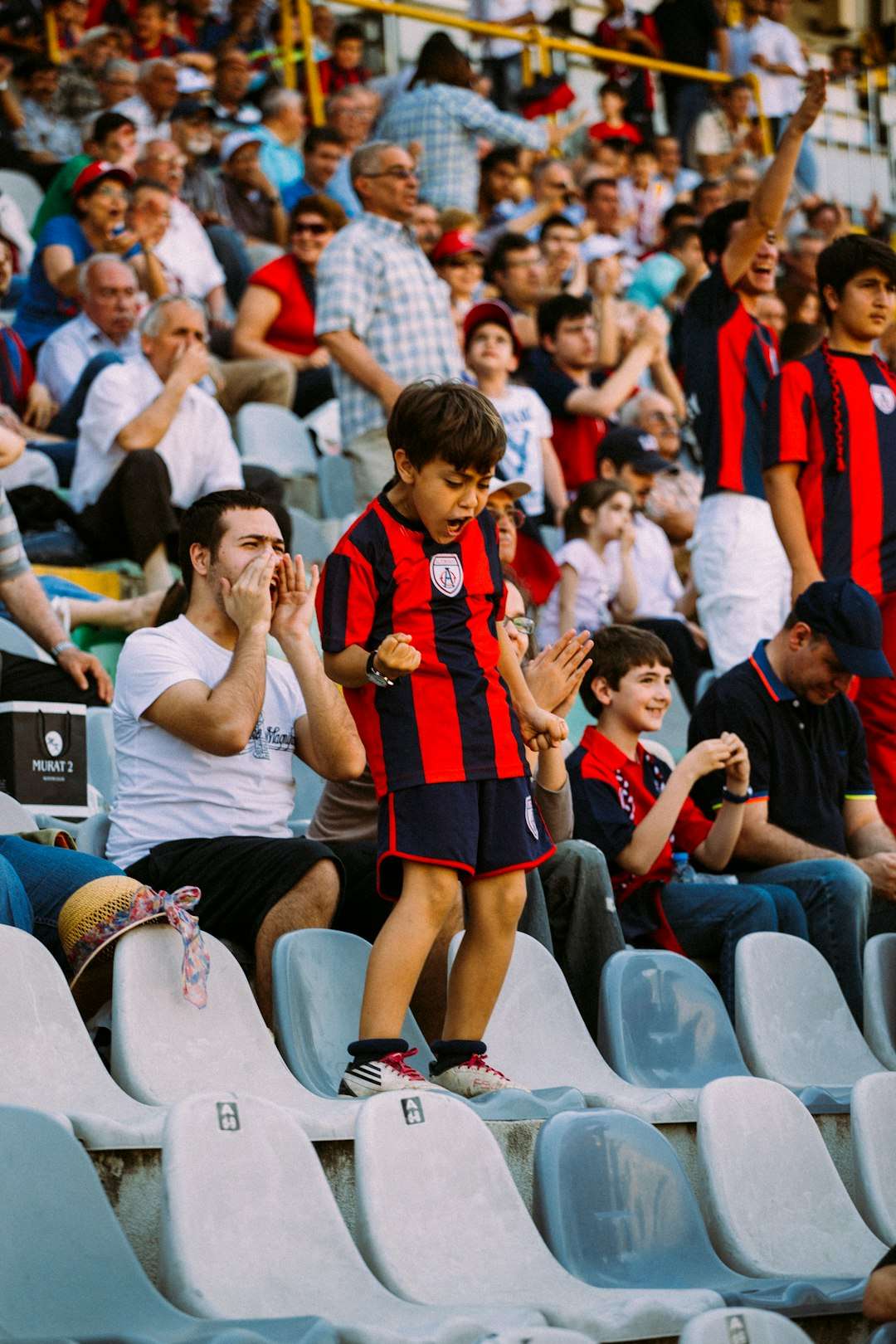
Photo by Jimmy Conover on Unsplash.