
A rolled ankle is one of the most common injuries in sport, and also one of the most often rushed. Athletes brace it, feel “good enough,” and jump back into training — then re-sprain the same ankle a few weeks later, usually worse than the first time.
This guide walks through a practical recovery timeline, the training that actually rebuilds ankle stability (not just range of motion), and the return-to-sport checks worth passing before you cut, jump, or sprint at full speed again.
Quick Answer
Protect the ankle and start gentle, pain-free movement within the first 24-48 hours instead of fully immobilizing it. Progress through range of motion, strength, balance/proprioception, and sport-specific movement before returning to full competition — rushing the balance and proprioception phase is the single biggest reason ankles get re-sprained.
The First 72 Hours: Protect, Don’t Freeze
Early management has shifted from strict rest toward the POLICE approach: Protect, Optimal Loading, Ice, Compression, Elevation. The ‘protect’ part means a brace, taping, or an elastic bandage to limit painful motion — not a hard cast or weeks of staying off it entirely.
‘Optimal loading’ is the key difference from old-school advice. As soon as pain allows (often within a day or so), start gentle non-weight-bearing ankle movements — alphabet tracing with the foot, light ankle circles — and progress to weight-bearing as tolerated. Ice and compression in the first couple of days help manage swelling and pain, and elevating the foot above heart level when resting reduces pooling.
A sprain that’s still very swollen, can’t bear any weight at all, or shows visible deformity needs a medical evaluation to rule out a fracture or high-grade ligament tear before you start any home program.
Rebuild in Phases: Motion, Strength, Balance, Sport
Once acute swelling and pain settle, work through range of motion first — regaining full ankle flexion, extension, and circular motion without pain. Calf and shin stretches help here too, since a stiff ankle changes how you land and push off.
Next comes strength: resistance-band exercises in all four directions (up, down, in, out), calf raises, and single-leg work to rebuild the muscles that support the joint. Many athletes stop here, thinking stronger means stable — it doesn’t.
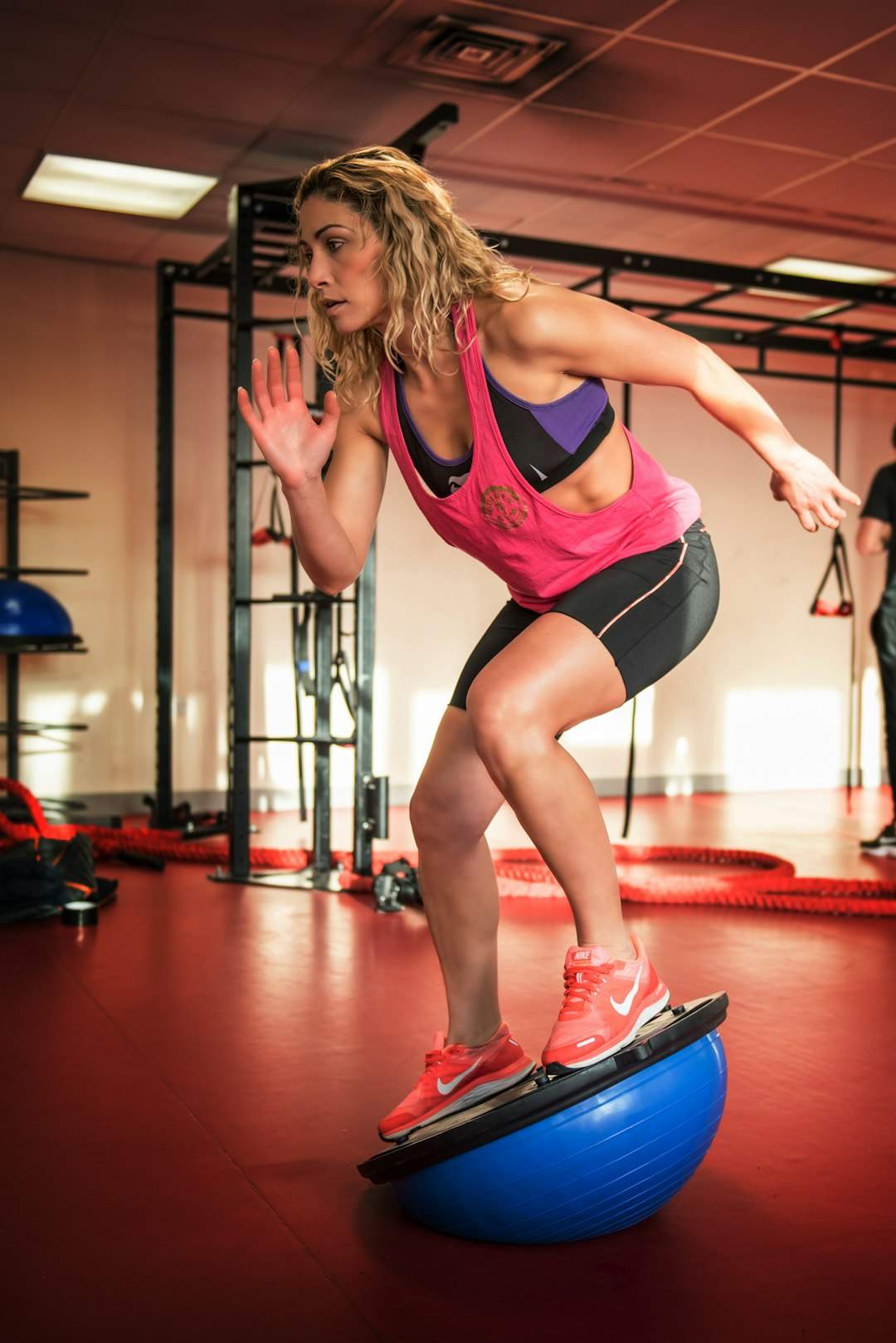
The phase that actually prevents re-injury is balance and proprioception training: single-leg stands with eyes closed, wobble board or balance pad work, and unstable-surface drills that retrain the nervous system to react instantly when the ankle starts to roll. Research on this consistently shows that athletes who do structured balance training after a sprain have meaningfully fewer repeat sprains than those who skip straight to strength and sport — a sustained program of several weeks or more, continued well past the point symptoms disappear, gives the most protection.
Only after pain-free motion, strength, and balance are solid should you move to sport-specific loading: jogging, cutting, jumping and landing, and gradually faster direction changes, progressing from controlled drills to full-speed, unplanned movement similar to competition.

Tips / Common Mistakes
Don’t judge readiness by pain alone — a joint can feel fine standing still but still lack the reactive stability to catch an unexpected roll at speed. Compare both ankles on a single-leg balance hold, a hop-and-stick landing, and a side-to-side agility drill before clearing yourself for full return.
Skipping the balance/proprioception phase is the most common mistake — it’s the least exciting part of rehab but the part with the strongest evidence for preventing a second sprain.
Taping or a brace during the return-to-sport window is reasonable extra insurance, especially for athletes with a history of ankle sprains, but it shouldn’t replace doing the actual strength and balance work.
If swelling, instability, or pain lingers well past a few weeks, or the ankle keeps giving way, get it reassessed — chronic ankle instability is common after sprains that weren’t fully rehabbed and is much easier to address early.
Explore more: More athlete development guides.
Ankle sprain recovery FAQs
How long does it take to recover from an ankle sprain?
Mild sprains often feel mostly normal within one to two weeks, but moderate to severe sprains can take several weeks to a couple of months before the ankle is fully strong and stable again. Full proprioceptive recovery often lags behind how the ankle feels, which is why rushing back early raises re-injury risk.
Should I use ice or heat on a sprained ankle?
Ice is generally preferred in the first couple of days to help manage pain and swelling. Heat can be more comfortable later in recovery to loosen stiffness, once acute swelling has settled.
Is it okay to walk on a sprained ankle?
Gentle, pain-free weight-bearing as tolerated is usually encouraged early on rather than complete rest, but sharp pain or inability to bear any weight at all is a reason to get it checked out rather than push through it.
What’s the best exercise to prevent re-spraining an ankle?
Single-leg balance work and unstable-surface drills (like a wobble board or balance pad) have the strongest evidence for reducing repeat sprains, especially when continued for several weeks beyond when symptoms resolve.
Level Up With SportsSteps
Track your athlete’s progress, connect with coaches and your team, and grow — get the SportsSteps app. Get the SportsSteps App.
Want training tips and sports news in your inbox? Subscribe to the free newsletter.
Photo by Andreea Boncota on Unsplash.