
Shoulder pain is one of the most common reasons young swimmers miss practice, and it usually doesn’t come from one dramatic moment — it builds slowly from thousands of overhead arm rotations across a training week. The good news is that most cases are preventable with a short, consistent routine of shoulder and shoulder-blade exercises done outside the pool.
This guide breaks down why swimmer’s shoulder develops in kids and teens, and walks through the specific exercises coaches and physical therapists recommend to build a stable, resilient shoulder before pain ever starts.
Quick Answer
Swimmer’s shoulder is best prevented with a two-part dryland routine done 2-3 times a week: exercises that strengthen the shoulder blade stabilizers and rotator cuff (like push-up plus, band external rotations, and Y-T-W raises), paired with mobility work like the sleeper stretch and chest-opening stretches to correct the rounded-shoulder posture that heavy swim training tends to create.
Why Young Swimmers Get Swimmer’s Shoulder
Swimmer’s shoulder is a form of shoulder impingement — the space under the shoulder bone (acromion) narrows and the rotator cuff tendons and surrounding tissue get pinched or irritated with repeated overhead motion. A competitive swimmer’s shoulder goes through an enormous number of rotations every week across all four strokes, so even small technique or strength issues get amplified over a season.
The most common contributing factors are: faulty stroke technique (especially a dropped elbow on the pull or crossing the midline on entry), too much training volume without enough recovery, and a muscular imbalance where the internal rotators and chest muscles used to pull through the water get strong while the external rotators and shoulder-blade stabilizers lag behind. That imbalance lets the shoulder blade sit in a poor position, which increases the chance of the rotator cuff getting compressed on every stroke.
Because growing bodies and growth plates are still developing, young swimmers are especially prone to this imbalance if they add yardage or a new stroke focus quickly without building supporting strength first.
Prevention Exercises Every Young Swimmer Should Learn
Scapular push-up plus: Start in a push-up position (on knees for beginners, on toes for more advanced swimmers). Do a normal push-up, then at the top, push the upper back further away from the floor so the shoulder blades spread apart. This trains the serratus anterior, the muscle that keeps the shoulder blade flat against the rib cage during the stroke. Aim for 2-3 sets of 10-15 reps.
Band external rotation: Anchor a light resistance band at waist height. Stand sideways to the anchor, tuck the elbow into the side at a 90-degree bend, and rotate the forearm outward without letting the elbow drift away from the body. This isolates the infraspinatus and teres minor, the small rotator cuff muscles that resist the internal-rotation dominance built up from swimming. Do 2-3 sets of 12-15 reps per arm, 2-3 times a week.
Band internal rotation: Same setup as above, but rotate the forearm inward across the body. Pairing this with external rotation keeps the front and back of the shoulder balanced rather than only strengthening one side.
Y-T-W raises: Lying face-down on a bench or exercise ball (or standing and hinging forward at the hips), raise the arms into a Y shape, then a T shape, then a W shape, squeezing the shoulder blades together on each position. This is one of the most efficient ways to hit the mid- and lower-trapezius and rhomboids that keep the shoulder blade set correctly. Use very light or no weight at first — 2-3 sets of 10 reps per position.
Scapular squeezes (Blackburn-style T’s): With arms extended out to the sides at shoulder height, thumbs up, squeeze the shoulder blades together and hold for 2-3 seconds before releasing. This can be done standing, on a stability ball in a plank position, or lying face-down. 3 sets of 10-15 reps is a good starting point.

Mobility and Posture Work to Pair With Strength Exercises
Sleeper stretch: Lie on the affected side with the shoulder stacked underneath, bend the elbow to 90 degrees so the fingers point up, then use the other hand to gently press the forearm down toward the floor. Hold 20-30 seconds for 2-3 reps per side. This restores internal rotation range of motion that tends to get tight from repetitive freestyle and butterfly. Stop immediately if it produces pinching or sharp pain rather than a stretch sensation.
Doorway or foam-roller chest stretch: Swimmers who spend hours pulling their arms across the body tend to develop tight chest muscles and rounded shoulders. Lying lengthwise along a foam roller with knees bent and arms relaxed out to the sides for 30-60 seconds, or doing a doorway pec stretch, helps counter that posture without forcing the stretch.
Head/chin retraction: Standing tall, gently draw the head straight back (not tilting up or down) to counter the forward-head posture common after long practices at a laptop or phone. Hold 2 seconds, 2-3 sets of 10 reps. It’s a small movement but it helps keep the whole upper back — and therefore the shoulder blades — in a better position.
Tips and Common Mistakes
Don’t skip the rotator cuff work just because it uses light bands — these are the smallest, most easily overpowered muscles in the shoulder, and they’re exactly the ones swimmer’s shoulder targets. Consistency with light resistance beats occasional heavy work.
Fix stroke technique alongside the exercises. A dropped elbow on the pull-through or crossing the body’s midline on hand entry puts extra strain on the front of the shoulder no matter how strong the rotator cuff is, so ask a coach to check technique if pain keeps recurring.
Increase training yardage gradually, especially after a break, a growth spurt, or when adding a new stroke emphasis — sudden jumps in volume are one of the most common triggers of shoulder pain in age-group swimmers.
Never push through shoulder pain during practice. Pain that lingers after a session, wakes a swimmer at night, or limits reaching overhead is a sign to scale back volume and see a sports medicine provider or physical therapist rather than swim through it.
Build the routine into the week rather than doing it once. Most of these exercises are designed to be done 2-3 times weekly with a rest day between sessions, not as a one-time warm-up.
Explore more: Browse more swimming training and technique guides.
Swimmer’s shoulder prevention FAQs
How often should young swimmers do shoulder prevention exercises?
Most physical therapists and swim programs recommend 2-3 sessions per week, with at least one rest day in between, rather than doing the full routine every day.
Can swimmer’s shoulder exercises be done as a warm-up before practice?
Light versions of the mobility work (like the sleeper stretch and scapular squeezes) work well as part of a pre-practice warm-up, but the strength exercises (band work, push-up plus, Y-T-W raises) are better done as a separate dryland session so they don’t fatigue the shoulder right before swimming.
What’s the first sign of swimmer’s shoulder parents and coaches should watch for?
Early signs include shoulder pain that shows up partway through a set, soreness that lingers into the next day, or discomfort when reaching overhead outside the pool. Catching it at this stage and adjusting volume is much easier than treating it once pain is constant.
Level Up With SportsSteps
Track your athlete’s progress, connect with coaches and your team, and grow — get the SportsSteps app. Get the SportsSteps App.
Want youth sports news in your inbox? Subscribe to the free newsletter.
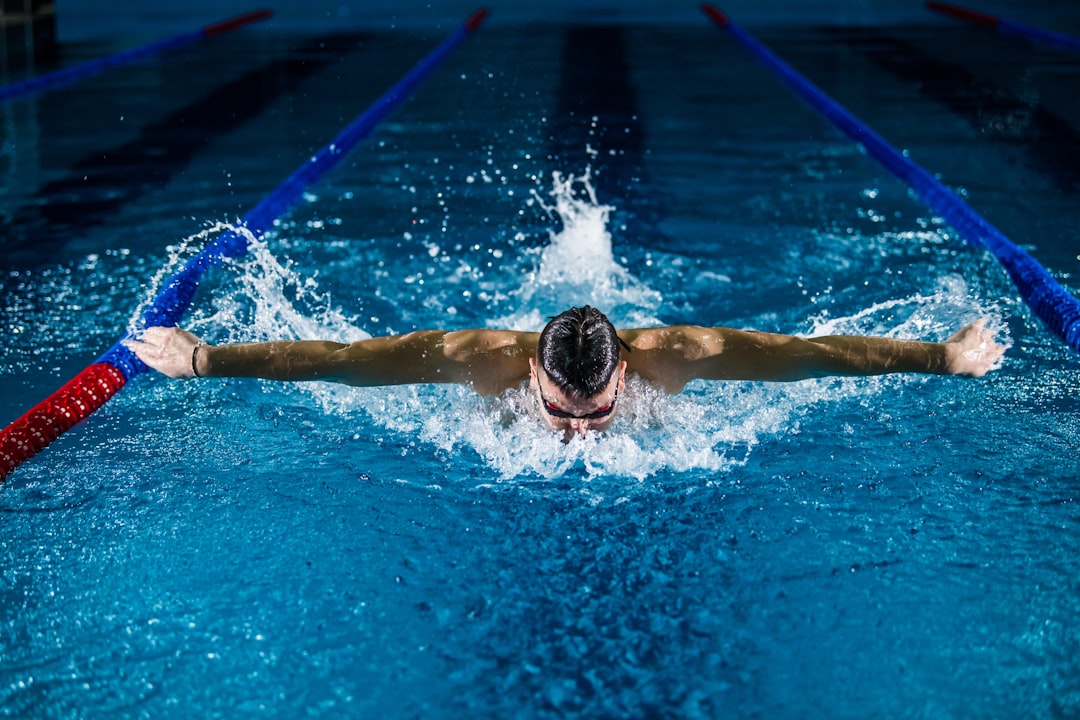
Photo by Gentrit Sylejmani on Unsplash.