
One week your child begged to sign up for soccer. Three weeks into the season, they’re suddenly obsessed with joining the swim team instead and dreading every practice. It’s one of the most common — and most stressful — moments in youth sports parenting, and there’s rarely a clean right answer.
This guide walks through how to figure out what’s actually going on, how to decide whether to finish the season or make a change now, and how to handle the conversation with your child, the coach, and the team without burning bridges.

Quick Answer
In most cases, help your child finish the current season if it’s safe and healthy to do so — commitment and follow-through are valuable lessons — while agreeing they can switch sports next season if the interest holds. Exceptions: if the issue is bullying, unsafe coaching, injury, or the sport is causing real emotional harm, it’s reasonable to make a change immediately.
First, Figure Out Why They Want Out
Before deciding anything, have a calm, low-pressure conversation — not in the car right after a game or practice, when emotions are still hot. Sport psychologists who work with young athletes often suggest starting with something like, ‘Do you want me to just listen, or do you want help solving this?’ That keeps the conversation from turning into an interrogation.
Kids usually want to switch sports for one of a few reasons: they’re not having fun anymore, they’re not getting playing time, they’re worn out from overscheduling, there’s friction with a coach or teammate, or they’ve simply developed a stronger interest in something else after watching friends play it. Each of these points to a different response. A playing-time problem might be solved with a conversation with the coach. Exhaustion might mean cutting back on other commitments rather than quitting entirely. Genuine boredom or a shift in interest is normal and doesn’t necessarily need ‘fixing’ — kids are supposed to explore.
If the reason involves bullying, a coach who’s making your child feel unsafe, or a physical injury, that’s different from ordinary mid-season restlessness. Those situations may call for stepping away right away rather than pushing through.
Finish the Season or Make the Switch Now?
A common and reasonable approach: require your child to finish out the season they’ve already committed to, then let them switch sports for the next one. The logic isn’t about punishment — it’s that a team is counting on them, a season has a natural endpoint, and ‘finishing what you start’ is a life skill that matters well beyond sports. You can soften this by reminding your child that finishing the season doesn’t mean committing forever, and by checking in periodically rather than just telling them to tough it out silently.
That said, treat ‘finish the season’ as a default, not an absolute rule. If your child is miserable every single day, the cost to their mental health may outweigh the lesson in commitment. And if they’re young — say, under 8 or so — the stakes of ‘breaking a commitment’ are much lower than they are for a teenager on a school team with a roster spot other kids are counting on.
It’s also worth remembering that trying several different sports through the early elementary and middle-school years, rather than locking into one sport early, is generally considered healthy for development — it lowers overuse-injury risk and helps kids figure out what they actually enjoy before specializing later in adolescence. A kid who wants to sample a new sport isn’t necessarily flaky; they may just be doing exactly what’s developmentally normal.
Talking to the Coach and Handling the Logistics
Once you’ve decided on a plan, loop in the coach directly rather than just disappearing from practice. A short, honest conversation — ‘we’re going to finish out the season, but [child] is planning to try [new sport] next season’ — is usually well received, especially if you give notice rather than a last-minute no-show. For older kids, let them have this conversation themselves when appropriate; it’s good practice in owning a decision.
Check the league or club’s policies before assuming you’re locked in either way. Some leagues have partial-refund or credit policies if you do need to leave mid-season for a legitimate reason (injury, moving, safety concerns); others don’t refund once the season starts. It’s worth an email to the league administrator rather than guessing.
If your child plays on a school team, be aware that switching sports mid-season can affect eligibility for the new sport (some schools have tryout windows or roster caps) — check with the new sport’s coach or your school’s athletic director before promising your child a spot.
Tips / Common Mistakes
Don’t make the decision in the heat of the moment. A bad game or a tough practice can make a kid want to quit on the spot; give it a few days and see if the feeling sticks before treating it as a real decision.
Don’t frame quitting as failure. Losing interest in an activity is normal at every age, and kids who feel shamed for wanting to stop something are less likely to be honest with you the next time something isn’t working.
Avoid deciding for your child without asking why. A playing-time problem and a bullying problem look identical from the outside (‘I don’t want to go’) but need completely different responses.
Don’t let the sunk cost of registration fees or equipment drive the decision. It’s a real financial factor, but it shouldn’t be the deciding one if your child is genuinely unhappy.
Keep the goal in view: raising a kid who stays active and enjoys movement long-term matters more than sticking with any single sport.
Explore more: More parent guides for youth sports.
Switching sports mid-season FAQs
Should I always make my child finish the season before switching sports?
As a general rule, yes — it teaches follow-through and respects the team’s commitment to your child. The exception is when the issue is safety, bullying, injury, or serious emotional distress, in which case leaving sooner is reasonable.
How do I know if my child is burned out versus just bored?
Burnout often comes with physical fatigue, dread before practice, irritability, or complaints across multiple activities, not just one sport. Boredom or shifting interest usually shows up as excitement about something new rather than exhaustion about everything. A calm conversation about specifics — what exactly they don’t like — usually makes the difference clear.
Is it bad for kids to switch sports often?
Not inherently. Trying multiple sports through the elementary and middle-school years is considered developmentally healthy and is linked to lower injury risk and better long-term enjoyment compared to specializing in one sport very early. The concern is less about switching itself and more about whether a child is learning to walk away from every challenge rather than working through solvable problems.
Level Up With SportsSteps
Track your athlete’s progress, connect with coaches and your team, and grow — get the SportsSteps app. Get the SportsSteps App.
Want youth sports news in your inbox? Subscribe to the free newsletter.
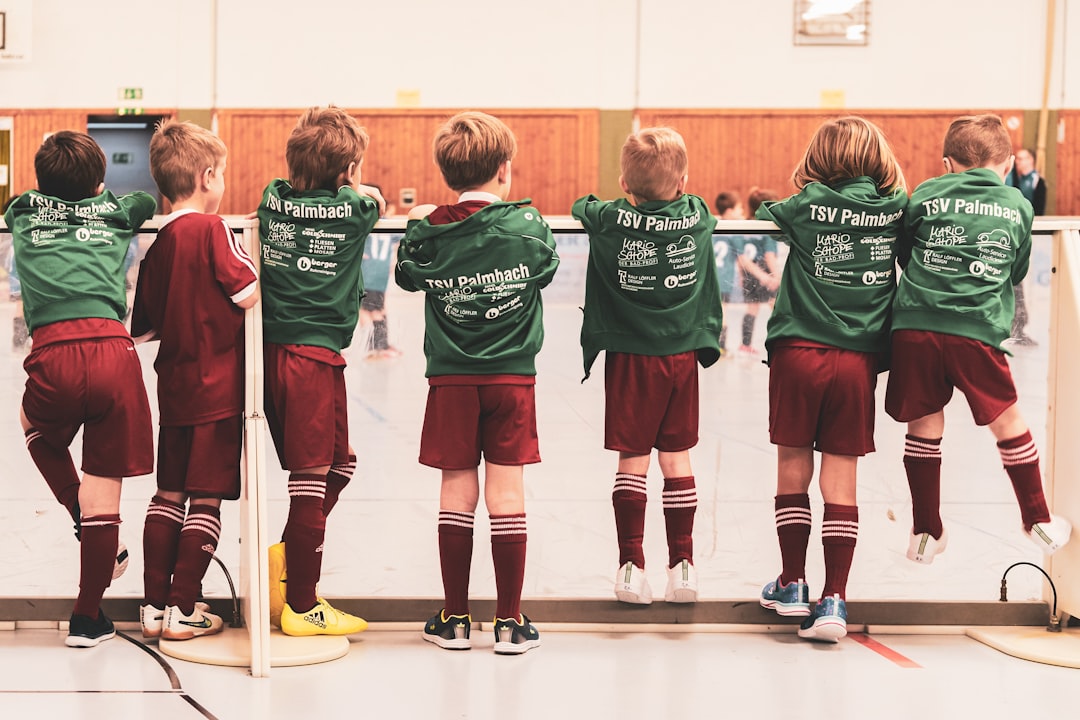
Photo by Jeffrey F Lin on Unsplash.