
If a young lacrosse player only has time for one thing between practices, it should be wall ball. A rebounding wall turns every throw into an instant, honest repetition — no teammate needed, no field required, just a stick, a ball, and a solid wall.
This guide lays out a practical wall ball routine you can run in a driveway or garage in 15-20 minutes, including which drills to pick, how far to stand, and how to structure the workout so a player actually improves instead of just going through the motions.
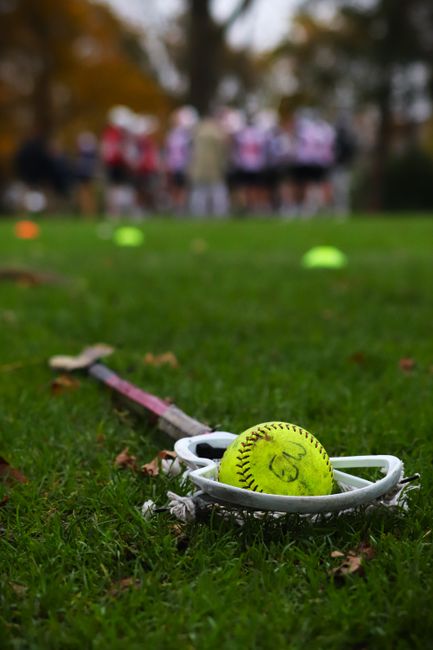
Quick Answer
A solid youth wall ball routine is 15-20 minutes, done 3-5 times a week, using 4-6 different drills at 25-50 reps each — mixing dominant-hand, off-hand, quick-stick, and ground ball work against a brick or concrete wall.
Setting Up the Routine
Find a hard, flat, rebounding surface — brick or concrete works far better than wood or siding, which absorb the throw and kill the rebound. Use chalk or tape to mark a target roughly shoulder height, since aiming at a consistent spot builds accuracy along with catching.
Standing distance depends on the drill. For basic catch-and-throw work, 12-15 feet from the wall is typical. For ground ball drills, back up 20-30 steps, throw the ball hard into the wall, and charge the bounce back rather than waiting for it to come to you — this mimics game speed and reinforces attacking the ball.
Pick 4-6 drills per session and aim for 25-50 clean reps of each. A player who strings together a set number of consecutive catches without a drop (say, 50 or 100) has a built-in way to measure progress from week to week.
Drills to Include
Right-hand catch and throw: the foundation drill. Catch, cradle once, and release quickly with good form before moving to anything more advanced.
Off-hand (non-dominant) catch and throw: the same motion using only the weak hand. This is the drill most players skip and the one that separates two-handed players from one-handed ones later on.
Quick stick: catch and release in one motion with no cradle at all. This builds the hand speed needed for passing lanes and feeding in tight spaces.
Split dodge to release: jog toward the wall, execute a split dodge to switch hands mid-stride, then immediately fire a pass off the new hand. This is one of the most game-realistic reps a player can get on a wall, since it combines a dodge move with an accurate release.
Behind-the-back and around-the-back throws: once fundamentals are solid, these add stick control and confidence for game situations where a clean catch-and-throw isn’t an option.
Ground balls off the wall: throw hard from 20-30 steps back and scoop the rebound on the run, always approaching the ball with speed rather than standing flat-footed.
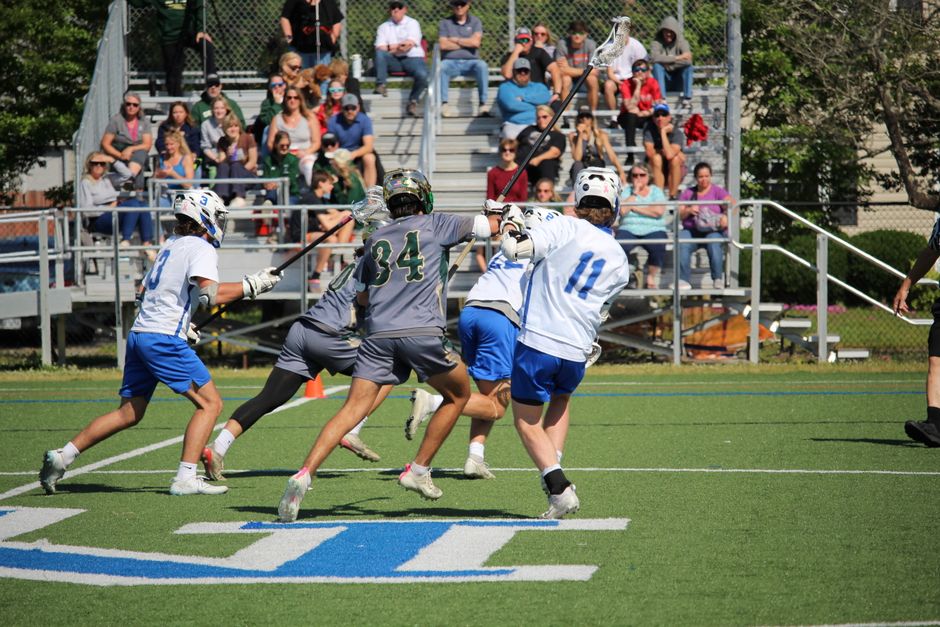
Tips / Common Mistakes
Don’t let reps turn into just tossing the ball back and forth — every catch should be with two hands ready to cradle, and every throw should be aimed at the marked target, not just “at the wall.”
Skipping off-hand work is the most common mistake. It feels slower and less satisfying early on, but it’s what makes a player dangerous on both sides of the field later.
Keep the sessions short and frequent rather than long and rare. Three to five short sessions a week beat one long weekend session for building stick skills that hold up under game pressure.
Match the drill to the surface available — a smaller wall or narrower space is fine for catch-and-throw and quick stick work, even if there isn’t room to back up 20-30 steps for ground ball reps.
Explore more: More coaching guides and drills.
Wall Ball Home Practice Routine FAQs
How long should a youth wall ball session be?
15-20 minutes is a good standard length, done 3-5 times a week. Sessions can run longer for more advanced or older players, but consistency matters more than duration.
How far should a young player stand from the wall?
About 12-15 feet for basic catch-and-throw and quick-stick drills. For ground ball work, move back 20-30 steps so the throw and rebound have more speed and distance to react to.
What kind of wall works best for wall ball?
A hard, flat surface like brick or concrete gives the truest rebound. Wood siding, garage doors, or soft surfaces absorb too much of the throw and make the drill less effective.
Should young players spend equal time on their off-hand?
Yes. Off-hand reps are the drill most players avoid because they’re less comfortable, but they’re essential for becoming a two-handed threat on the field.
Level Up With SportsSteps
Track your athlete’s progress, connect with coaches and your team, and grow — get the SportsSteps app. Get the SportsSteps App.
Photo by Jay Brand on Pexels.