
The night before a first swim meet is usually more nerve-wracking for parents than for the kid. There’s a stack of unfamiliar paperwork, a schedule that seems to run on its own clock, and terms like “heat sheet” and “seed time” that nobody explains before you need to know them.
This guide walks through what actually happens on meet day, from the moment you arrive through the final ribbon, so you and your swimmer can show up prepared instead of guessing.
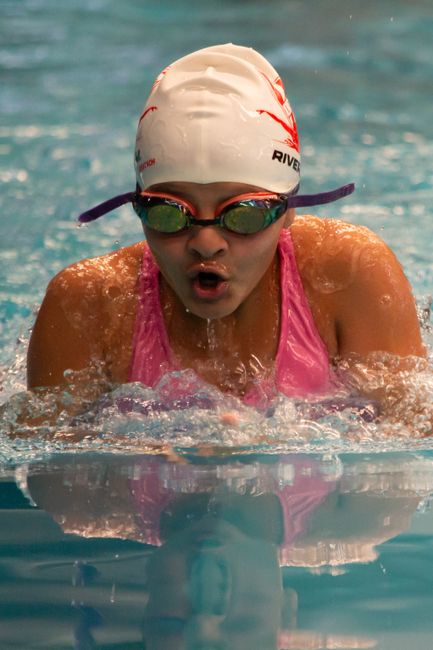
Quick Answer
A first swim meet follows a predictable pattern: arrive early for warm-up, find your swimmer’s events on the heat sheet, report to the blocks one event ahead of their race, swim, then celebrate the effort (and any best time) afterward. Most of the day is waiting, so bring layers, snacks, and something to pass the time between races.
Before the Meet: Reading the Heat Sheet
A few days ahead, the team usually sends out a heat sheet (sometimes called a psych sheet before lanes are assigned). It lists every swimmer’s events, along with the heat and lane they’ll swim in. Find your child’s name and jot down their event numbers, heat numbers, and lane assignments — you’ll want that list handy on deck since meets can have hundreds of swimmers and dozens of events running over several hours.
Heats group 8-10 swimmers who are seeded by their times, generally slowest to fastest, with the quickest swimmers placed toward the middle lanes in championship or final heats. If your swimmer has never raced that event before, their entry will show “NT” for No Time — that’s completely normal for a first meet and just means there’s nothing to seed them by yet, so they’ll likely land in an early heat.
Know the basic lingo going in: a false start is leaving the block before the starting signal, which results in a disqualification; a DQ (disqualification) means a stroke or turn rule was broken (like a breaststroke finish with only one hand touching the wall) and the swim won’t count for an official time. DQs are common for new swimmers and are treated as a normal part of learning — not a big deal.
Meet Day: Arrival Through the Race
Plan to arrive at least 15-30 minutes before the posted warm-up time, with your swimmer already in their suit, cap, and goggles. Warm-up is when swimmers get a feel for the pool, practice starts and turns, and settle their nerves — skipping it or arriving late adds unnecessary stress.
Coaches will usually check swimmers in, confirming they’re present and racing their assigned events. From there, most of the day is waiting around the team area between races, so bring something to keep your child occupied — cards, a book, or just downtime with teammates.
The one hard rule: report to the blocks or the clerk-of-course area one event before your swimmer’s race. Meets move fast, and missing a call-up can mean missing the race entirely. After the swim, swimmers return to the team area to towel off, rehydrate, and wait for their next event.
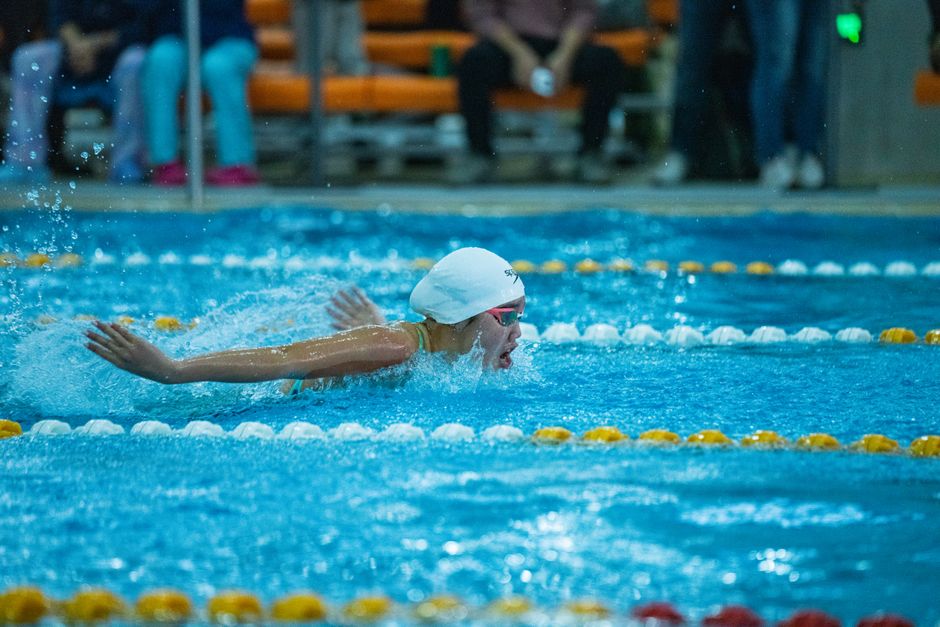
Tips and Common Mistakes
Pack smart: swimsuit (a practice suit is fine for a first meet), goggles, cap if the team uses one, at least two towels, a water bottle, and a team shirt or parka for warmth between races. For yourself, bring a folding chair, layers (pool decks run cold, outdoor meets run hot), snacks, cash for the concession stand, and the printed heat sheet with a pen.
The most common parent mistake is coaching from the stands. After a race, avoid technique feedback — that’s the coach’s job, and jumping in can undercut what the coach is teaching. Instead, focus on effort and attitude: ask how it felt, celebrate a best time (often shortened to “PR”), and save any real analysis for the coach.
Don’t panic over a DQ or a slow heat. Meets are as much about experience and racing practice as they are about outcomes, especially for a first-timer. The goal on day one is simply finishing comfortable with the process — everything else follows from there.
Explore more: More swimming guides.
First swim meet FAQs
What should my child wear to their first swim meet?
A regular practice swimsuit is fine — they don’t need a special racing suit for a first meet. Add goggles, a cap if the team uses them, and a warm layer like a parka or hoodie for between races.
What does ‘NT’ mean on the heat sheet?
NT stands for ‘No Time,’ meaning the swimmer has no recorded time in that event yet. It’s normal for beginners and just affects which heat they’re placed in, typically an earlier one.
What happens if my child gets disqualified (DQ’d)?
A DQ means a stroke, turn, or start rule was broken, so the swim doesn’t get an official time. It’s common for new swimmers and is treated as a learning moment, not a punishment — the coach will explain what to fix at practice.
How early should we arrive at a swim meet?
Aim to arrive 15-30 minutes before the scheduled warm-up time, with your swimmer already suited up with cap and goggles ready, so they have time to settle in before racing starts.
Level Up With SportsSteps
Track your athlete’s progress, connect with coaches and your team, and grow — get the SportsSteps app. Get the SportsSteps App.
Photo by david hou on Pexels.