
Your child just aged out of the beginner class, or a coach mentioned tryouts, and now you’re stuck deciding: keep paying for lessons, or sign up for swim team? The two aren’t interchangeable, and jumping into team before your child is ready can backfire into frustration and pool anxiety instead of confidence.
This guide breaks down the real differences between swim lessons and swim team, the specific skills your child needs before making the jump, and how to tell which option fits their current stage — not just their age.
Quick Answer
Choose swim lessons if your child is still building basic water comfort, stroke technique, or breath control — lessons are instruction-focused and self-paced. Choose swim team once your child can swim multiple strokes independently across a full pool length, follows multi-step directions, and enjoys structured group practice more than one-on-one coaching. Most kids benefit from finishing the upper levels of a learn-to-swim program before trying team.
How Swim Lessons and Swim Team Actually Differ
Swim lessons (through programs like the American Red Cross Learn-to-Swim levels, YMCA, or a local swim school) are built around individual skill progression. A typical path moves from water comfort and floating, through fundamentals like kicking and blowing bubbles, into stroke development, stroke improvement, and stroke refinement. Classes are usually small, instructor-led, and paced to each child — a 7-year-old and a 10-year-old can be in the same level if their skills match.
Swim team is a different model entirely. Instead of small skill-based groups, kids train in age-based or ability-based squads, follow a coach’s practice plan, and work toward racing multiple strokes for time. USA Swimming-affiliated club teams typically start with an ‘age group’ or ‘novice’ tier for swimmers around age 10 and under, though many club and summer league teams accept kids as young as 5 if their skills are strong enough. The focus shifts from ‘can my child do this stroke correctly’ to ‘can my child sustain this stroke, this distance, this many times, with a team around them.’
The practical difference for parents: lessons are typically 30 minutes, once or twice a week, and end when the child finishes a level. Team practice is often several days a week, an hour or more per session, with meets on weekends during the season — a bigger time and logistics commitment for the whole family.
Signs Your Child Is Ready for Swim Team
The clearest readiness marker is independent stroke ability. For swimmers 10 and under, most teams look for a child who can complete one full lap of freestyle and one full lap of backstroke on their own, without hanging on the wall or lane line partway through. If a coach mentions a tryout or evaluation, this is usually what’s being tested.
Beyond raw stroke skill, look for comfort in deep water, willingness to try new drills without hesitation, and the ability to follow multi-step verbal instructions (“swim to the flag, then do a flip turn, then kick back”) without one-on-one prompting. A child who still gets nervous in water over their head, or who needs constant individual reassurance, will usually do better finishing out lesson levels first.
Endurance matters too. Team practice involves repeated laps with limited rest between sets. If your child can comfortably swim 25 to 100 meters at a time and recover quickly enough to go again, that’s a good sign they can handle a real practice, not just a single drill.

Tips and Common Mistakes
Don’t chase the calendar over the skill. Parents often push a child onto team because ‘the season is starting’ rather than because the child is actually ready — this is the most common way kids end up discouraged. It’s fine to sit out a season and finish stroke work in lessons first.
Ask the instructor directly. Swim school staff and lesson instructors see your child’s skills every week and can usually tell you plainly whether they’re close to team-ready or need another level or two first — use that relationship instead of guessing.
Watch personality, not just skill. Some strong swimmers hate group settings and racing pressure and are happier in private or semi-private lessons long-term; some average swimmers thrive on team energy and improve faster there than they ever did in individual lessons. Both are valid choices.
Try a ‘summer league’ or novice team first if your area has one. These are usually lower-commitment and lower-pressure than year-round club teams, and they’re a good way to test whether your child likes the team format before committing to a bigger schedule.
Keep lessons going even after joining team if stroke technique is shaky — some families do a hybrid season, mixing team practice with occasional private lessons to fix specific technique issues a group coach doesn’t have time to address one-on-one.
Explore more: More swimming guides and tips.
Swim Team vs Swim Lessons FAQs
What age can a child join a swim team?
It varies by program, but many club and summer league teams accept kids as young as 5 if their swim skills are strong enough. USA Swimming’s youngest competitive age group is generally 10 and under, though novice or ‘mini’ teams for younger kids are common at the local level.
Does my child need to finish all the swim lesson levels before joining a team?
Not necessarily all of them, but most kids need to reach the stroke development or stroke improvement stage — meaning they can swim freestyle and backstroke independently for a full lap — before a team tryout makes sense.
Can my child do swim lessons and swim team at the same time?
Yes. Some families keep occasional private lessons going alongside team practice specifically to work on technique issues that group practice doesn’t have time to fix individually.
What if my child fails a swim team tryout or evaluation?
It just means more time in lessons is the right next step, not a setback. Ask the evaluator or instructor exactly which skills to work on so lessons can target them directly before trying again.
Level Up With SportsSteps
Track your athlete’s progress, connect with coaches and your team, and grow — get the SportsSteps app. Get the SportsSteps App.
Want youth sports news in your inbox? Subscribe to the free newsletter.
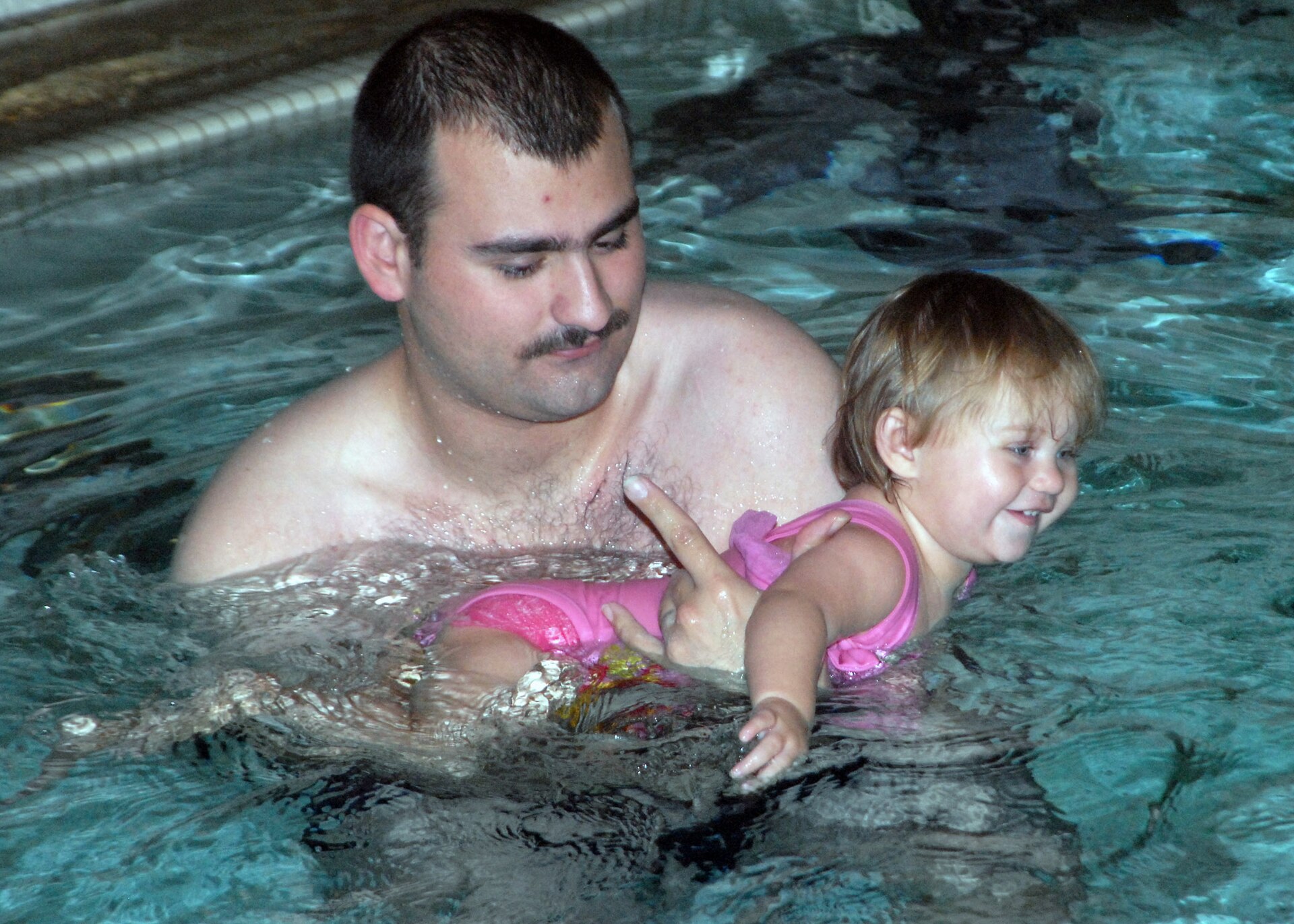
Photo: U.S. Navy photo by Courtney Pollock / Public domain, via Wikimedia Commons.