
If you’ve ever called “run a slant” and watched a seven-year-old sprint straight into the parking lot, you already know: young kids don’t think in routes. They think in shapes, colors, and “run to that thing.” Trying to teach a route tree the way a high school coach would is a fast way to lose an entire practice to confused stares.
The fix isn’t a better diagram — it’s a different teaching method entirely. Below are the drills that actually work for beginners, built around cones, landmarks, and repetition without the ball, so kids build the movement pattern before they ever have to remember a route name.
Quick Answer
Skip the route tree and route names at first. Use cones as physical turn-markers, walk the path with the kid before jogging it, run it without a ball several times, and only add the football once the footwork is automatic. Teach one shape at a time — straight line, one turn, one line — instead of naming plays.
Start With Shapes, Not Route Names
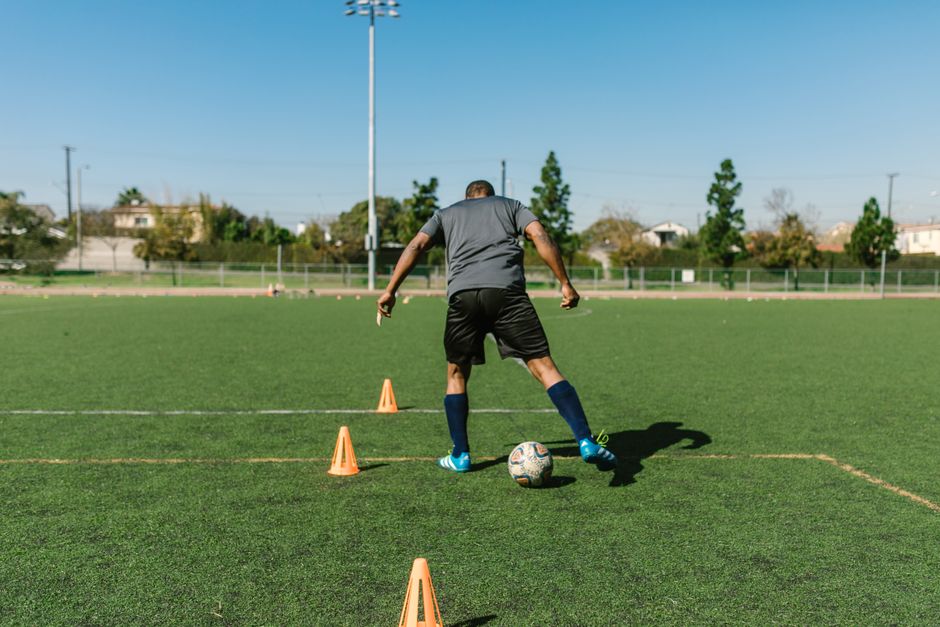
Kids under about 8-10 usually can’t hold “out route at five yards, sell it inside first” in their head — it’s too many instructions at once. Instead, describe every route as a shape: a straight line, an L, a Z, or a hook. Put a cone at every point where the path changes direction and tell the player “run to the cone, then turn toward me.” The cone does the thinking for them; they just react to it.
Once a kid can consistently run to a cone and turn the right way without being reminded mid-run, you can start attaching the real route name to the shape they already know. Naming comes after the movement, not before.
The Core Beginner Drill Progression
1. Walk it first. Before any running, walk the exact path with the player, pointing at each cone and saying out loud where they’ll turn. This removes the guesswork before speed gets added.
2. Run it with no ball. Have the player jog the route shape several times focusing only on hitting the cone and making a clean turn — not catching anything. Adding a ball too early splits their attention and they revert to just chasing it.
3. Add the quarterback’s eyes. Once the shape is automatic, have the player look back at the passer (or coach) right as they make their turn, since finding the ball late is one of the most common mistakes at this age.
4. Add the ball last. Only introduce a thrown or tossed ball once steps 1-3 are consistent. If the route breaks down once the ball shows up, back up a step rather than pushing forward.
5. Two go-to routes for total beginners are the curl (straight line out, then turn back around to face the passer) and the out (straight line, then a hard turn toward the sideline). These two cover most of what a young player needs and are easy to explain as “run, then turn.”
Building Footwork Underneath the Routes
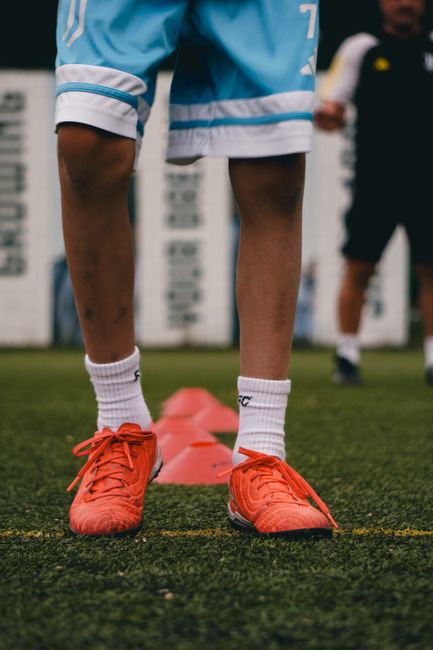
Route running falls apart when a kid’s feet cross or they round every turn like a car instead of cutting. A simple footwork base to run before or alongside route drills: set cones about five yards apart in a line and have the player sprint to each one, plant, and change direction while staying low and facing forward — no crossing the feet. This builds the same plant-and-turn mechanic they’ll need at every route break, just without the pressure of also remembering where to go.
A basic four-cone square drill (cones set a few yards apart in a square) works well too — it teaches quick, controlled direction changes that carry directly into sharper route breaks later on.
Tips and Common Mistakes
Don’t teach more than one or two routes in a single practice — kids need repetition on the same shape, not variety. Use consistent language every time (always say “turn” at the same spot, not “cut” one day and “break” the next) since young players latch onto the exact words they’ve heard before. Avoid full-speed reps before the walk-through and no-ball stages are solid; speed just makes a wrong pattern more permanent. And explain the why in one simple sentence when you can — even “you’re running there so the ball has room to reach you” gives a young player a reason to remember the path, not just a shape to memorize.
Explore more: More youth coaching drills and tips.
Route running drills for kids FAQs
What age should kids start learning real route names?
Most coaches wait until players can consistently run the shape and hit their turn point before attaching formal route names — for many kids that’s easier once they’re a bit older, but it depends more on the individual player than a strict age cutoff.
How many routes should a beginner learn first?
Start with just one or two — typically a straight-line curl and a simple out route toward the sideline. Adding more before those are automatic tends to create confusion rather than progress.
Do I need a real football field to practice this?
No. Cones in a yard, gym, or driveway are enough to teach the turn points and footwork; the ball and full field spacing can be added once the basic shapes are solid.
Level Up With SportsSteps
Track your athlete’s progress, connect with coaches and your team, and grow — get the SportsSteps app. Get the SportsSteps App.
Photo by Chris K on Pexels.