
The breaststroke pullout is sometimes called the fifth stroke, and for good reason: a clean, powerful pullout off the start and every turn can gain a swimmer a full body length on the field before the first breaststroke kick even happens. It’s also one of the easiest places to get disqualified, since the stroke, kick, and surfacing sequence are all tightly regulated.
This guide breaks the pullout into its individual phases, explains the rules that govern it under World Aquatics (formerly FINA) regulations, and covers the mistakes that either slow swimmers down or get them pulled from a heat sheet.
Quick Answer
A legal breaststroke pullout is: push off in a tight streamline, one optional dolphin kick, one breaststroke arm pull all the way back to the legs, then a single breaststroke kick. After that, the head must break the surface of the water before the hands turn inward at the widest part of the second arm stroke of the swim, counting the pullout pull as the first.
The Pullout Step by Step
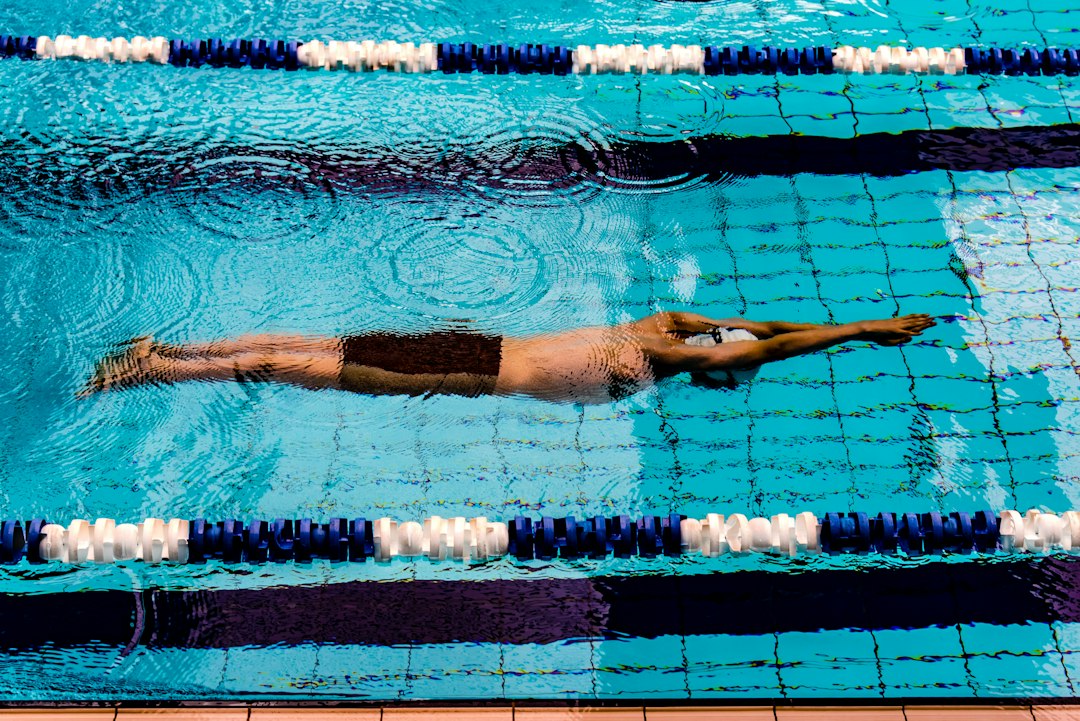
Push-off and streamline: Leave the wall with hands stacked, arms squeezed against the ears, and legs together, forming as straight a line as possible. Drag increases fast with any bend in the hips or lower back, so this position sets up everything that follows.
The single dolphin kick: The rules permit one butterfly-style (dolphin) kick at any time before your first breaststroke kick. It’s optional, but nearly every competitive swimmer takes it while still in streamline because it adds speed without costing anything legally.
The pull-down: This is the one arm stroke the rules allow to travel all the way back to the legs, instead of stopping at the hipline as in normal breaststroke swimming. Bend the elbows to roughly a right angle, point the fingers down and back, and pull with patience rather than rushing — the goal is to finish the stroke with the hands near the thighs, not to yank the arms through as fast as possible.
Recovery and the breaststroke kick: Bring the arms back forward close to the body (not out wide) while drawing the heels toward the hips for a single breaststroke kick. The legs must kick simultaneously and in the same horizontal plane — no scissor or flutter action is allowed here.
Surfacing: The pullout pull counts as the first arm stroke, so the next arm pull is the second stroke. The rule requires some part of the head to break the surface before the hands turn inward at the widest part of that second stroke — timed well, the head naturally pops up right as the hands sweep outward and begin turning in, which is also where a swimmer gets the most propulsion out of the stroke.
The Rules That Make or Break Legality
Order matters: after the start or a turn, the swimmer may take one arm stroke completely back to the legs, during which the body may be submerged, and one butterfly kick is allowed at any point before the first breaststroke kick. Taking more than one pullout stroke, more than one dolphin kick, or a dolphin kick after the first breaststroke kick is a disqualification.
Leg symmetry: from the first breaststroke kick onward, both legs must move together and in the same plane. A common DQ is an uneven or ‘scissor’ kick where one foot turns out and the other turns in, often from asymmetrical hip rotation during the pull-down.
The surfacing rule: breaststroke is judged by a timing rule rather than a set distance underwater. Some part of the head must break the surface before the hands turn inward at the widest part of the second arm stroke after the start or a turn. Surface late relative to that stroke and it’s a DQ, regardless of how far off the wall it happens.
No extra dolphin kicks: outside of that single permitted kick in the pullout, any dolphin/butterfly-style kicking during breaststroke swimming is illegal at any point in the race.
The hipline rule, waived once: during normal breaststroke swimming, the arm pull can’t go back past the hipline. The pullout is the one exception, which is exactly what makes it a distinct, separately-coached skill rather than just ‘one more breaststroke stroke.’

Tips / Common Mistakes
Lifting the head early is probably the most common speed killer — it breaks the streamline and adds drag well before the swimmer needs to breathe. Keep the head between the arms until the pull-down and kick are finished.
Bending the elbows too soon during the pull turns a powerful pull-down into a weak, splashy paddle. Keep the arms straighter through the first part of the pull and only bend once the hands pass the shoulder line.
Rushing the whole sequence is a close second. Treat the pullout as five connected phases — streamline, kick, pull, kick, surface — rather than one fast blur; efficiency, not raw speed, is what makes a pullout gain distance.
Practicing it lazily during warm-up and only ‘trying’ at race pace is a habit worth breaking. Because the pullout happens off every single wall, small technical flaws compound over a whole race — it’s worth drilling on its own, not just as an afterthought to starts and turns.
Explore more: more swimming technique guides.
Breaststroke pullout FAQs
How many kicks are allowed in a breaststroke pullout?
Two: one optional dolphin (butterfly) kick, which may be taken at any time before the first breaststroke kick, and then one breaststroke kick. Additional kicks of either type before surfacing are illegal.
Can you take more than one arm pull during the pullout?
No. Only one arm stroke is allowed to travel all the way back to the legs before the swimmer kicks and then continues swimming breaststroke normally, with the pull staying at or before the hipline.
How far can you swim underwater in breaststroke before surfacing?
Breaststroke is governed by a timing rule instead of a set distance. Some part of the head must break the surface before the hands turn inward at the widest part of the second arm stroke, whatever distance that ends up covering.
What’s the most common breaststroke pullout disqualification?
Kicking out of sequence (such as taking extra kicks or a dolphin kick after the first breaststroke kick) and uneven, non-simultaneous leg movement are among the most frequent stroke-and-turn DQs, along with not completing a legal two-hand touch at the wall.
Level Up With SportsSteps
Track your athlete’s progress, connect with coaches and your team, and grow — get the SportsSteps app. Get the SportsSteps App.
Want training tips and sports news in your inbox? Subscribe to the free newsletter.
Photo by Richard R. Schünemann on Unsplash.