
Lifting your head too high, too often, or at the wrong point in your stroke is the main reason sighting slows swimmers down. Every time your head comes up and your hips drop, you create drag, and if you’re wasting energy correcting your line every few strokes, you’re swimming farther than you need to.
The fix isn’t to sight less — it’s to sight smarter. This guide walks through the low-profile “alligator eyes” technique, how to time it with your breath instead of against it, and how often you actually need to check your line so you swim straighter without burning extra energy.
Quick Answer
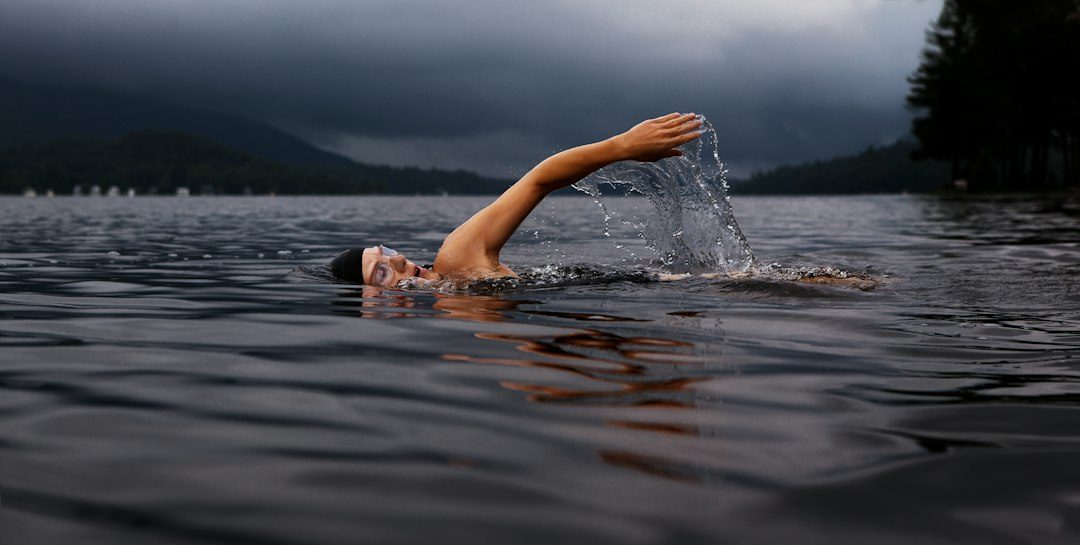
Keep your head low and only lift your eyes just above the surface for a split second — not your whole face — and time that lift to happen right before you turn to breathe, not at the same moment. Sight every 6 to 10 strokes in calm water (more often in waves or chop), then drop your head straight back down into your normal head-down body line.
The Alligator Eyes Technique, Step by Step
Start from your normal head-down freestyle position, with your head an extension of your spine rather than tilted up. As you’re about to take a breath, press down slightly with your lead/front arm during the catch — that extra downward pressure gives your head and shoulders just enough lift to clear your eyes and the top of your goggles above the surface.
Only your eyes need to break the waterline. Picture an alligator cruising with just its eyes above the surface — the rest of your head stays down and your hips stay up, so you don’t create the drag that comes from lifting your whole face out of the water.
Glance forward quickly to spot your buoy, landmark, or the swimmer ahead of you, then rotate your head to the side to take your breath as normal, and let your head drop straight back into line. The sight and the breath are two separate motions on the same stroke — sight first while facing forward, then turn and breathe — not one combined motion where you try to see and inhale at the same time.
Timing, Frequency, and Stroke Integration
In calm, flat water, sighting roughly every 6 to 10 strokes is enough to hold your line without constantly breaking rhythm — you’re not trying to track a moving target, just confirming you’re still pointed the right way. In rougher conditions or when sighting a buoy that’s easy to lose in chop, shorten that to every 3-5 strokes and try to time the lift so it happens when you crest a wave rather than in a trough, where you won’t see past the swell anyway.
If sighting feels like it throws off your stroke, practice it in the pool first. Swim a length breathing every two strokes as usual, then add a quick forward sight on the stroke right before one of those breaths. Once that feels automatic, stretch it out to sighting every 4, then 6, then 8 strokes so the motion becomes a small, practiced habit instead of a disruptive one by the time you’re in open water.
Sighting bilaterally (sometimes to the left, sometimes to the right) on alternating sides can help you hold a straighter line than always sighting and breathing on the same side, since it keeps your stroke symmetric instead of consistently pulling you off-course in one direction.
Tips and Common Mistakes
The biggest mistake is lifting the head too high and holding it up too long — this drops the hips and legs, kills your body’s hydrodynamic line, and forces you to kick harder just to stay level, which costs far more energy than the sight itself. Keep every lift short and low.
Another common error is combining the sight and the breath into one motion, which often means you’re either not actually seeing your target clearly or you’re gasping for air at an awkward angle. Separate them: look forward, then turn and breathe.
Wear goggles suited to the light and water conditions — tinted or polarized lenses cut glare when you’re sighting toward the sun, while clear lenses work better in overcast or low-light swims — since squinting into glare makes it harder to spot your target quickly and tempts you to lift your head higher than necessary.
Pick a sighting target that’s actually visible at your eye level from the water — a tall building, a distinctive tree line, or a brightly colored buoy works better than a low marker that disappears behind swell. Even small, consistent course corrections beat drifting off-line for a long stretch and having to swim extra distance to correct it.
Explore more: more open water and triathlon swimming guides.
Open water sighting technique FAQs
How often should I sight in open water?
About every 6 to 10 strokes in calm conditions is a good starting point. Sight more frequently — every 3-5 strokes — in waves, current, or when visibility to your target is poor.
Why does sighting slow me down?
It’s usually not the sight itself but the technique: lifting your whole head out of the water drops your hips and legs, creating drag. Keeping the lift small (just your eyes) and timing it with your stroke’s natural catch avoids that speed loss.
Should I sight and breathe at the same time?
No. Sight first by glancing forward low over the water, then rotate your head to the side to take your breath. Combining both into one motion usually means you see less and breathe worse.
What’s the best way to practice sighting before race day?
Practice in the pool first. Add a quick forward sight right before a breath on an otherwise normal breathing pattern, then gradually extend the number of strokes between sights until it feels automatic before trying it in open water.
Level Up With SportsSteps
Track your athlete’s progress, connect with coaches and your team, and grow — get the SportsSteps app. Get the SportsSteps App.
Want training tips and sports news in your inbox? Subscribe to the free newsletter.
Photo by Todd Quackenbush on Unsplash.