
Youth sports news this week was about who plays and who doesn’t. Two national reports came out within days of each other. One found boys are leaving organized sports, and the other found girls fall behind as early as age 8. Money kept flowing into flag football, youth media and facilities at the same time. This youth sports news roundup covers the participation data, what pediatric sports medicine experts are telling parents, and the business and tech moves that will shape your family’s next season.
Youth Sports News
Aspen Institute: Boys’ Participation Drops From 50% to 42%
Aspen Institute’s Project Play and the American Institute for Boys and Men released the Boys in Sports report. It found that the share of boys ages 6-17 who play sports regularly fell from 50% in 2013 to 42% in 2024. Current male athletes named bad coaching as their top complaint (22%), ahead of cost (17%). Nearly half of boys who never played (49.5%) said fear of injury kept them out. If your program is losing players, our guide to halftime talks built on structure over speeches is a good place to start improving the coaching experience.
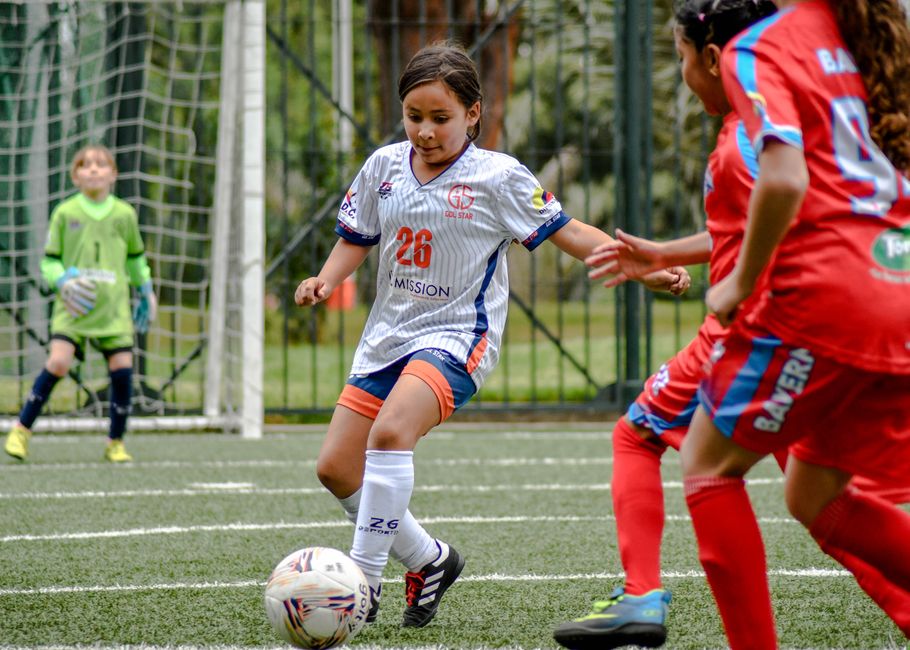
Women’s Sports Foundation: Girls’ Gap Opens by Ages 8 to 10
The Women’s Sports Foundation’s first WSF Sport Report 2026 found that 46% of girls ages 8-10 play organized sports, compared with 54% of boys. Interest isn’t the issue: 54% of girls who have never played say they want to. Household income makes the gap even wider, from 31% participation for girls in homes under $50,000 to 58% in homes over $100,000. Forbes breaks down why the boom in pro women’s sports hasn’t reached young girls yet.
NFL FLAG and NRPA Bring Funding to Local Park Agencies
RCX Sports, which operates NFL FLAG, announced a multi-year partnership with the National Recreation and Park Association on September 28. Through the NFL FLAG Fund, park and rec agencies can get money for equipment, uniforms, staffing, scholarships and clinics. A set portion goes to girls’ flag football through NRPA’s “Get Her in the Game” initiative. NRPA members reach more than 50 million young people every year.
U.S. Bank Sponsors 10 NFL FLAG Regional Tournaments
U.S. Bank will sponsor 10 NFL FLAG Regional Tournaments across fall 2026 and spring 2027, starting October 3 in Canton, Ohio. The bank is also putting $250,000 toward NFL FLAG-In-School kits for 400 schools. Flag football participation among kids ages 6-12 is up 38% since 2015 and now tops 1.5 million players.
Protect College Sports Act Clears the Senate 77-22
The Senate passed the Protect College Sports Act. It gives the NCAA a limited antitrust exemption over athlete pay, NIL, transfers and eligibility, and it would let schools pay athletes directly up to $48.8 million a year. The House doesn’t return until November 9. High school recruits and their families should follow this closely because it would change the college pathway they’re working toward.
Training & Performance Science
A Concussion Researcher Explains Why He Lets His Sons Play Football
University of Michigan concussion researcher Jonathan Lifshitz, Ph.D., says he weighs risk against benefit instead of chasing zero risk. His sons played three years of flag football before starting tackle in 8th grade. He stresses strength, nutrition, sleep and proper tackling technique. “Every head injury can have downstream, longer lasting effects,” he said. That’s why he calls preparation non-negotiable.
US Sports Camps President: More Games Don’t Make Better Athletes
Justin Hoeveler, president of US Sports Camps, argues that youth sports is good at scheduling practices, games and tournaments but bad at measuring whether kids actually get better. “Competition is part of development. I just don’t think it should be the entire development model,” he said. He recommends tracking skill gains, confidence and enjoyment, not just hours played. Our conditioning standards by sport and age can help you set benchmarks like that.
Return-to-Play Guidance at the AAP National Conference
The American Academy of Pediatrics National Conference runs October 2-6 in San Diego, and pediatric sports medicine has a big presence on the program. Children’s Hospital Los Angeles physicians are presenting “Back in the Game: Pediatrician’s Guide to Return to Play” and “The Pediatric Injury Playbook.” There is also a full-day Council on Sports Medicine and Fitness program on October 4. Parents can expect pediatricians to come home with updated return-to-sport protocols.
E-Bike Injuries in Kids Nearly Quadruple
Research presented at the AAP conference found that pediatric e-bike and e-scooter injuries at one hospital rose from 33 cases in 2019 to 124 in 2025. Patients averaged 14.2 years old. According to Contemporary Pediatrics, e-bike injuries were more severe than e-scooter injuries: 17% involved a concussion (vs. 8.6%) and 26% needed surgery (vs. 9.7%). That matters for any athlete who rides to practice.
Sports Tech & Community
Overtime Raises Strategic Round Led by Todd Boehly’s Eldridge
Youth sports media brand Overtime closed a strategic investment led by Eldridge, Todd Boehly’s firm. The amount wasn’t disclosed. Overtime will spend the money on content, commerce, technology and its live properties: Overtime Elite, Overtime Select (girls’ basketball) and OT7 (football). Its last raise was a $100 million Series D in 2022.
TeamSnap Launches a Product Sampling Network
TeamSnap launched TeamSnap Sampling, which lets brands hand out products at more than 40 partner facilities. National campaigns can top 2 million samples. In a pilot, Meiji Hello Panda saw a 64% lift in brand familiarity among participating families. If your team uses more than one app, see our explainer on using TeamSnap and GameChanger for the same team.
iFlag Youth Links Flag Football Tournaments Into One Season
iFlag Youth launched Road to Worlds. It connects 24 Premier Circuit tournaments in five regions to a National Championship (January 15-17, 2027, in Tampa) and a World Championship (July 9-11, 2027, in Ontario, California). Neither championship requires a qualifying bid, and divisions run from 7U through 18U.
Perfect Game Sorts About 10,000 Events Into Five Tiers
Perfect Game is sorting its roughly 10,000 annual baseball events into five classes: Flagship, Premier, Signature, Classic and All-Star. The rollout will be finished by January 1, 2027. The goal is to show families what level of scouting and ranking value each event offers before they pay.
TEC Signs a 20-Year Naming Deal at Kentucky Sports Factory
Fiber broadband provider TEC signed a 20-year presenting deal, so the Madisonville facility is now “Kentucky Sports Factory, Connected by TEC.” The deal includes up to 8-gig fiber service and local hiring. Club directors looking for sponsors should read our breakdown of sponsorship tiers local businesses actually buy.
Canada Launches a Global Challenge on Youth Sport Belonging
Canadian Tire Jumpstart Charities and Lausanne-based ThinkSport launched the Canadian Sport Innovation Challenge. It is looking for proven solutions in coaching, family support, peer connection and role models. One in five Canadian parents say they have hesitated to sign up a child for sport. Applications close November 22. For more participation trends, see last week’s youth sports news roundup.
Sources
- Youth Sports Business Report — Boys Sports Participation Is Falling, and a New Aspen Report Points to Coaching and Access
- Youth Sports Business Report — Girls Sports Participation Gap Opens by Ages 8 to 10
- Youth Sports Business Report — U.S. Bank to Sponsor 10 NFL FLAG Regional Tournaments
- Youth Sports Business Report — Overtime Investment Round Led by Todd Boehly’s Eldridge
- Newswise — CHLA Experts to Present on Sports Medicine at 2026 AAP Meeting
Featured image — Photo: Cpl. Travis Gershaneck / Public domain, via Wikimedia Commons
Frequently Asked Questions
What was the biggest youth sports news this week?
Two national reports. Aspen Institute’s Boys in Sports report found boys’ regular participation fell from 50% to 42%. The Women’s Sports Foundation found the girls’ participation gap opens by ages 8 to 10.
Why are boys quitting youth sports?
Current male athletes named bad coaching as their top complaint (22%), followed by cost (17%). Almost half of boys who never played said fear of injury kept them out.
How fast is youth flag football growing?
Participation among kids ages 6-12 is up 38% since 2015 and now tops 1.5 million players. NFL FLAG runs more than 2,000 local leagues.
Should concussion risk keep kids out of football?
University of Michigan researcher Jonathan Lifshitz recommends weighing risk against benefit instead of aiming for zero risk. He suggests starting with flag football, then focusing on strength, sleep, nutrition and proper tackling technique.
Where can I follow weekly youth sports news?
SportsSteps publishes a youth sports news roundup every Sunday. It covers participation research, training science and sports tech for parents and coaches.