
Every time you turn your head to breathe in freestyle, something in your stroke can change. Your hips may drop, your pull may shorten, or one side may end up stronger than the other. A center-mount swim snorkel removes the head turn so you can see what the rest of your stroke is really doing.
This guide explains what a swim snorkel does, why swimmers and coaches use one, how to fit it, and how to work it into your sets. It also covers the mistakes that make new users give up in the first session.
Quick Answer
A swim snorkel is a center-mount tube that sits at the front of your face, so you can breathe without turning your head. That lets you keep a neutral head position and focus on body alignment, rotation, and your catch. Start with short, easy repeats of drills and freestyle, and use it as a technique tool alongside normal swimming rather than a replacement for it.
Why Swimmers Use a Snorkel
Breathing is often what limits technique. As U.S. Masters Swimming explains, a snorkel lets you concentrate on your stroke instead of the constant task of getting air, so you can work on things like your catch, pull, and rotation without interruption.
The main benefits swimmers and coaches point to are these. First, less breathing anxiety: knowing air is always there helps many swimmers relax. Second, stroke awareness: with your face in the water while you breathe, it is easier to see problems in your hand path and other technique flaws. Third, body position and symmetry: without the head lift or turn, the hips and legs are less likely to sink, and it is easier to notice if one side of your stroke is stronger or different from the other.
USMS also notes that better mechanics can help reduce injury risk, and that a snorkel can be helpful for swimmers with conditions such as arthritis or previous neck or spine injuries, since it cuts down on repeated head rotation. Talk to a doctor or coach if you are managing a real injury or a medical condition. Open-water swimmers also use snorkels in the pool to work on alignment and straight-line swimming.
How to Get Started, Step by Step
1. Choose a center-mount snorkel designed for swimming. Options vary in tube shape, bore width, length, and whether they have a purge valve. In general, a wider bore and a gently curved tube tend to be easier for beginners, while narrower, more minimal designs suit experienced swimmers. Most major swim brands make one, so try a few on if you can.
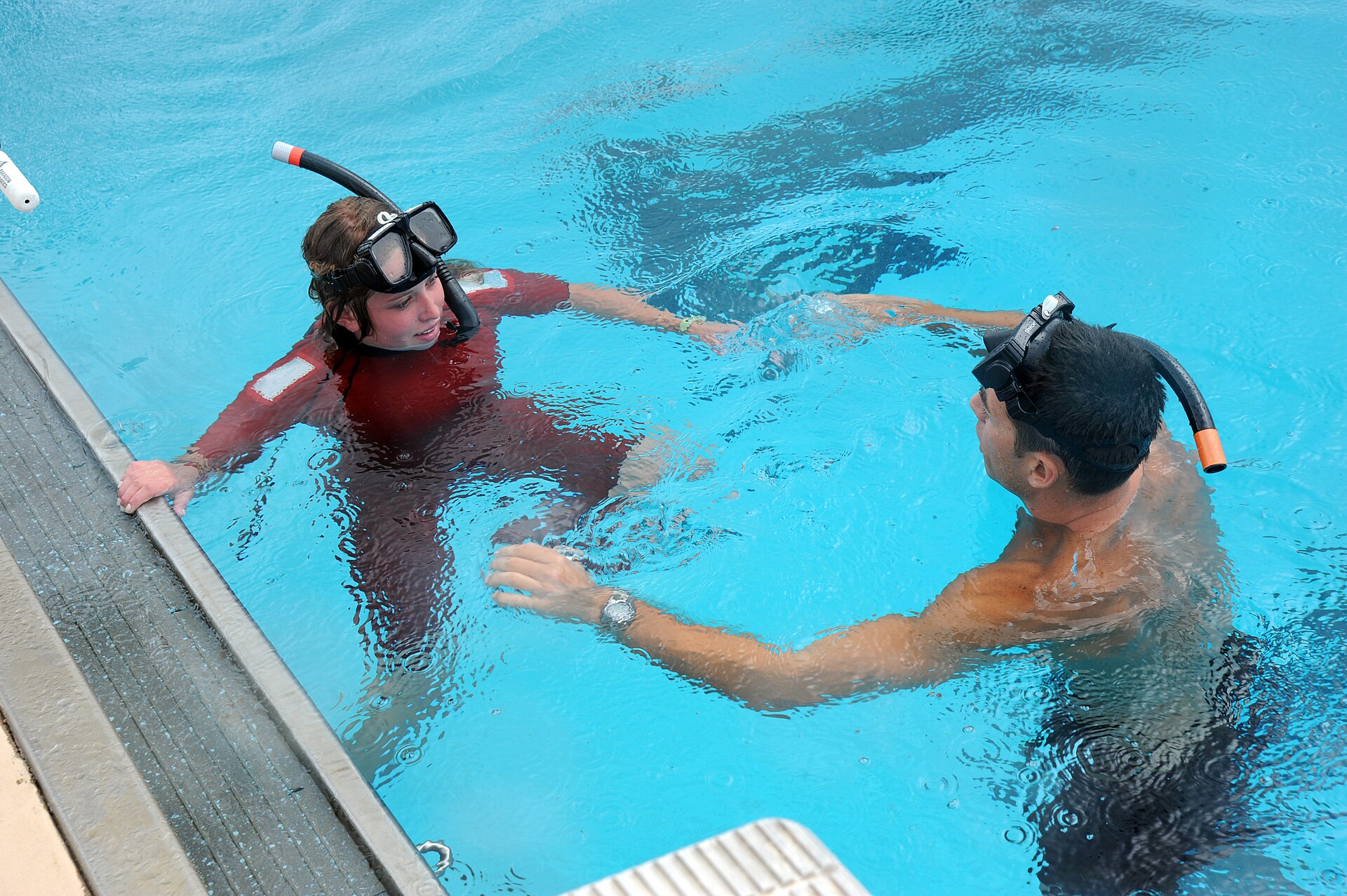
2. Fit it before you get in the water. Adjust the head bracket so the tube sits centered over your forehead and the strap is snug but not tight. Your goggles should sit comfortably under or beside the bracket without leaking.
3. Bite gently on the mouthpiece and seal your lips around it. Do not clamp down hard. A relaxed jaw makes it easier to keep water out and avoids sore jaw muscles.
4. Start with easy breathing. Stand in shallow water or hold the wall and breathe in and out through the tube until it feels natural. Breathe steadily and exhale firmly, rather than gulping air or holding your breath.
5. Push off and swim a short, easy length or two. Keep repeats short, especially early on, so you can stay focused on technique and not get fatigued or frustrated.
6. Build up gradually. Once easy freestyle feels comfortable, move on to drills and longer repeats.
Drills and Sets to Try
Easy freestyle: swim relaxed lengths and focus on a level head and steady, even rotation. Note whether your hips stay high and whether both sides of your stroke feel the same.
Catch-focus swimming: with your face down and your breathing sorted, concentrate on getting a good hold on the water early in the pull. Slow the stroke down and feel the water on your forearm and hand.
Kick and sculling: a snorkel is handy for kick sets and sculling because you can stay in a streamlined position without lifting your head.
A simple first session might be a short warm-up without the snorkel, a handful of short repeats with it on, and then some normal swimming to finish. Swimming a few repeats without the snorkel right afterwards is a good way to check whether the changes carry over.
Tips and Common Mistakes
Do not treat it as a permanent crutch. You still need to practice bilateral breathing and the timing of your normal breath, because snorkels are not allowed in most swim races. Use it for some of your session rather than all of it.
Do not grip the mouthpiece too hard or hold your breath. Tension in the jaw and neck spreads to the rest of your stroke. If water gets in, exhale sharply through the tube to clear it.
Keep your head still. If the tube bobs or swings around, your head is probably moving too much, and that is useful feedback about your alignment.
Expect an adjustment period. Turns and starts will feel different with a snorkel, so many swimmers take it off for turns or practice them slowly. If your snorkel has a purge valve, check it regularly for debris.
Rinse the snorkel in fresh water after each pool session and let it dry out of direct sun. Follow the manufacturer’s care instructions for the mouthpiece.
Be patient. As USMS notes, learning to use a snorkel efficiently takes time, so give it several sessions before you decide whether it suits you.
Explore more: More swimming guides and training tips.
Swim snorkel training FAQs
Is a snorkel good for beginner swimmers?
It can be, because it removes the timing challenge of turning to breathe. Beginners should still be comfortable in the water, start in a shallow area or near the wall, and learn regular breathing too. A coach can help you decide how much to use it.
Can I use a swim snorkel for open water swimming?
It depends on the event and the setting. Recreational open-water swimmers can generally use one, but many competitive open-water events do not allow snorkels, and rules vary by organizer. Some events permit them in non-competitive divisions or with approval from event safety staff. Always check the rules of the specific swim, and remember that open water brings its own safety needs, so swim with a buddy or a support setup. Many open-water swimmers also use a snorkel in the pool to work on alignment and symmetry.
How often should I use a snorkel?
Most swimmers use it for part of a session, such as a drill block or some technique sets, rather than the whole workout. Follow your coach’s advice and make sure you also keep practicing normal breathing.
Should I wear the snorkel for flip turns?
Turns generally feel different with a center-mount snorkel. Many swimmers take it off for turns or slow down and practice them carefully. Ask your coach if you want to keep it on.
Level Up With SportsSteps
Track your athlete’s progress, connect with coaches and your team, and grow — get the SportsSteps app. Get the SportsSteps App.
Want training tips and sports news in your inbox? Subscribe to the free newsletter.
Photo: Wildswimmer Pete / CC BY-SA 4.0, via Wikimedia Commons.