
Switch from coaching a youth team to running an adult session and the same drill can land completely differently. Adults show up with baggage — old habits, self-consciousness about looking clumsy, a job to get back to — while kids show up mostly wanting to move and have fun. Neither group is harder to coach, but they respond to different cues, and a coach who treats both groups identically usually loses one of them.
This guide breaks down what genuinely needs to change between coaching adults and coaching kids — motivation, feedback style, session structure, pacing — and what stays constant no matter who’s in front of you. It’s written for coaches working across age groups, whether that’s a club running both youth and adult programs or an individual coach building a mixed client base.
Quick Answer
Coaching adults means leaning on autonomy, clear rationale, and efficient use of limited time, since adults are self-directed and often have less time and more inhibition. Coaching kids means leaning on structure, novelty, and play, since children need more repetition, shorter attention spans accommodated, and fun kept central. What doesn’t change: the need for clear communication, consistent feedback, safety, and genuine encouragement — good coaching fundamentals apply at every age.
What Changes: Motivation, Feedback, and Pacing
Motivation is the biggest shift. Kids typically play because it’s fun — the scoreline and league table rarely crack their top reasons for showing up. Adults usually arrive with a specific goal (fitness, competition, stress relief, a personal best) and want to see a clear line between the drill and that goal. Explaining the ‘why’ behind an exercise matters far more with adults; kids are usually happy to just play the game you put in front of them.
Feedback style needs to adjust too. With younger children, criticism lands best sandwiched between encouragement — say what went well, note the fix, end on a positive. Teens and adults can generally handle more direct feedback, but it still helps to follow criticism with support rather than leaving it hanging. Adults are also more self-conscious about looking incompetent in front of peers, so public correction that would roll off a kid can shut an adult down; a quieter word often works better.
Pacing and structure differ as well. Children benefit from shorter, more varied activity blocks with built-in breaks and game-like framing, since attention spans and coordination are still developing — this is especially true for younger age groups where the brain regions handling planning and impulse control are still maturing. Adults can typically sustain longer, more linear blocks of focused work, and they respond well to sessions that respect their time: a clear agenda, efficient transitions, and a defined start and end.
Prior experience changes what you’re building on. Adult athletes usually already have ingrained technique and habits, so a lot of adult coaching is refinement or gently unlearning bad patterns. Kids are closer to a blank slate, which means early technical input has an outsized, long-lasting effect — good or bad.
What Doesn’t Change: The Coaching Fundamentals
Some things hold at every age. Clear, specific instructions beat vague ones whether you’re talking to a seven-year-old or a forty-year-old — ‘plant your foot before you swing’ works better than ‘get better contact’ for anyone. Consistency matters too: athletes of any age perform better when they know what to expect from a session and from you as a coach.
Safety and physical readiness are non-negotiable regardless of age group — warm-ups, appropriate progressions, and reading fatigue or injury risk apply whether you’re coaching a youth clinic or a masters league. And genuine encouragement — noticing effort, not just outcomes — keeps people coming back whether they’re 9 or 49. The instinct to build confidence rather than just correct errors is universal good coaching, not an age-specific technique.
Group dynamics also matter at every level. Both kids and adults take cues from how teammates are treated, so favoritism or public embarrassment damages trust in either setting. A coach who’s fair and attentive builds buy-in regardless of the age of the room.

Tips / Common Mistakes
A common mistake is running adult sessions like youth practice — over-explaining basics adults already grasp, or padding time with drills that don’t obviously connect to their goals. Adults disengage fast when a session feels like it’s wasting their time.
The reverse mistake is coaching kids like small adults — expecting adult-level focus, skipping the play element, or delivering feedback so direct it discourages rather than corrects. Kids need the fun kept in the session or participation drops off.
Another frequent issue: assuming an adult group is homogenous. Adult recreational groups can span a huge range of prior experience, from lifelong athletes to complete beginners, so don’t assume uniform ability just because everyone’s the same age.
Finally, watch how you handle mistakes. With kids, framing errors as part of learning keeps them trying new things. With adults, acknowledging that they may feel self-conscious — and normalizing that beginners struggle — helps keep them from quitting out of embarrassment.
Explore more: more coaching tips and strategies.
Coaching Adults vs Kids FAQs
Is coaching adults easier than coaching kids?
Not necessarily — it’s different, not easier. Adults need less behavior management but more explanation of purpose and are more sensitive to feeling judged. Kids need more structure and repetition but are generally more forgiving and easier to re-engage after a mistake.
Should feedback be more direct with adults?
Generally yes, but it should still be paired with support. Adults can typically handle straightforward correction better than young children, who respond best when criticism is framed alongside praise.
Do adults need warm-ups and progressions the same way kids do?
Yes — physical readiness and injury prevention matter at every age. Adults may need more attention to old injuries or lower baseline mobility, while kids need progressions suited to still-developing coordination.
What’s the biggest mistake coaches make switching between adult and youth groups?
Using the same session format for both. Copying a youth practice plan for adults often feels slow and unfocused to them, while copying an adult-style session for kids often loses the fun element that keeps children engaged.
Level Up With SportsSteps
Track your athlete’s progress, connect with coaches and your team, and grow — get the SportsSteps app. Get the SportsSteps App.
Want training tips and sports news in your inbox? Subscribe to the free newsletter.
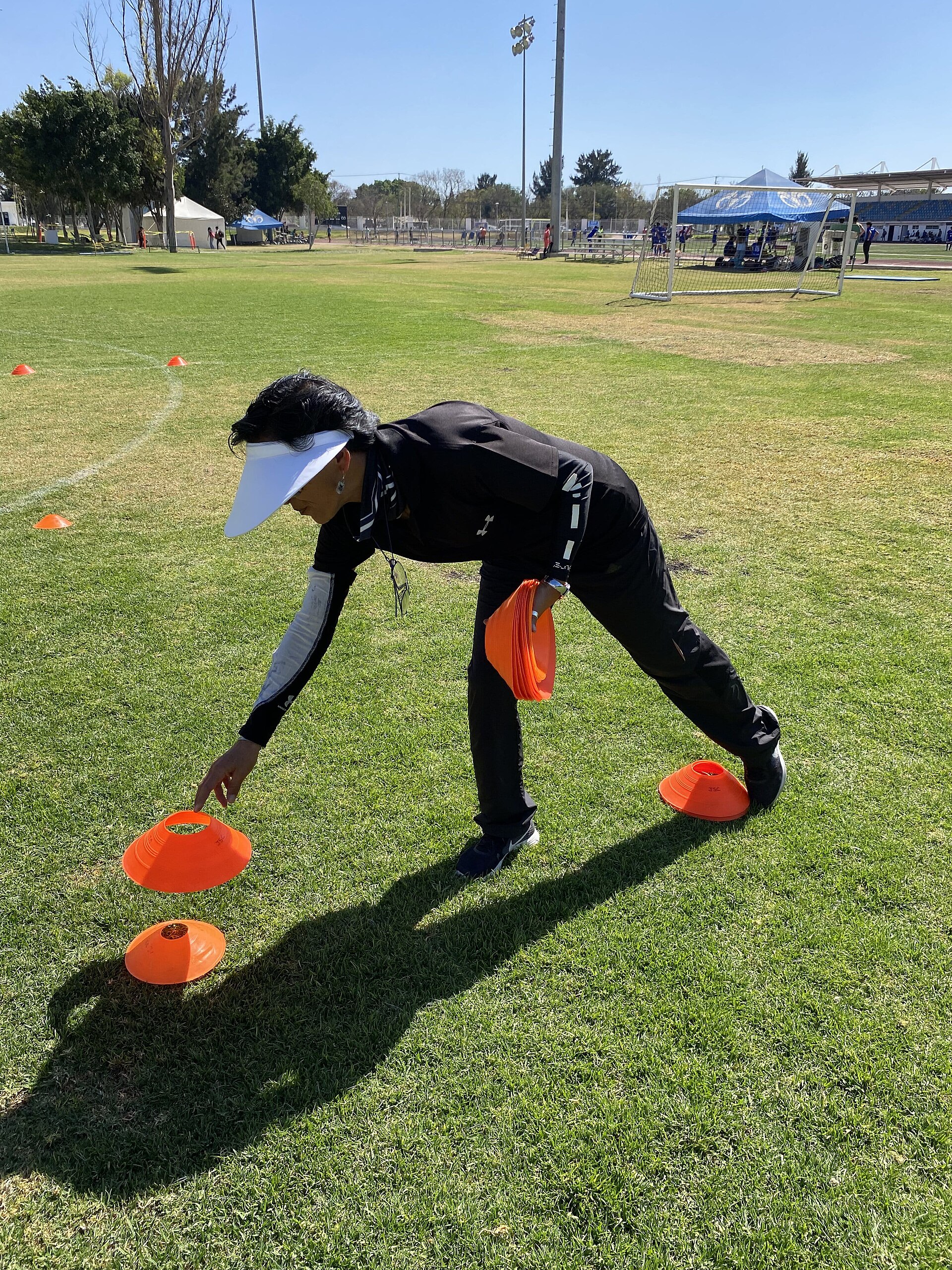
Photo: James Moore200 / CC BY-SA 4.0, via Wikimedia Commons.
1 thought on “Coaching Adults vs Kids: What Changes and What Doesn’t”
Comments are closed.