
If your kid lives in the pool every summer, you’ve probably noticed the aftermath: hair that feels like straw, a faint chemical smell that survives three shampoos, and skin that turns red, itchy, or flaky by bedtime. Chlorine is what keeps pool water safe from bacteria, but it also strips away natural oils from hair and skin, which is why swim team kids and daily pool-goers tend to have the driest, most sensitive skin and hair of any young athletes.
The good news is that most of the damage is preventable with a short routine before and after swimming. This guide walks through exactly what to do, what products actually help, and the mistakes that make chlorine exposure worse.
Quick Answer
Rinse your child’s hair and skin with plain water before swimming so their hair and pores are already saturated and absorb less chlorinated water, apply a leave-in conditioner or swim-safe oil to hair and a barrier lotion to skin, then have them wear a swim cap and goggles. After swimming, rinse or shower immediately, use a clarifying (chelating) shampoo a couple of times a week to strip chlorine buildup, and moisturize skin while it’s still damp.
Before Your Kid Gets in the Pool
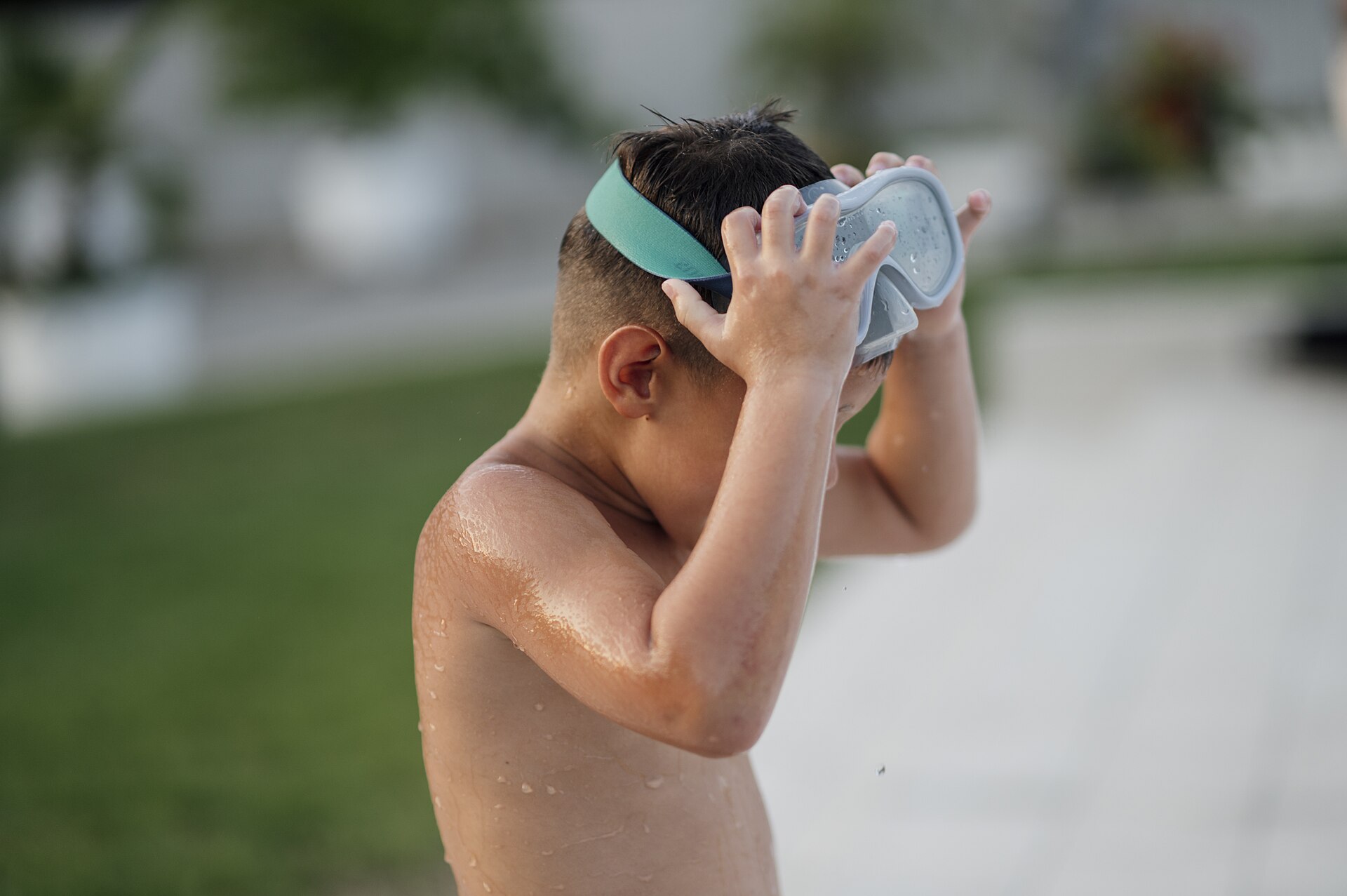
Wet hair and skin first. Have your child rinse off with clean water in the shower or under a hose for a minute or two before swimming. Hair and skin absorb liquid like a sponge — if they’re already saturated with fresh water, there’s less room to soak up chlorinated pool water.
Coat hair in conditioner or oil. Work a leave-in conditioner through damp hair, or use a swim-safe oil such as coconut, argan, or jojoba oil on the ends. Either one creates a light barrier that keeps chlorine from penetrating the hair shaft as easily. This matters most for kids with longer, curlier, or color-treated hair, which dries out faster than short hair.
Use a swim cap for extra protection. A cap won’t keep hair perfectly dry, but combined with conditioner it meaningfully cuts down how much chlorinated water reaches the hair, especially for kids on a swim team who are in the water for long practices.
Apply a barrier lotion or sunscreen to skin. A thick, fragrance-free moisturizer or a dedicated pre-swim skin barrier product helps protect skin the same way conditioner protects hair. If your child is swimming outdoors, this pairs naturally with sunscreen — apply sunscreen first and let it absorb before they get in the water.
Don’t skip goggles. Chlorine irritates eyes as much as skin, and rubbing itchy eyes with pool-water hands is a common way kids end up with redness or minor infections.
Right After Swimming: The Rinse-Off Routine
Shower as soon as possible. The longer chlorinated water sits on hair and skin, the more it dries and irritates. A rinse within a few minutes of getting out of the pool removes most surface chlorine before it can keep working.
Use a gentle, sulfate-free body wash rather than harsh soap, which can strip already-stressed skin further. Pat skin dry instead of rubbing.
Moisturize while skin is still slightly damp — within a couple of minutes of toweling off works best, since this helps seal in moisture rather than applying lotion to fully dry skin.
For hair, follow with a moisturizing conditioner or hair mask after shampooing to replace oils that chlorine stripped out during the swim.
Tips and Common Mistakes
Use a clarifying or chelating shampoo one to two times a week, not every day. These shampoos are formulated to strip mineral and chlorine buildup out of hair, but they’re also more drying than regular shampoo, so overusing them can backfire and dry hair out further. Follow every clarifying wash with a good conditioner.
Watch for chlorine-related skin irritation versus a chlorine allergy. Most kids get simple dryness or mild redness, but persistent itching, hives, or rash that doesn’t improve with moisturizing and rinsing can be a sign of sensitive skin reacting to pool chemicals, especially in kids with eczema. If irritation keeps recurring or spreads, check in with a pediatrician or dermatologist rather than just adding more lotion.
Don’t rely on a swim cap alone. Caps aren’t watertight, and hair around the hairline and neck still gets exposed — the conditioner-or-oil step is what actually blocks chlorine from soaking into the hair shaft.
Reapply sunscreen after any long swim, since even ‘water-resistant’ sunscreen wears down with time in the pool, and combine sun protection with the chlorine routine rather than treating them as separate steps.
For very frequent swimmers (daily swim team practice, for example), consider a deeper conditioning treatment or hair mask once a week in addition to the daily rinse-and-condition routine, since daily chlorine exposure adds up faster than occasional weekend swimming.
Explore more: more swimming tips and guides.
Protecting kids’ hair and skin from pool chlorine FAQs
Does a swim cap fully protect hair from chlorine?
No. Swim caps reduce water exposure but aren’t fully watertight, so hair around the edges and hairline still gets wet. Pairing a cap with a leave-in conditioner or oil gives much better protection than a cap alone.
What’s the best shampoo for chlorine buildup in kids’ hair?
A clarifying or chelating shampoo, used once or twice a week, is best for removing chlorine and mineral buildup. Using it more often than that can dry hair out further, so alternate it with a gentle, moisturizing shampoo and always follow with conditioner.
Why does my kid’s skin get itchy or red after swimming?
Chlorine strips natural oils from the skin’s surface, which can leave it dry, flaky, or irritated, especially for kids with naturally sensitive skin or eczema. Rinsing off promptly, moisturizing while skin is damp, and using a pre-swim barrier lotion all help. If redness or itching persists or worsens, talk to a pediatrician or dermatologist.
Is it better to shower before or after swimming?
Both matter. Rinsing before swimming saturates hair and skin with clean water so they absorb less chlorinated pool water, and showering right after swimming washes away chlorine residue before it can keep drying out hair and skin.
Level Up With SportsSteps
Track your athlete’s progress, connect with coaches and your team, and grow — get the SportsSteps app. Get the SportsSteps App.
Want youth sports news in your inbox? Subscribe to the free newsletter.
Photo by Raj Rana on Unsplash.