
Not every teen athlete has access to a full weight room, and not every coach wants young lifters loading a barbell before they’ve mastered basic movement control. Resistance bands fill that gap: they’re cheap, portable, and let teens build real strength and joint stability without the intimidation factor of a squat rack.
This guide walks through why bands work well for adolescent athletes, a simple routine you can run in 15-20 minutes, and the mistakes that turn a useful tool into a waste of time.

Quick Answer
For teen athletes, a resistance band add-on works best as a 15-20 minute warm-up or accessory session, 2-3 times a week, focused on shoulder and hip stability (band pull-aparts, lateral band walks, Pallof presses) rather than heavy lifting. Bands are safe for this age group when technique is supervised and loads progress gradually, per guidance from the American Academy of Pediatrics and the NSCA.
Why Bands Make Sense for Teen Athletes
Sports medicine and strength-and-conditioning organizations, including the American Academy of Pediatrics and the National Strength and Conditioning Association, support resistance training for children and adolescents when it’s properly designed and supervised — and both note that resistance bands, alongside body weight, medicine balls, and free weights, are appropriate training tools for this age group. Both groups still discourage competitive powerlifting and bodybuilding for youth athletes. Worth knowing, though: the AAP’s 2020 clinical report updated older guidance that had discouraged one-repetition-maximum (1RM) testing in skeletally immature athletes — it now says properly administered 1RM testing, done by a qualified professional following established protocols, can be a valid and safe way to gauge strength. That distinction mostly matters for barbell training; band work doesn’t involve single-rep max-effort testing in the first place, so it sidesteps the question entirely.
Bands are a good fit for a gradual-progression approach. Tension increases smoothly as the band stretches, so there’s no sudden jarring load the way there can be with a barbell rep gone wrong. They’re also easy to scale — a lighter band for a 13-year-old just learning the movement, a heavier one for a 17-year-old varsity athlete — using the exact same exercise and coaching cues.
The other advantage is accessibility. A set of bands costs a fraction of a home gym, travels in a backpack, and works in a bedroom, a hotel room, or on the sideline before practice. For a teen juggling school, practice, and games, that lowers the barrier to actually doing the work consistently, which matters more than any single session.
A Simple Band Routine to Start With
Start with the shoulders. Band pull-aparts — holding the band at chest height with arms extended and pulling it apart until it touches the chest — target the rear delts, rhomboids, and mid-traps, muscles that get neglected in sports dominated by pressing and throwing motions. Pair that with band pass-throughs (raising the band from waist to overhead and back) to open up shoulder mobility. Two to three sets of 12-15 controlled reps of each is plenty.
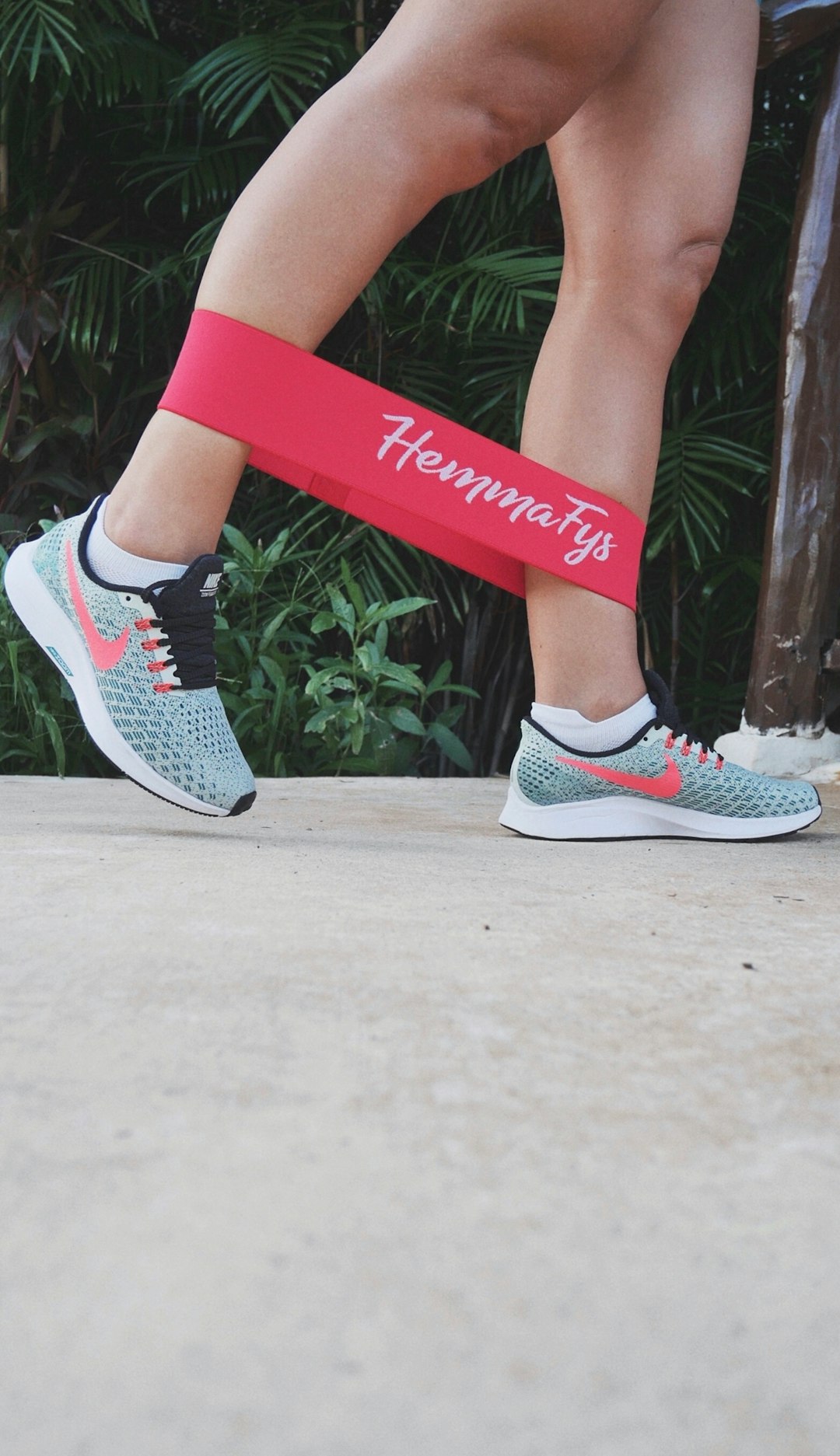
Move to the hips next. The lateral band walk is the standard here: loop a light band above the ankles or just above the knees, drop into a quarter-squat stance, and take slow, controlled side steps while keeping tension on the band the whole time. This activates the glute medius, which is a key stabilizer for cutting, jumping, and landing mechanics — exactly the movements that get taxed in field and court sports. Ten to fifteen steps in each direction, for two sets, is a solid dose.
Add a core anti-rotation piece like the Pallof press: anchor the band at chest height to the side, hold it at your sternum, and press it straight out and back without letting your torso twist. This builds the kind of trunk control that protects the lower back during rotational sports like baseball, tennis, or golf. Two sets of 10-12 reps per side is enough.
Finish with a single-leg or hip-hinge band movement, such as banded glute bridges or standing hip extensions, to reinforce posterior-chain strength that supports sprinting and jumping. The whole sequence — shoulders, hips, core, posterior chain — takes about 15-20 minutes and works well as a pre-practice warm-up or a standalone recovery-day session.
General programming guidance for band work with youth is to start with light resistance, prioritize slow and controlled reps over speed, and build up the band strength or rep count gradually as technique stays clean — not before.
Tips / Common Mistakes
Prioritize technique over resistance level. If a teen is jerking through reps or losing form to move a heavier band, that’s the signal to drop down a band, not push through — this matches the broader youth resistance training guidance that emphasizes supervised, well-executed technique over load.
Don’t skip a proper warm-up before banded work, especially before high-intensity practice or a game — a few minutes of light cardio or dynamic movement first reduces injury risk and gets more out of the session.
Rotate the bands used for different exercises; a set with a couple of resistance levels (light, medium) covers most needs, since a shoulder pull-apart and a leg-strength move require very different tension.
Inspect bands regularly for nicks, thinning, or tears — a snapped band under tension is one of the few real injury risks with this kind of training, and it’s easily avoided by replacing worn bands.
Treat band work as a complement to, not a replacement for, sport practice and other strength training. It’s most valuable as a warm-up, an in-season maintenance tool, or a way to build stability in areas a teen’s main sport doesn’t address.
Explore more: More training and performance guides.
Resistance band training for teen athletes FAQs
Are resistance bands safe for teenage athletes?
Yes. Major pediatric and strength-and-conditioning organizations, including the American Academy of Pediatrics and the NSCA, consider resistance training — including bands — safe for adolescents when it’s technique-focused, appropriately loaded for the athlete’s stage of development, and supervised by a knowledgeable coach or trainer.
How often should a teen athlete use resistance bands?
Two to three sessions a week is a reasonable starting point, either as a pre-practice warm-up or a short standalone session on non-practice days. Consistency matters more than volume — a 15-20 minute routine done regularly beats an occasional long session.
Can resistance bands replace weightlifting for teen athletes?
Not entirely. Bands are excellent for warm-ups, mobility, and stability work, but as teens mature, progressive strength training with free weights or machines — under proper supervision — adds strength benefits that bands alone can’t fully replicate. The two work well together rather than as substitutes.
Level Up With SportsSteps
Track your athlete’s progress, connect with coaches and your team, and grow — get the SportsSteps app. Get the SportsSteps App.
Want youth sports news in your inbox? Subscribe to the free newsletter.
Photo by Delaney Van on Unsplash.