
Butterfly is widely considered the hardest competitive swim stroke — and for good reason. It demands simultaneous arm recovery, a coordinated two-beat kick, and a full-body undulating wave, all working together at the same time. Most beginners who try to swim it by brute force end up exhausted after half a length. The good news: butterfly is actually a learnable skill when you break it into progressive pieces.
The drills below are specifically chosen to build the butterfly from the ground up — starting with body movement, adding the kick, then layering in the arms. Work through them in order, keep your sets short (15–25 meters at a time), and prioritize rhythm over speed. You’ll be surprised how quickly the stroke starts to click.
Quick Answer
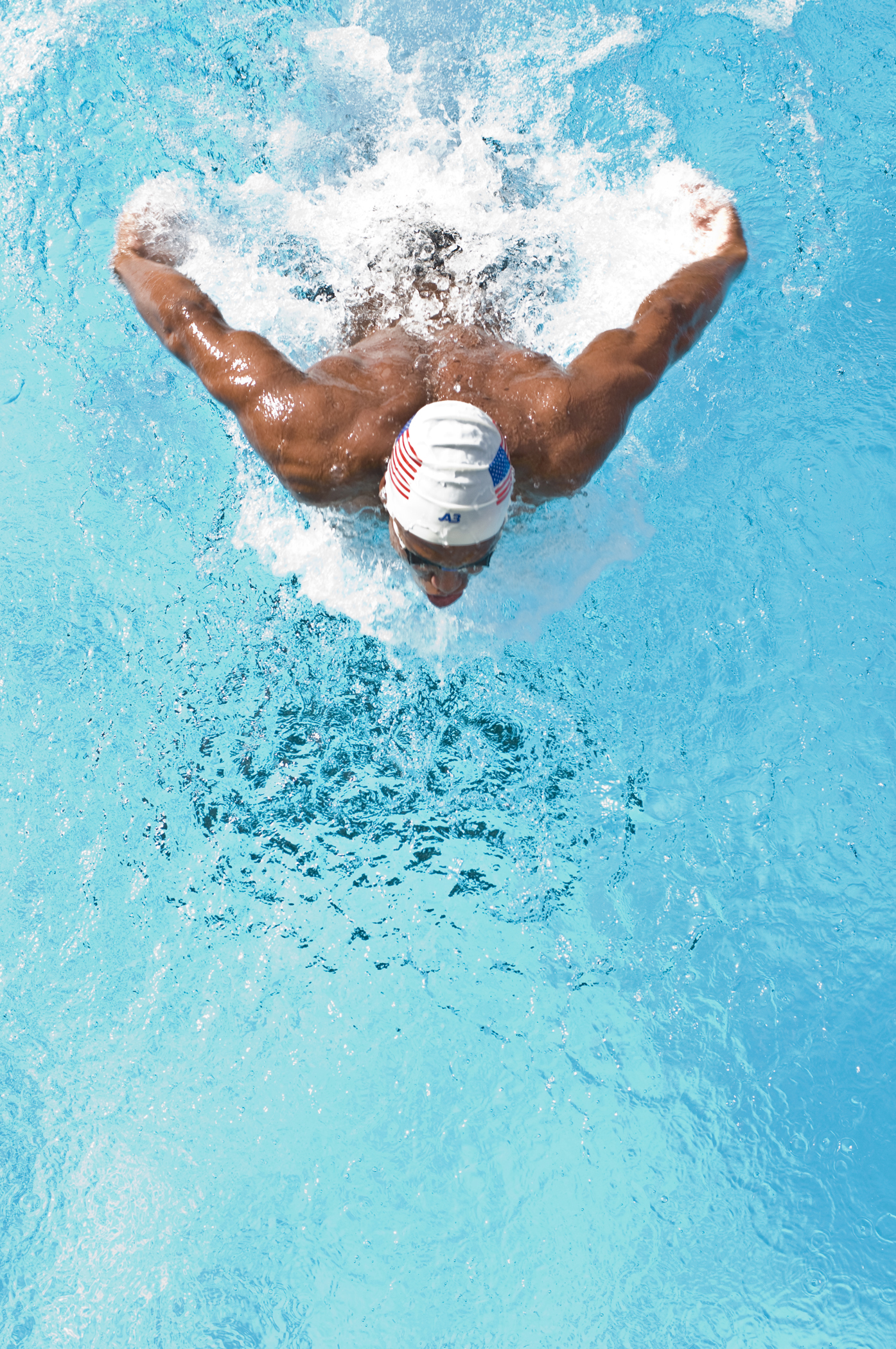
The fastest way to learn butterfly is to stop trying to swim it and start drilling it. Begin with the Head-Lead Body Dolphin to learn undulation, progress to the Hand-Lead Body Dolphin to add arm position, then build timing with Single-Arm Butterfly, and finally bridge to full stroke with the 2-2-2 Drill. Each drill isolates one piece of the stroke so your body can learn it before combining everything.
The 4 Drills, Step by Step
Drill 1 — Head-Lead Body Dolphin. Push off the wall face down with your arms at your sides. Your only job is to move through the water using your body wave: press your chest down, let it rise, press your hips down, let them rise, and feel that wave travel down to your feet. Keep your legs together, toes pointed. If you find yourself sinking, strap on a pair of fins — they amplify the wave and make it much easier to feel the correct motion. Do not kick from your knees; the movement originates at your chest and hips, and your knees should stay relatively soft. Swim 10–15 meters, rest fully, repeat.
Drill 2 — Hand-Lead Body Dolphin. This is the same body wave as Drill 1, but now your arms extend forward in a Superman position with hands together. This changes your balance point and gets you used to the entry position your hands will take during a real butterfly stroke. Keep your face down, continue the undulation from chest through hips to toes, and focus on keeping your hips near the surface. A snorkel is a worthwhile investment here — it lets you breathe without interrupting the wave. Think of your body as a single long wave from fingertips to toes.
Drill 3 — Single-Arm Butterfly. Now you add one arm at a time. Extend one arm forward and leave it there while the other arm completes a full butterfly pull: sweep out, scoop inward and back, then swing the arm over the water to re-enter in front. Breathe to the side during the recovery (not forward). Do 6–8 strokes on one arm, then switch. This drill is powerful because it removes half the coordination demand while still training the exact timing between kick and pull. You’ll feel two kicks per arm cycle — one as your hand enters the water, one as it pushes back. That rhythm is the key to butterfly.
Drill 4 — The 2-2-2 Drill. Once single-arm feels controlled, use this drill to bridge into full butterfly. Swim two strokes with your right arm only, two strokes with your left arm only, then two full butterfly strokes — and repeat the pattern. Breathe to the side during the single-arm phases, then breathe forward on the full strokes. The alternating pattern keeps fatigue low while forcing your nervous system to connect single-arm timing to the real thing. You can vary it (try 1-1-1 for a faster stimulus, or 3-3-3 for longer segments) depending on what feels challenging but controlled.
The Fundamentals Behind the Drills
Body position is everything in butterfly. Think of your body as a surfboard — long, flat, and close to the surface. When beginners let their hips sink, the arms have to do enormous work to push through the water. The drills above are specifically designed to keep hips high and teach the undulation that makes butterfly feel efficient rather than exhausting.
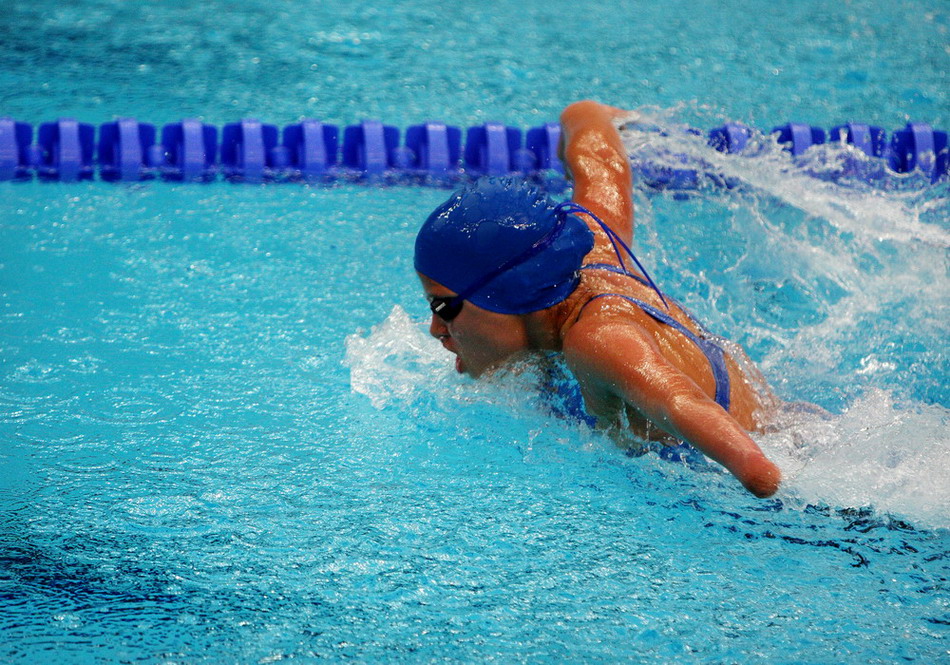
The dolphin kick has two beats per stroke cycle, and their timing is not random. The first kick happens as your hands enter the water at the front — it drives your hips up and helps your arms set up their catch. The second kick comes as your hands finish the push phase at your hips — it keeps your body moving forward as your arms swing over for recovery. Miss either of those timing windows and the stroke falls apart. Single-Arm Butterfly in Drill 3 is the best tool for ingraining this timing because you can feel each kick relative to each arm motion.
Breathing in butterfly should be a small, quick chin lift — not a full head raise. As your arms swing forward over the water, press your chin just forward and up to catch a breath, then drop your face back in before your hands re-enter. A common cue: ‘press, lift, breathe, down.’ Holding your breath too long or lifting your head too high forces your hips to sink, which kills momentum for the next stroke.
Common Mistakes (and How to Fix Them)
Kicking from the knees is the most common error beginners make. It feels intuitive but it causes your legs to sink and your upper body to bob upward, breaking the wave entirely. Fix it by thinking about pushing the crown of your head and the balls of your feet in the same downward direction at the same time — this forces the motion to originate from your core rather than your knees. Head-Lead Body Dolphin in Drill 1 exists specifically to train this out of you.
Going too far, too fast is the other big mistake. Butterfly is demanding — even well-trained swimmers don’t crank out 200-meter sets in practice. When you’re learning, cap your reps at 15–25 meters and take full rest between them. Rushing into longer distances before the technique is automatic will only ingrain bad habits. Four rounds of 8×15m will teach you more than one exhausted 200m swim.
Tension in the arms during recovery slows you down and wears you out. Your arms should swing over the water loosely, with soft elbows — not stiff and straight. Staying tense during recovery is often a sign you’re trying to muscle through the stroke. Let the body wave do the work; the arms are just along for the ride at that stage. If you catch yourself white-knuckling it, drop back to Single-Arm Butterfly until the rhythm feels natural again.
Explore more: More swimming guides and tips.
Butterfly stroke for beginners FAQs
How long does it take to learn butterfly stroke?
Most swimmers with solid freestyle and backstroke foundations can feel the basic butterfly rhythm within a few dedicated sessions using progressive drills. Developing genuinely efficient butterfly — where it feels controlled rather than exhausting — typically takes several weeks of consistent short-set practice. The learning curve is steep at first and then accelerates once the body wave clicks.
Do I need fins to learn butterfly?
Fins aren’t required, but they’re one of the most useful tools for beginners. They add propulsion so you can feel the body wave even before your kick is strong, and they help keep your hips at the surface. Short training fins (not long snorkeling fins) work best. A swimmer’s snorkel is similarly helpful because it lets you practice undulation and arm mechanics without pausing to breathe.
Why do I sink when I try to swim butterfly?
Sinking usually means your hips are dropping — which happens when the body wave isn’t working yet, when you kick from your knees instead of your hips, or when you hold your head up too long during breathing. Go back to Head-Lead Body Dolphin drill and focus on keeping your hips near the surface throughout every kick cycle. Strong dolphin kick timing is the fastest fix for a sinking body position.
Level Up With SportsSteps
Track your athlete’s progress, connect with coaches and your team, and grow — get the SportsSteps app. Get the SportsSteps App.
Photo: Isiwal / CC BY-SA 4.0, via Wikimedia Commons.