
If you’re choosing between padel and pickleball, you’re comparing two of the fastest-growing sports on the planet. Both use paddles, nets, and small courts. Both are fast, social, and fun. Yet beyond those surface similarities lie some major differences — in court design, equipment, gameplay, and even community culture. Whether you’re a competitive athlete or just looking for a new way to stay active, understanding the nuances between padel vs pickle can help you decide which one fits your style.
Court and Layout
The most visible difference between padel and pickleball lies in the court structure.
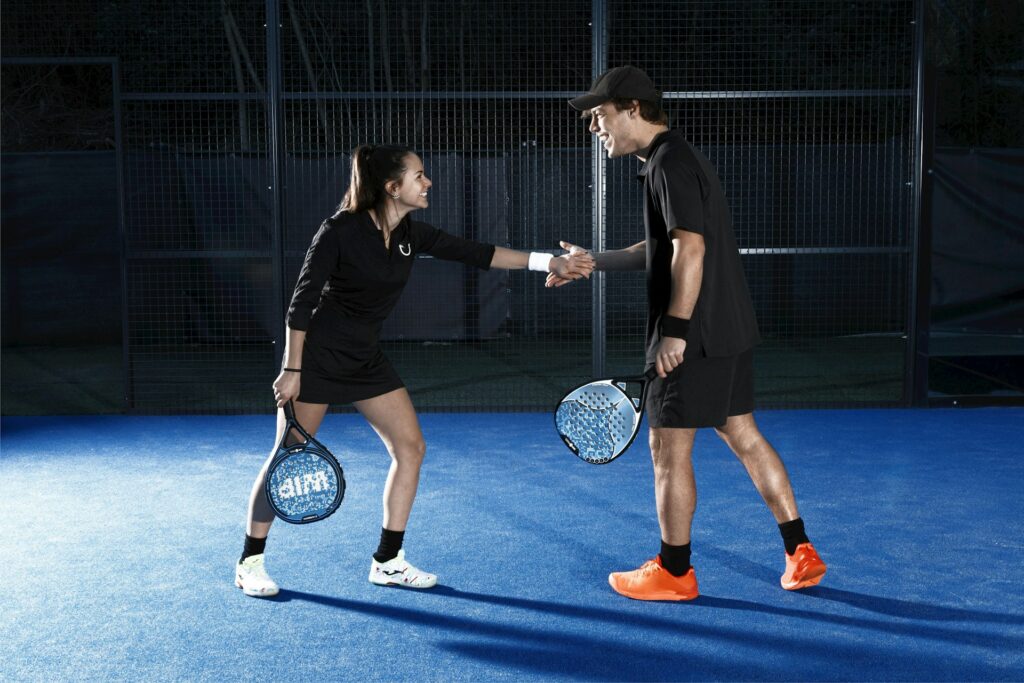
Padel is played on a 20×10 meter enclosed court surrounded by glass or mesh walls, similar to a mini tennis court with walls you can play off — much like squash. The walls are part of the game, so a ball that bounces off the glass and lands back in play remains live. This adds a tactical layer that rewards positioning, anticipation, and creativity. Many rallies last far longer than in tennis or pickleball because players can retrieve shots that would otherwise be out of bounds.
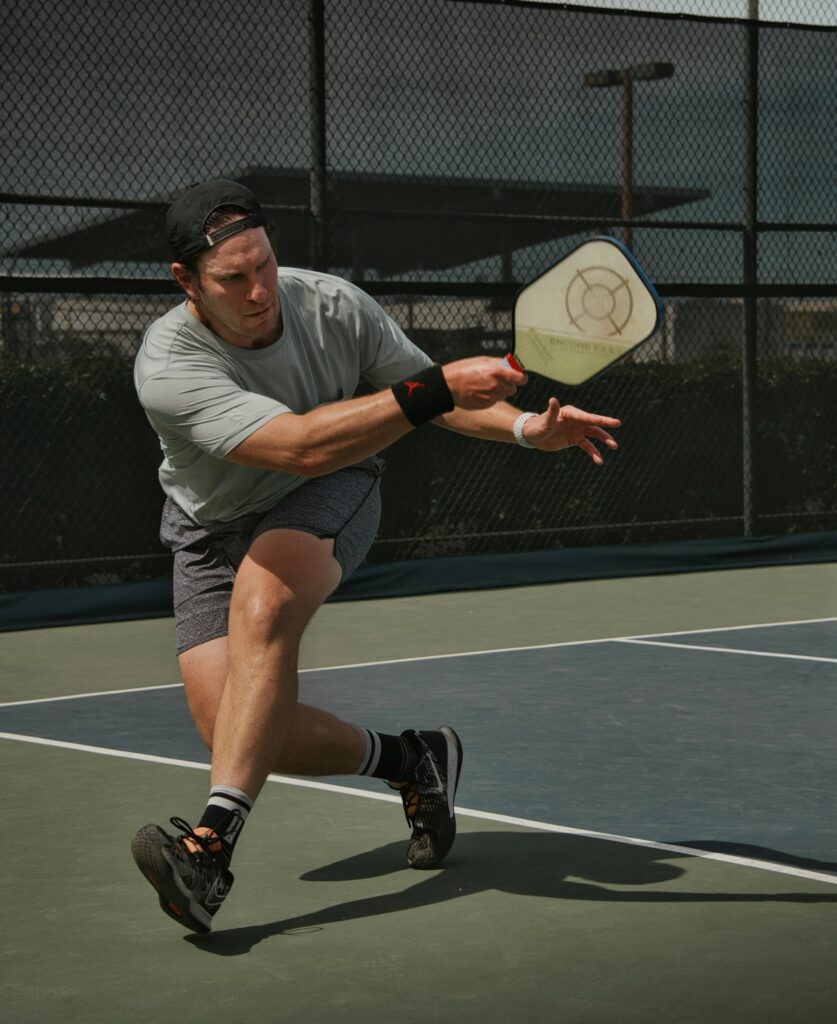
Pickleball, on the other hand, is played on a smaller open court measuring roughly 13.41×6.09 meters, without any walls or enclosures. The smaller space encourages quick exchanges and reflex-based play. The no-volley zone near the net — called “the kitchen” — adds another strategic twist: you can’t smash volleys while standing inside it. This forces players to rely on control, dinks, and soft touches instead of pure power.
In short, padel’s court invites longer, more strategic rallies, while pickleball’s compact design promotes faster, reaction-driven gameplay.
Equipment and Feel
Another key difference in the padel vs pickle comparison is the equipment.
Padel players use a solid, string-less racket with perforations in the face. The racket is made of composite materials such as carbon fiber or fiberglass, providing a balanced mix of power and control. The ball looks similar to a tennis ball but is slightly depressurized, resulting in a slower bounce that enhances rally length and precision.
Pickleball paddles, by contrast, are lightweight and flat, typically made of graphite, fiberglass, or polymer. Instead of a felt-covered ball, players hit a plastic ball with holes, somewhat like a whiffle ball. This lighter ball travels slower through the air, allowing for longer reaction times but also creating unpredictable bounce patterns in outdoor play.
If padel feels like “tennis meets squash”, then pickleball feels like “ping-pong on a court”. Both sports reward hand-eye coordination and quick footwork, but padel’s heavier racket and wall rebounds give it a more athletic, endurance-based feel, while pickleball emphasizes finesse, timing, and soft control.
Rules and Gameplay Style
The basic goal of both games is the same — hit the ball over the net and within the opponent’s boundaries — but how you get there differs.
Padel is almost always played in doubles, and the serve must be underhand after a single bounce. The ball can hit the wall after bouncing, creating creative defensive and offensive plays. The point continues as long as the ball doesn’t bounce twice. Matches are usually best of three sets, scored like tennis (15, 30, 40, game).
Pickleball can be played in singles or doubles, though doubles dominate in recreational play. Games are played to 11 points, and you must win by two. Serves are also underhand, but you can’t volley directly after a serve because of the double-bounce rule — the ball must bounce once on each side before volleys are allowed. This rule encourages extended rallies and levels the playing field for beginners.
Padel’s longer rallies and court coverage demand more stamina and positioning skills, whereas pickleball’s short-court dynamics emphasize quick reactions, communication, and touch.
Learning Curve and Accessibility
One reason pickleball has exploded in popularity across North America is its accessibility. The smaller court, lighter paddle, and simplified rules make it easy for beginners of all ages to learn within a single session. Many parks, gyms, and community centers already have pickleball lines painted over old tennis courts, meaning new players can jump in without special facilities.
Padel, while slightly more complex, is extremely popular in Europe and Latin America, especially in Spain, Argentina, and Italy. New padel clubs are appearing across the United States too, often featuring premium facilities and a social club atmosphere. Because padel is usually doubles, players quickly develop communication and teamwork skills — plus it’s low-impact on the joints compared to tennis.
In essence: pickleball is easier to start, but padel offers deeper long-term challenge and variety.
Social Aspect and Culture
Both sports have strong social cultures, but their communities feel a bit different.
Pickleball thrives on its inclusive, casual vibe. Local clubs often organize “open play” sessions where people rotate partners and mix skill levels. It’s common to see players chatting mid-game, cheering good shots, and staying after matches just to hang out. The sport’s low barrier to entry makes it perfect for families, retirees, and social groups.
Padel, meanwhile, has a slightly more competitive and international culture. Matches can get intense, but players often gather afterward for coffee or post-game drinks. Because padel requires specific courts, players tend to form tighter communities centered around clubs. Many describe it as a “social sport disguised as a workout,” combining fitness, friendship, and tactical thinking.
Both sports provide excellent mental and social health benefits — improving focus, teamwork, and mood through friendly competition.
Fitness and Skill Development
From a fitness standpoint, both padel and pickleball offer low-impact cardiovascular workouts.
Padel emphasizes explosive movement, balance, and endurance. Running off walls and tracking long rallies improve agility and coordination. The glass rebounds also keep players guessing, improving anticipation and quick directional changes.
Pickleball focuses on reflexes and precision, especially in the kitchen area where subtle wrist control matters more than power. While pickleball may look less physically demanding, fast volleys and constant lateral movement give players a surprisingly effective workout — especially during longer doubles matches.
If you want to burn calories while sharpening mental focus, either sport fits the bill.
View other training tips on SportsSteps
Growth and Global Reach
Globally, padel is booming. Spain alone has over 15,000 padel courts, and professional leagues like the World Padel Tour draw international audiences. The sport’s mix of strategy, teamwork, and fun has made it a hit among athletes transitioning from tennis.
Pickleball, meanwhile, has seen explosive growth in the United States and Canada, where it’s become the fastest-growing sport for several years running. National tournaments, celebrity endorsements, and municipal investments have helped pickleball evolve from backyard fun to a semi-professional sport with real prize money.
As both games expand worldwide, crossover players are becoming common — athletes who enjoy both for different reasons.
Which Should You Try?
So, padel vs pickle — which is right for you?
Choose padel if you enjoy:
- Longer, tactical rallies that use the walls strategically
- Team-based doubles play and dynamic movement
- A sport that feels halfway between tennis and squash
Choose pickleball if you prefer:
- Quick, reflex-oriented games with shorter points
- Easy setup and accessible community courts
- Lightweight equipment and an instantly welcoming crowd
The truth? You don’t have to pick one forever. Many athletes switch between both, using padel for endurance and power training while enjoying pickleball for relaxed, social play. Each sport offers unique skills that complement the other — and both provide an incredible way to stay active, meet new people, and enjoy movement for life.
Bottom line: When it comes to padel vs pickleball, there’s no wrong answer — just different kinds of fun. Try both, discover your rhythm, and you’ll quickly understand why these two paddle sports are taking the world by storm.