If you’ve stood on a sideline trying to film your kid’s game on a phone propped against a water bottle, you already know why AI-tracking sports cameras have taken off with youth teams. Pixellot, Veo, and XbotGo are the three names parents and coaches run into most often, and they solve the same problem in noticeably different ways — with different price tags to match.
This guide breaks down what each camera actually does, what it costs (camera plus any subscription), and which one makes sense depending on whether you’re outfitting a single travel team or an entire club’s home field.
Track the journey. The free SportsSteps app lets athletes, parents, and coaches log progress, celebrate milestones, and stay connected with their team — on iOS and Android.
Quick Answer
For most individual families or single teams, the XbotGo Falcon is the best value — a one-time purchase starting around $699 with no required subscription and solid auto-tracking across 10+ sports. Veo Cam 3 is the stronger pick for clubs that want the most mature auto-tracking and analytics ecosystem and don’t mind an ongoing subscription. Pixellot is built more for permanent field installations and league-wide streaming than for one family carrying a camera to away games.
How Each Camera Actually Works
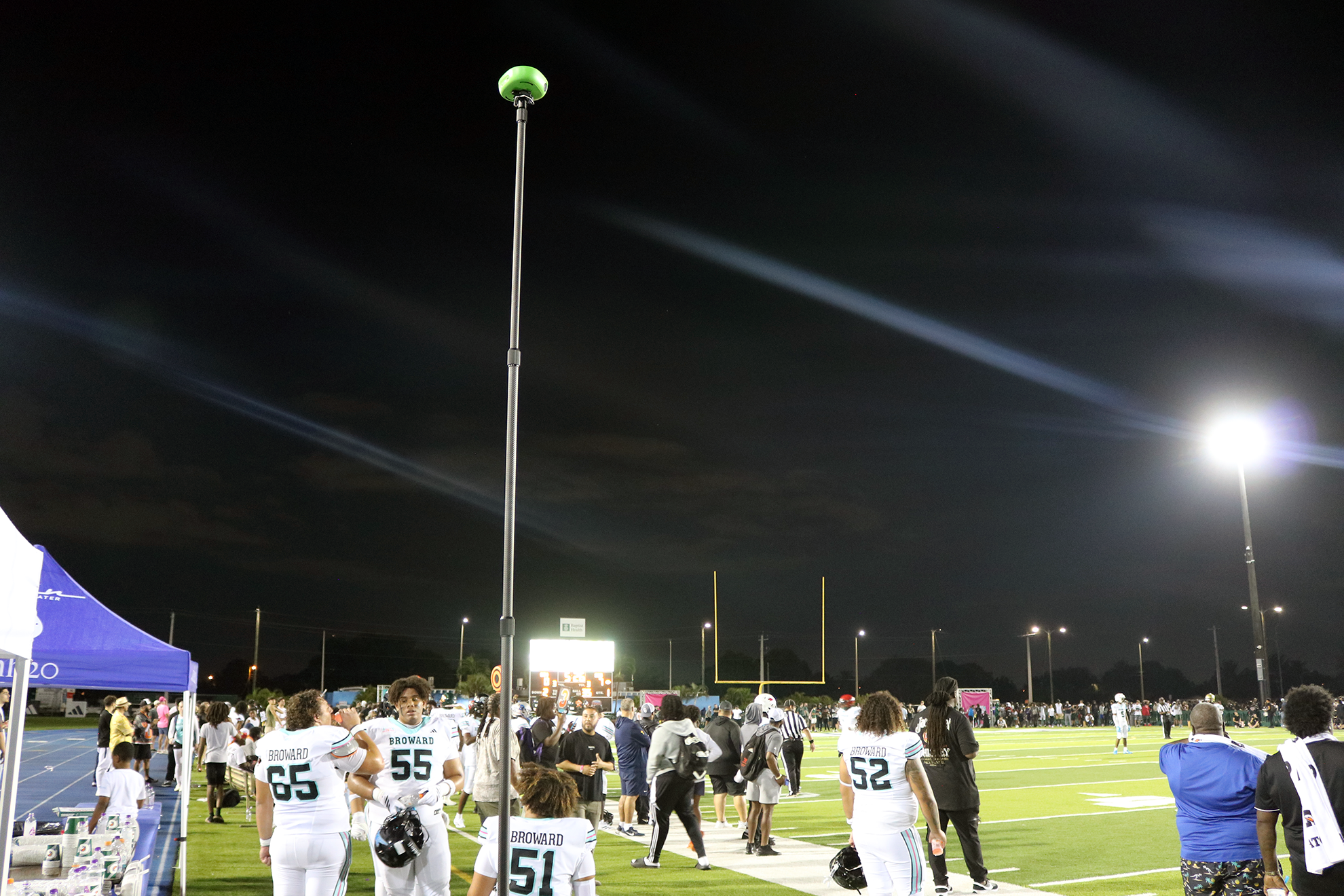
Pixellot got its start building fixed multi-camera rigs that mount permanently at a stadium or field to auto-produce broadcasts for entire leagues (it’s used by outfits like FC Barcelona’s academy and various college and high school conferences). Its consumer-facing product, Pixellot Air (now the Air NXT), shrinks that down into a portable unit under 2kg with dual 2x4K wide-angle cameras and roughly six hours of internal battery life. It auto-tracks play, auto-generates highlights, and works indoors or outdoors across a wide range of sports. Because Pixellot’s roots are in whole-league infrastructure, it’s often the camera a club or school buys to cover a home field, more than something one parent throws in a bag.
Veo Cam 3 is a single 4K panoramic camera that films the entire field from one fixed wide angle, then uses onboard AI in the Veo app to digitally pan, zoom, and follow the ball — no operator, no pointing required. It weighs about 2.8 pounds, runs roughly 6.5 hours per charge, and is rated for outdoor use in a broad temperature range. A 5G version adds a built-in modem so you can upload or livestream from fields without Wi-Fi. Veo’s real strength is the editing and analytics layer in its app — automatic clip creation, player profiles, and (for soccer) AI-driven performance analytics — but you need an active subscription to unlock and export footage.
XbotGo takes a more hardware-first, subscription-optional approach. The Falcon is an all-in-one 4K camera with an onboard AI chip that does target recognition, pose estimation, and trajectory prediction to track the ball and players live, including locking onto a specific jersey number so you can tell it to follow “number 11” for an entire game. It runs about 4 hours on its built-in 9,600mAh battery and includes free live streaming to YouTube and Facebook plus a bundled amount of cloud storage, with no subscription needed for core recording and tracking. XbotGo also sells the Chameleon, a cheaper accessory that turns a phone into a tracking camera using a motorized mount, at a lower price point than the Falcon.
Price and Subscription Comparison
XbotGo Falcon: the Standard pack is priced at $699, and the Elite Pack (which bundles the NT4 tripod) currently runs $869.99 on XbotGo’s own site (marked down from a $898 list price). Either way it’s a genuine one-time cost — there’s no subscription required to record, track, or live stream. That makes total first-year cost the most predictable of the three, though XbotGo runs frequent promotions, so it’s worth checking the current price before buying.
Veo Cam 3: the camera itself runs in the neighborhood of $1,300–$1,900 depending on configuration (more for the 5G version), and on top of that you need an ongoing subscription — Veo offers multiple tiers that scale by recording hours, number of teams, storage length, and number of user accounts, plus optional add-ons like Veo Live and Veo Analytics. Exact hardware and monthly pricing shift with promotions and plan size, so budget for both the hardware and a recurring bill and confirm current numbers on Veo’s site before buying.
Pixellot Air: the camera is commonly sold in the roughly $900–$1,000 range through retailers, and Pixellot also runs monthly subscription plans for streaming, storage, and analytics, with pricing that scales by event volume, storage retention, and tier — check Pixellot’s site or a retailer for current plan details. Because Pixellot also sells full stadium installations, individual/team pricing can vary more by retailer and bundle than with Veo or XbotGo.
Tips / Common Mistakes
Don’t buy on camera price alone — factor in a full season or year of subscription costs for Veo or Pixellot before comparing to XbotGo’s subscription-free model; the gap can be bigger than the sticker price suggests.
Check battery life against your actual game length plus warm-up and any doubleheader schedule. XbotGo Falcon’s roughly 4-hour battery is the shortest of the three, so back-to-back games may need a charge break or a spare battery.
If jersey-number tracking for one specific player matters to you (common with parents who just want their own kid on camera), XbotGo’s number-lock tracking is built for exactly that use case, while Veo and Pixellot are generally optimized to follow the ball/play across the whole team.
Confirm your sport is fully supported before buying — all three list broad multi-sport tracking, but auto-tracking accuracy is typically strongest for wide-field sports like soccer and weaker for sports with more erratic, close-quarters motion.
Explore more: More parent guides for youth sports.
Pixellot vs Veo vs XbotGo FAQs
Which AI sports camera is cheapest overall for one family or team?
XbotGo is generally the lowest total cost since the Falcon Standard (around $699) and the Chameleon (a lower-cost accessory) don’t require a subscription for core recording, tracking, and live streaming, while Veo and Pixellot both add a recurring monthly fee on top of the camera price.
Do I need Wi-Fi at the field to use these cameras?
No for basic recording — all three record to onboard storage. Livestreaming without Wi-Fi is easiest with the Veo Cam 3 5G, which has a built-in cellular modem; XbotGo and standard Pixellot/Veo units typically rely on a phone hotspot or field Wi-Fi to stream live.
Can these cameras follow just my kid instead of the whole game?
XbotGo’s Falcon supports locking onto a specific jersey number so it follows one player throughout the game. Veo and Pixellot are built primarily to track the ball and overall play across the full field rather than a single athlete.
Is Pixellot a good choice for a single youth team, or is it more for clubs?
Pixellot’s core business is permanent, league-wide field installations for schools, clubs, and federations, so its portable Air NXT camera can work for a single team, but it’s most cost-effective when a club or league is covering an entire home field and multiple teams.
Level Up With SportsSteps
Track your athlete’s progress, connect with coaches and your team, and grow — get the SportsSteps app. Get the SportsSteps App.
Images: Pixellot.