Your teen limps off the field, showers, and by the next morning can barely walk down the stairs. Delayed-onset muscle soreness (DOMS) is a normal part of playing sports hard, but it doesn’t have to sideline a young athlete for two days every time.
Foam rolling is one of the simplest, cheapest recovery tools available, and it takes less time than a post-game snack run. Here’s a teen-friendly, 10-minute routine that hits the muscles that take the most abuse in field and court sports, plus what the research actually says about whether it works and how to do it safely on a still-developing body.

Quick Answer
Right after a game or hard practice, roll each major muscle group used in that sport — calves, hamstrings, quads, glutes/IT band, and upper back — for about 60-90 seconds each, moving slowly and pausing on tender spots without pushing into sharp pain. A full circuit takes about 10 minutes and can help reduce next-day soreness and stiffness.
The 10-Minute Post-Game Routine
Do this within about 30-60 minutes of finishing play, before soreness sets in and while muscles are still warm. Move slowly — roll about an inch per second, not back-and-forth fast — and breathe normally instead of holding your breath through tender spots.
Calves (90 seconds): Sit with the roller under one calf, hands behind you for support, and roll from the back of the knee to the ankle. Cross the other leg on top for more pressure if it’s tolerable. Switch sides.
Hamstrings (90 seconds): Same seated position, roller under the back of the thigh, rolling from just below the glutes to just above the knee. Avoid rolling directly on the knee joint itself.
Quads (90 seconds): Lie face-down, forearms on the ground, roller under the front of the thighs. Roll from hip to just above the kneecap — stop short of the kneecap and hip bone rather than rolling directly over them.
Glutes and IT band (90 seconds): Sit on the roller and shift weight onto one glute at a time, rolling in small circles. For the IT band, lie on one side with the roller along the outer thigh between hip and knee — this spot is often the most tender, so ease in rather than dropping full body weight on it right away.
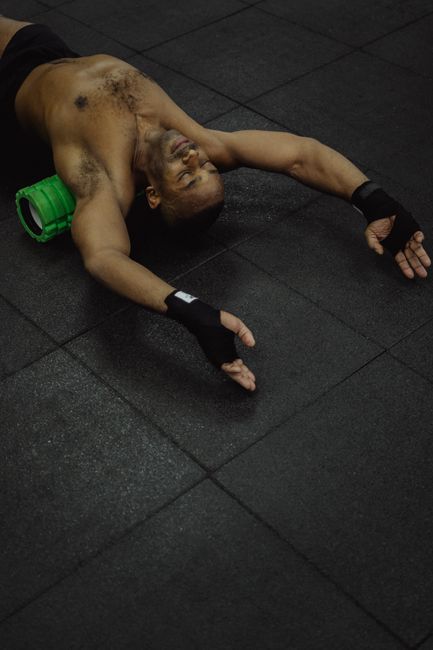
Upper back (90 seconds): Lie on your back with the roller under the shoulder blades, feet planted, and gently roll from mid-back to upper back. Keep the lower back off the roller entirely — never roll directly over the spine or lower back, where there’s less muscle padding over bone.
Why It Works — and What Foam Rolling Actually Does
Foam rolling is a form of self-myofascial release, essentially self-massage using body weight and pressure. Research on athletes has found it can reduce the perceived soreness and stiffness of DOMS in the 24-72 hours after exercise, and some studies on youth and adult athletes show it can help restore range of motion and reduce perceived fatigue faster than doing nothing. It isn’t a magic fix and results vary study to study, but as a low-cost, low-risk recovery habit, the evidence leans clearly positive.
For teen athletes specifically, growth plates — the still-developing cartilage near the ends of long bones — are more vulnerable to injury than fully mature bone, which is exactly why the routine above avoids rolling directly over joints, kneecaps, hip bones, and the spine. Rolling the soft muscle belly, not the bony landmarks, keeps the practice safe while still delivering the recovery benefit.
Tips and Common Mistakes
Discomfort is normal; sharp, shooting, or numbing pain is not — stop immediately if that happens and check with a coach or sports medicine provider. The same goes for rolling directly over a recent injury, a swollen joint, or anywhere pain doesn’t ease up after a few sessions.
Speed is the most common mistake: rolling fast feels productive but does far less than rolling slowly and pausing on tight spots for a few extra seconds. Skipping the lower-leg work is another common shortcut — calves and hamstrings take a beating in running sports and are often the sorest the next day. Pair the routine with basic hydration and a few static stretches afterward, and keep a roller in the sports bag so it actually gets used after away games, not just at home.
Explore more: Training & Performance.
Foam rolling for teen athletes FAQs
Is foam rolling safe for teenagers with open growth plates?
Yes, when done correctly. Foam rolling targets soft muscle tissue, not bone, so the key is avoiding direct pressure on joints, kneecaps, hip bones, and the spine — exactly the areas where growth plates are located. Gentle, muscle-focused rolling is considered a safe recovery habit for young athletes.
How soon after a game should a teen athlete foam roll?
Ideally within 30-60 minutes of finishing play, while muscles are still warm and before stiffness sets in. Foam rolling later that night or the next day still helps, but earlier tends to be more effective for easing next-day soreness.
My teen doesn’t have a foam roller — what can they use instead?
A tennis or lacrosse ball works for smaller, targeted spots like the glutes or feet, and a firm rolled towel can substitute in a pinch for the larger muscle groups. A basic foam roller is inexpensive and worth adding to a sports bag, but it isn’t required to get started.
Does foam rolling actually reduce soreness, or is it just placebo?
Studies on athletes, including youth players, have found real reductions in perceived soreness and faster return of range of motion after foam rolling compared with doing nothing, though results vary by study and it works better as a supplement to good sleep and hydration than as a standalone fix.
Level Up With SportsSteps
Track your athlete’s progress, connect with coaches and your team, and grow — get the SportsSteps app. Get the SportsSteps App.
Photo by Ketut Subiyanto on Pexels.