
A pull buoy is one of the simplest tools in the pool bag, but most swimmers use it wrong — they let it turn easy laps into a leg-rest lap instead of a technique workout. Squeezed between the thighs, it floats your legs so your kick drops out of the equation, leaving nothing to hide behind but your arm stroke.
Used correctly, that isolation is exactly the point: it forces you to feel your catch, your pull path, and your body position without the crutch of kicking to compensate. This guide covers where to place the buoy, how to set up your stroke while using it, and the mistakes that quietly cancel out the benefit.
Quick Answer
Place the pull buoy between your upper thighs (not down at the ankles), keep your legs still and hips high, and swim freestyle focusing entirely on a high-elbow catch and a long, controlled pull all the way to your hip. If pulling feels easier than normal swimming, you’re relying on the buoy’s float instead of your technique — slow down and rebuild the catch.
How to Set Up and Swim a Pull Buoy Drill
Position the buoy between your thighs, close to your groin, with one lobe on each side of your legs. This keeps your hips and legs riding high without needing much squeeze. Placing it lower near your knees or ankles is a common error — it throws off your alignment and can strain your lower back, causing your hips to sag instead of stay elevated.
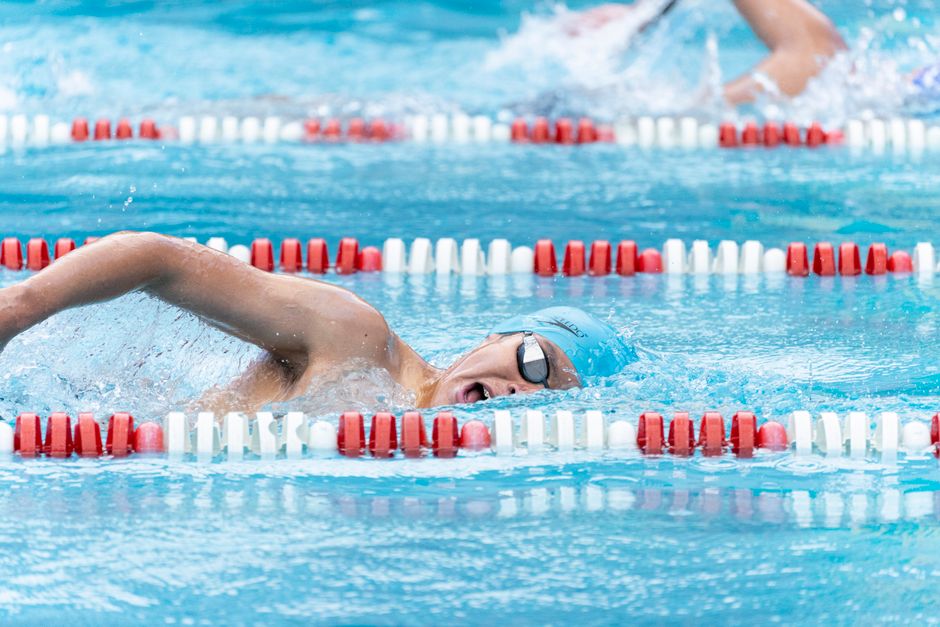
Once you push off, keep your legs relaxed and mostly still (a very slight flutter is fine for balance, but don’t kick). Enter each hand in line with your shoulder, then focus on catching the water early with a high elbow — think about pressing your forearm and palm backward against the water rather than pulling straight down. Pull all the way back past your hip before recovering with a high elbow over the water.
Keep your head in a neutral position, eyes angled toward the bottom of the pool, and try to feel even, symmetrical pressure on both sides of the pull. Many coaches recommend pairing the buoy with a snorkel for these sets — it removes the need to turn for a breath, so you can hold a stable head and body line and dedicate full attention to the arm pull.
Why It Works — and When to Add Paddles
Removing the kick strips away the coordination and cardio demands of full-stroke swimming, which frees up mental bandwidth to concentrate on one thing: the catch and pull. It also naturally elevates your hips, giving you a feel for the high, streamlined body position you should be holding when you swim full stroke.
Once your pull-buoy technique is solid, hand paddles can be added to build pulling strength and reinforce the feel of pressing water with your forearm, not just your hand. Introduce paddles gradually, though — because they increase leverage and load on the shoulder, they can aggravate joints if your catch technique isn’t clean yet. If a set with paddles causes shoulder discomfort, drop them and go buoy-only until form improves.
Tips and Common Mistakes
The biggest mistake is squeezing the buoy so hard your legs go rigid — this locks up your hips and actually makes body position worse, not better. Aim for a light hold, just enough to keep the buoy in place.
A second mistake is letting the buoy do all the work: if a 100 pull set feels noticeably easier than a 100 freestyle, you’re likely not applying real pulling pressure, or your catch is slipping through the water instead of holding it. Slow down and focus on feeling resistance through the whole stroke.
Don’t use a pull buoy as your only training tool — it isolates the arms, so it shouldn’t replace full-stroke swimming where your kick, rotation, and timing all work together. Use pull sets as a supplement — a few times a week within a broader practice — not a replacement for whole-stroke work.
Finally, don’t ignore rotation. Even with legs still, keep rotating your hips and shoulders with each stroke rather than swimming flat on your stomach; flat pulling reinforces a flat, less powerful full stroke.
Explore more: More swimming technique guides.
Pull buoy FAQs
Where exactly should I put a pull buoy?
Between your upper thighs, close to the groin — not down by your knees or ankles. That placement keeps your hips high without forcing your lower back out of alignment.
Should pull buoy sets feel easier than regular freestyle?
No. If it feels significantly easier, you’re coasting on the float instead of applying a real catch and pull. A good pull set should feel at least as demanding on your arms and core as full-stroke swimming.
Can I use a pull buoy every time I swim?
You can use it regularly, but it shouldn’t replace full-stroke swimming. Pull buoy work is best as a technique-focused portion of practice — often paired with a snorkel — rather than the entire session.
Is it okay to use paddles with a pull buoy?
Yes, once your catch technique is solid. Paddles add resistance and reinforce a high-elbow pull, but introduce them gradually since they increase shoulder load and can aggravate joints if your form isn’t clean yet.
Level Up With SportsSteps
Track your athlete’s progress, connect with coaches and your team, and grow — get the SportsSteps app. Get the SportsSteps App.
Photo: Edo de Roo / CC BY-SA 3.0, via Wikimedia Commons.