
Watching a young kid heave a ball with their elbow down, chest wide open, and all-arm effort is completely normal — and completely fixable. Around age seven, children are developmentally ready to absorb basic throwing instruction and start building a motion they can refine for years. The good news: the fundamentals are simple, and a few short practice sessions can produce a noticeable difference.
This guide breaks down the key mechanics into five teachable steps, plus practical drills and the most common mistakes to watch for. Whether your child is playing T-ball, softball, or just tossing a ball in the backyard, these coaching principles apply across the board.
Quick Answer
To throw correctly, a 7-year-old needs five things working together: a solid grip across the seams, the lead shoulder pointed at the target, the throwing elbow raised above shoulder height, full-body rotation through the throw, and a complete follow-through. Teach each piece separately before putting them all together.
The Five Steps of a Correct Throw
Step 1 — Grip the ball correctly. For baseball, teach a three-finger grip with the fingers spread across the seams, not alongside them. For softball, a five-finger grip works well at this age. The goal is control, not spin, so keep it simple and make sure the ball sits in the fingers, not deep in the palm.
Step 2 — Point the lead shoulder at the target. Before anything else moves, the non-throwing shoulder should aim directly at where the ball is going. This automatically sets the hips and feet in the right position. Many kids default to facing the target chest-first from the start — this is the cue that breaks everything downstream.
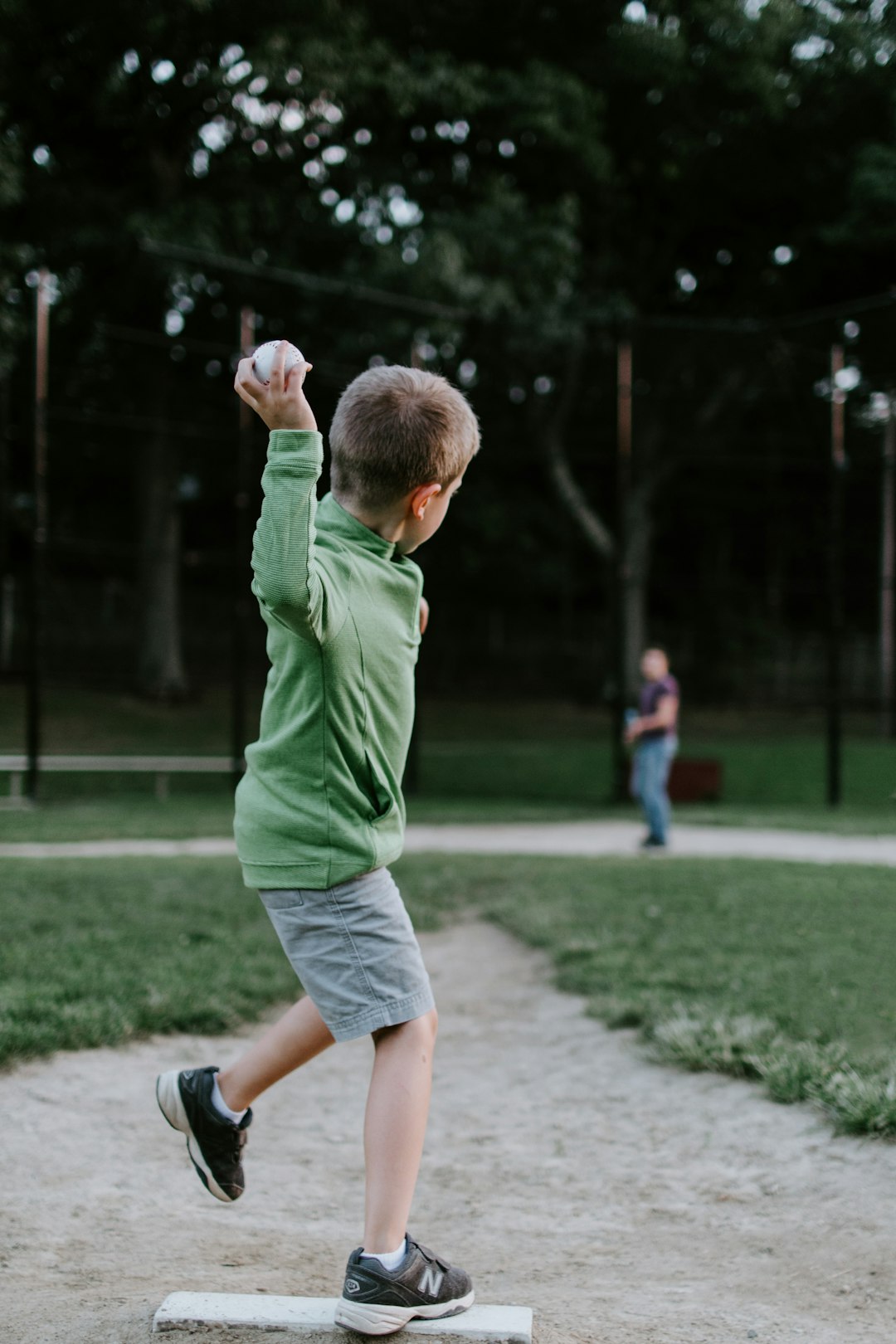
Step 3 — Get the elbow up. This is the single most important mechanical point for young throwers. The throwing elbow must be at or above shoulder height before the arm comes forward. When the elbow drops below the shoulder, the child is throwing sidearm — a pattern that is both inaccurate and puts unnecessary stress on the elbow and shoulder over time. A helpful cue: ‘Make a muscle, then reach back.’
Step 4 — Use the whole body, not just the arm. Young kids tend to throw with their arm alone. A proper throw generates power from the core and chest. As the child brings the arm forward, the front shoulder rotates back and the chest rotates through toward the target. Cue this with ‘show your chest to the target after you let go.’ Starting with both arms raised in an L-shape and over-exaggerating shoulder rotation helps kids feel this body engagement.
Step 5 — Follow through completely. The throwing arm should continue down and across the body after the ball is released, finishing near the opposite hip. A throw that stops short loses force and accuracy. Tell kids: ‘Chase the ball with your hand until it points at the ground.’
How to Practice With Your 7-Year-Old
Start stationary before adding footwork. Have your child throw without stepping at first, focusing entirely on elbow height, shoulder rotation, and follow-through. Once the arm action is consistent, introduce the opposite-foot step — place a piece of tape or a rope on the ground and have them step over it with the foot opposite their throwing hand as they release.
Use fun imagery over technical jargon. Coaching cues like ‘reach into the cookie jar’ (arm back and up), ‘show your armpit’ (elbow up), and ‘pat the dog’ (follow-through down) stick far better with 7-year-olds than anatomical explanations. The more physical and playful the cue, the more likely they are to remember it mid-throw.
Build power before accuracy. Early in the learning process, ask your child to throw as far or as hard as they can — distance attempts naturally pull kids into a fuller throwing motion. Once the mechanics are consistent, set a shoulder-height target and shift focus to hitting it. Reversing this order (accuracy first) often causes kids to muscle up with just their arm and shortens the motion.
Keep sessions short and frequent rather than long and rare. Brief throwing sessions every other day build arm strength and ingrain the pattern more effectively than one long practice per week. End on a positive rep — finishing when the technique looks good leaves a clean motor memory.
Common Mistakes to Correct (and One to Ignore)
The low elbow is the most important mistake to fix and the most common one. A dropped elbow leads to sidearm throws, which are both inaccurate and hard on developing joints. Any time you see the elbow dipping below the shoulder, stop and reset. Use the L-shape starting position — both arms bent at 90 degrees and raised — to help kids feel where the elbow belongs before the throw begins.
Throwing all-arm is the second most common issue. If your child’s body stays square and only the arm moves, they are leaving most of their natural power unused. Encourage exaggerated shoulder rotation even if it looks a little theatrical at first — the motion will smooth out with repetition.
Stopping the follow-through short is subtle but common. Kids often release and immediately drop the arm, especially when they are aiming carefully. Remind them that the throw is not over at the moment of release — the follow-through is part of the throw, not a bonus step.
The one mistake to ease up on: over-coaching. At age seven, kids are still building the neural pathways for complex movement patterns. Too many corrections at once leads to paralysis by analysis. Pick one thing to focus on per session, deliver the cue with encouragement, and let repetition do the rest. Positive feedback — even for effort, not just result — keeps the learning environment productive and fun.
Explore more: More coaching guides and youth sports tips.
Teaching Kids to Throw FAQs
At what age should kids start learning proper throwing mechanics?
Around age six or seven is generally when children have the coordination and attention span to begin absorbing basic throwing instruction. Before that age, free play and natural exploration of movement are usually more beneficial than formal technique coaching.
Why does my 7-year-old throw sidearm?
A sidearm throw almost always means the elbow is dropping below shoulder height before the arm comes forward. It is a very common default pattern because it feels natural and generates short-distance results. Focus on getting the elbow up — at or above shoulder height — before the arm comes through, and the sidearm habit will correct itself over time.
How often should a 7-year-old practice throwing?
Short sessions every other day tend to work better than infrequent long sessions. This gives the arm time to recover and allows the movement pattern to consolidate between practices. Even 10–15 minutes of focused throwing every couple of days adds up quickly over a season.
Level Up With SportsSteps
Track your athlete’s progress, connect with coaches and your team, and grow — get the SportsSteps app. Get the SportsSteps App.
Photo: David E. Lucas / Public domain, via Wikimedia Commons.